
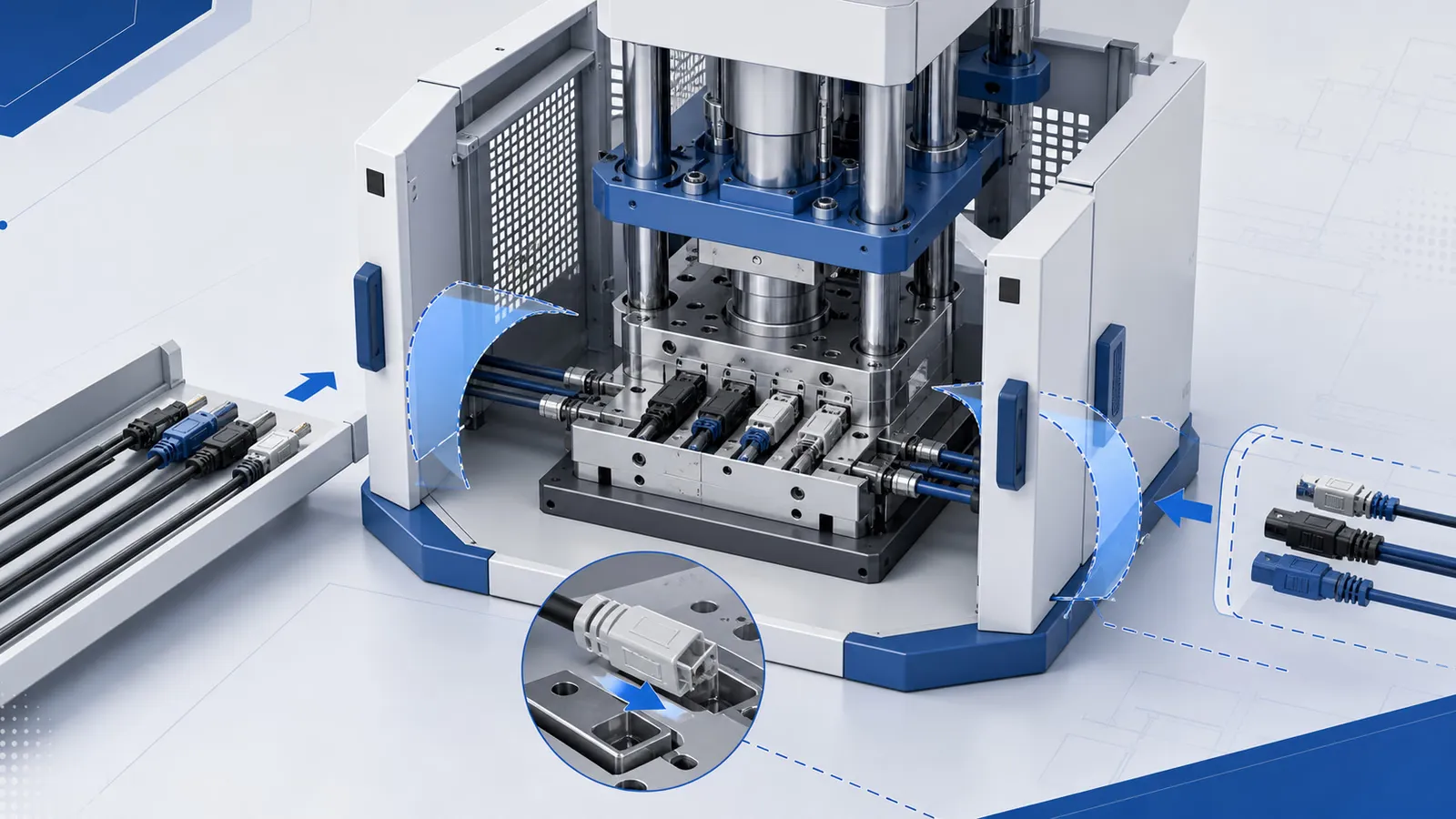
Weld Lines Around Inserts or Flow Fronts: Troubleshooting Guide
Review weld line causes by checking flow split, insert geometry, material temperature stability, venting, mold temperature, and gate or runner condition.
2026-07-12 - 8 min diagnostic read - Category: Molding Defects
A weld line forms where two flow fronts meet. Around inserts, ribs, holes, terminals, or cable features, the flow often splits and reunites. The visible line may be only cosmetic for some products, but it can also matter for strength, sealing, insulation, or appearance requirements.
Quick Answer
Do not review weld lines as an appearance issue only. Confirm where the flow fronts meet, whether air can escape, whether material temperature is stable, and whether the insert geometry or gate position forces the line into a critical area.
What You May See
- A line appears where material flows around an insert and meets again.
- The line is stronger on one side, one cavity, or one table station.
- The weld line appears with short shot, burn mark, bubble, or weak surface finish.
- The line becomes more visible after material or mold temperature changes.
- The product requirement rejects the line because of strength, sealing, or appearance.
Likely Cause Areas
- Insert geometry may split the flow and force two fronts to meet in a visible area.
- Low or unstable material temperature can reduce bonding at the meeting point.
- Mold temperature imbalance can cool one flow front before it meets the other.
- Air may be trapped at the meeting area if venting is not effective.
- Gate, runner, or flow path design may place the weld line in a sensitive region.
- Material contamination, moisture, or feeding instability may weaken the flow front.
Safe Checks Before Adjustment
Stop automatic operation if movement, alarm, guarding, or operator safety is uncertain. Do not place hands in the mold, table, injection, or guarded area while movement is possible. Use photos, controller screenshots, cycle logs, and safe observation before changing several settings.
Diagnosis Path
- Mark the weld line location relative to gate, insert, hole, rib, and flow direction.
- Confirm whether the line appears in all cavities or only one table station.
- Check material drying, batch, and feeding stability before changing many settings.
- Review mold temperature and barrel temperature history for drift or alarms.
- Inspect vents near the flow meeting area under safe stopped conditions.
- Compare the weld line with product acceptance requirements, not only visual preference.
- Document whether the line appears with other defects such as short shot or burn marks.
- If the line sits in a critical functional area, involve mold and product engineering early.
Evidence to Collect
| Check | Why It Matters | Evidence to Collect |
|---|---|---|
| Flow meeting location | Weld lines are controlled by where fronts meet | Marked photos with gate and insert position |
| Product requirement | Acceptable appearance depends on function and inspection standard | Inspection notes or rejected sample criteria |
| Temperature stability | Temperature affects flow front bonding | Controller screenshots and alarm history |
| Venting condition | Trapped air can weaken or darken the weld line | Safe mold inspection photos |
| Material history | Moisture or contamination can make the line more visible | Drying, batch, and feeding notes |
What Not to Change Too Quickly
- Do not call every weld line acceptable without checking the product requirement.
- Do not change settings before confirming gate, insert, and flow path location.
- Do not ignore weld lines that appear together with burn marks or short shots.
- Do not inspect vent areas while the machine can move.
When to Contact Deboge
Contact Deboge when the weld line is linked to insert loading, machine sequence, or repeatability concerns. Send part photos with gate and insert location, material details, mold layout if available, temperature notes, and rejection criteria.
Related Reading
Related Reading
Related Questions
Are weld lines only an appearance issue?
Not always. Depending on the part requirement, a weld line can affect appearance, strength, sealing, or insulation. The acceptable level should be confirmed by the product requirement.
Why do weld lines appear near inserts?
The insert divides the flow path. When the separated flow fronts meet again, the meeting point can become a visible line or a weaker area.
Can venting affect weld lines?
Yes. If air is trapped where flow fronts meet, the weld line may become more visible, darker, or weaker.
What evidence helps review a weld line?
Send marked photos, gate and insert location, material records, temperature history, vent condition notes, and the product acceptance requirement if available.
Need help with this issue?
Send the machine model, material, mold or insert details, defect photos, alarm screenshots, and recent changes. Deboge can review the information and suggest the next diagnostic step.