
Custom Vertical Molding Solutions
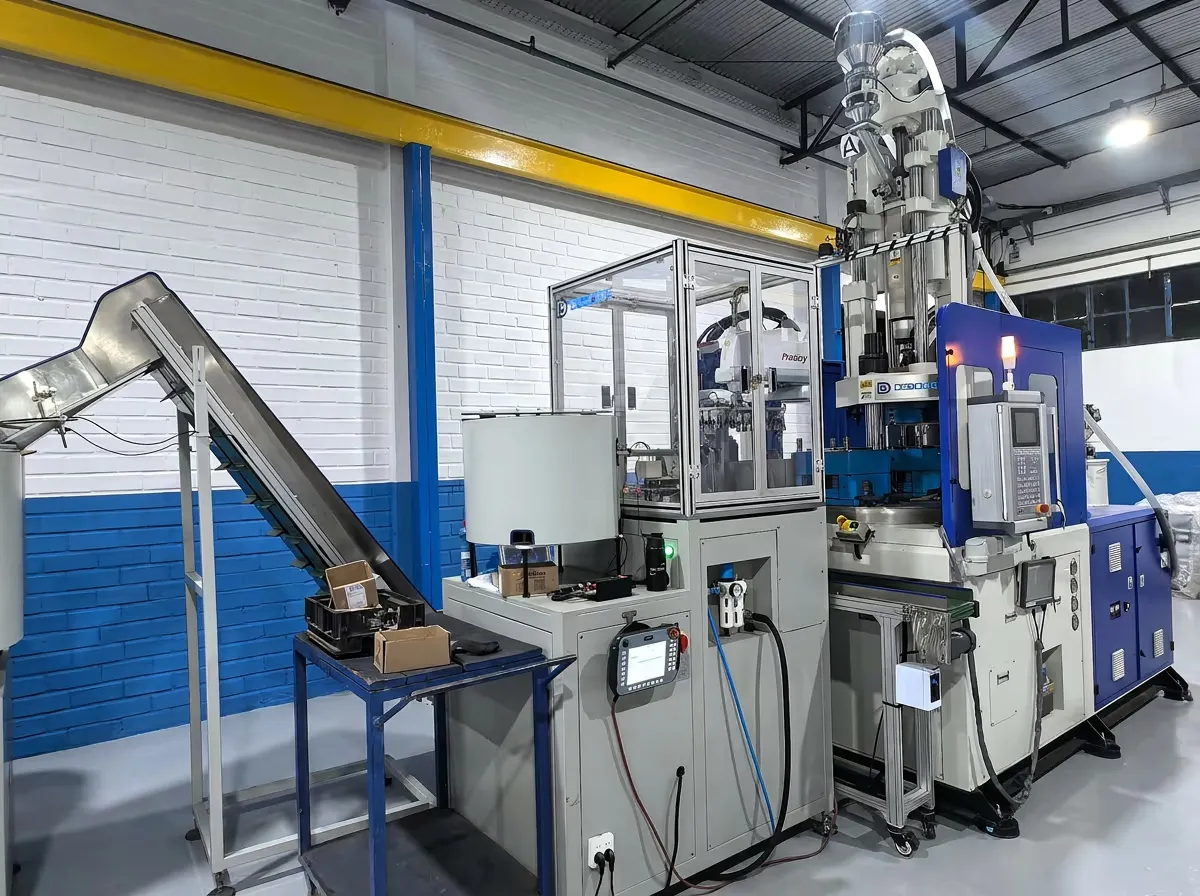
Custom vertical molding solutions start from a standard DA, DC, or DK platform, then adapt the machine around mold access, table motion, controls, or surrounding equipment.
The review begins with the closest proven configuration, then identifies which parts of the machine need project-specific adjustment.
Production Requirement
When a standard configuration isn't quite right
Most injection molding projects fit neatly into standard DA, DC, or DK Series configurations. But some don't - and that's where customization comes in. Rather than forcing your production process to fit a machine that is almost right, a proven platform can be adapted to match your specific requirements.
The approach is practical, not theoretical: start from the series whose clamping structure and machine-size range fit your application, then modify the components that need to change. This keeps the core engineering proven while addressing your specific constraints - whether they involve mold dimensions, material handling, automation integration, or production floor layout.
- Built on proven platforms DA, DC, or DK Series foundation - not an experimental one-off design
- Adapted to your needs Table, platen, injection unit, controls - modify what matters, keep what works
- Engineering-led evaluation No guesswork - requirements and feasibility are reviewed before quoting
- Practical lead times Adapting a standard platform is faster and more cost-effective than full bespoke engineering
Customization Scope
Three areas where customization is most commonly requested
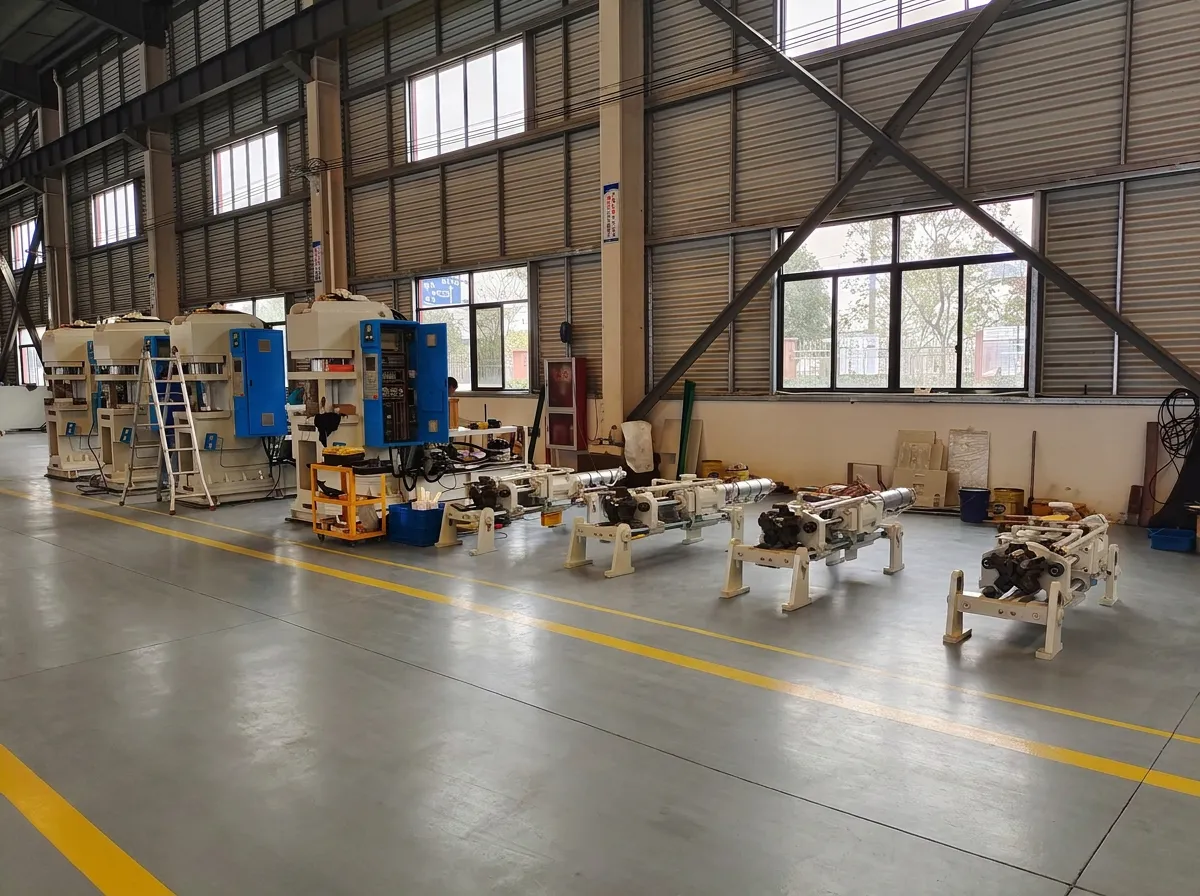
Most custom vertical molding requests fall into three categories. Typical projects involve one or two of these areas - rarely all three. Understanding which category your requirement falls into helps frame the initial discussion with the engineering team.
- Non-Standard Table
- Beyond the standard fixed, slide, and rotary configurations. Larger platens, additional stations, right-angle slide arrangements, or combined slide-and-rotary setups for complex multi-step molding workflows.
- Special Mold Integration
- When your existing mold or planned mold requires non-standard tie-bar spacing, extended daylight, unusual ejection patterns, or integrated core-pull sequences that standard machine configurations do not accommodate.
- Process-Specific Adaptation
- Thermoset-specific barrel and screw configurations, LSR feeding system integration, multi-color injection unit arrangements, gas-assist or water-assist interfaces, and specialized temperature control zones for demanding materials.
How the customization process works
- - 1. Requirement review: Send your machine requirements, mold drawings (if available), material specifications, production volume targets, and any special constraints. The engineering team reviews against standard configurations first - many projects that start as "custom" are covered by existing options.
- - 2. Platform selection: If customization is needed, the team identifies which series (DA, DC, or DK) provides the best starting point based on clamping structure, tonnage, and injection direction. The right platform minimizes the scope of modifications needed.
- - 3. Adaptation proposal: You receive a specification outlining what will be modified, the resulting machine parameters, estimated lead time, and cost. You review and confirm before any engineering work begins - no surprises.
- - 4. Build, test, deliver: The customized machine is assembled, tested with your mold or a representative setup where practical, and shipped with documentation reflecting the final as-built configuration.
Compatible Series
All three Deboge platforms can serve as a customization starting point
The right platform depends on your clamping structure preference, tonnage requirement, injection direction, and how the machine needs to fit into your production layout. Each series brings different strengths to a customization project.
DA Series
Standard Vertical Injection
15T-800T | Vertical injection
A broad standard platform to review first - 15T to 800T across all four table configurations, with several standard model and table options to adapt from.
View series specificationsDC Series
Tie-bar-less Vertical Clamping
45T-120T | Open-front design
Tie-bar-less C-frame structure - 45T to 120T. When the application requires an open working area combined with non-standard tooling, automation interfaces, or special mold access, DC's open-front design simplifies customization.
View series specificationsDK Series
Vertical Clamping | Horizontal Injection
90T-1,000T | Horizontal injection
The high-tonnage platform - 90T to 1,000T with horizontal injection. When large parts, heavy metal inserts, or high-output requirements demand a customized high-tonnage configuration, DK provides the greatest working envelope to work with.
View series specificationsCommon Application Areas
Applications where customization is frequently discussed
Custom machine adaptations are most commonly requested for applications involving non-standard materials, complex multi-step processes, or production environments where the machine must integrate with existing tooling and auxiliary equipment. These application areas are typical starting points.
Standard or Custom?
Start with standard - customize only what needs to change
Most production requirements fit within standard configurations. Before requesting a custom solution, check whether your needs are already covered. If they are not, the engineering team can help scope what needs to change.
Standard configurations cover:
- - 15T to 1,000T across three clamping structures (tie-bar, tie-bar-less, horizontal injection)
- - Four table types: fixed platen, single slide, double slide, rotary
- - Right-angle slide, multi-color, and combined tandem configurations on DA Series
- - Multiple screw diameter options per model for different shot weight requirements
- - Standard automation interface provisions on all series
A customization discussion starts when:
- - Your mold dimensions exceed the standard tie-bar spacing or platen dimensions for the required tonnage
- - You need a table configuration not covered by the four standard types
- - Your material (thermoset, LSR, high-temperature engineering resin) requires special barrel, screw, or temperature zone configuration
- - You need multi-injection-unit setup for multi-color or multi-material molding
- - Your production layout requires specific machine orientation, guarding, or auxiliary equipment integration
Related Machine Information
Frequently Asked Questions About Custom Solutions
What does "custom" mean for a vertical molding machine - fully bespoke or adapted from standard platforms?
What aspects of a vertical molding machine can be customized?
How do I know if my project needs a custom solution or a standard configuration?
Does customization affect lead time and cost?
Can third-party auxiliary equipment be integrated into a custom machine?
Have a non-standard molding requirement?
Send your machine requirements, mold specifications, and production goals so the engineering team can evaluate whether a standard configuration covers your needs or a custom adaptation is the right approach.