
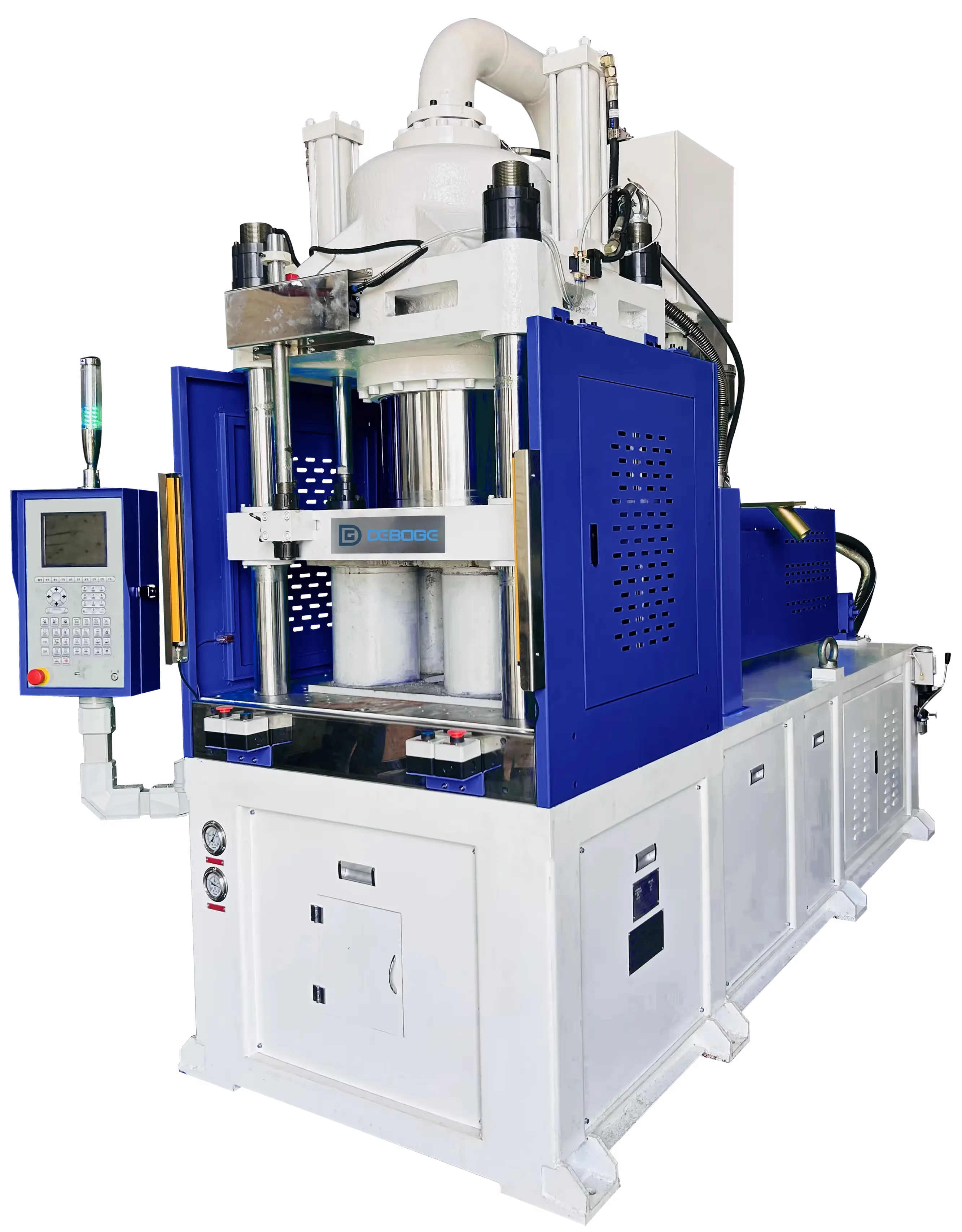
High Tonnage Vertical Molding Machines
High-tonnage vertical molding machines are reviewed when part size, insert weight, projected area, or mold structure pushes the clamp-force requirement beyond smaller platforms.
DA and DK provide different paths into higher clamp force; the right direction depends on injection orientation, mold access, shot requirement, and production workflow.
Production Requirement
When your part outgrows standard clamp force
Clamp force is what keeps the mold closed against the pressure of injected material. When your part has a large projected area, thick walls, or embedded metal inserts, the injection pressure trying to push the mold open increases - and so must the clamp force resisting it.
High-tonnage vertical machines start at approximately 120T and scale to 1,000T. This range covers automotive interior and under-hood components, large metal-insert overmolded parts, multi-cavity industrial tooling, and structural components where lower-tonnage machines cannot maintain mold closure during injection and holding.
- Up to 1,000T clamp force DK Series reaches 1,000T - the highest tonnage in this vertical lineup
- Two injection directions Vertical (DA) or horizontal (DK) - choose based on mold gating and shot size requirements
- Multiple table configurations Fixed platen, double slide, and rotary tables available at high tonnages
- Engineering material capability Larger barrels and higher plasticizing rates handle glass-filled and high-viscosity resins
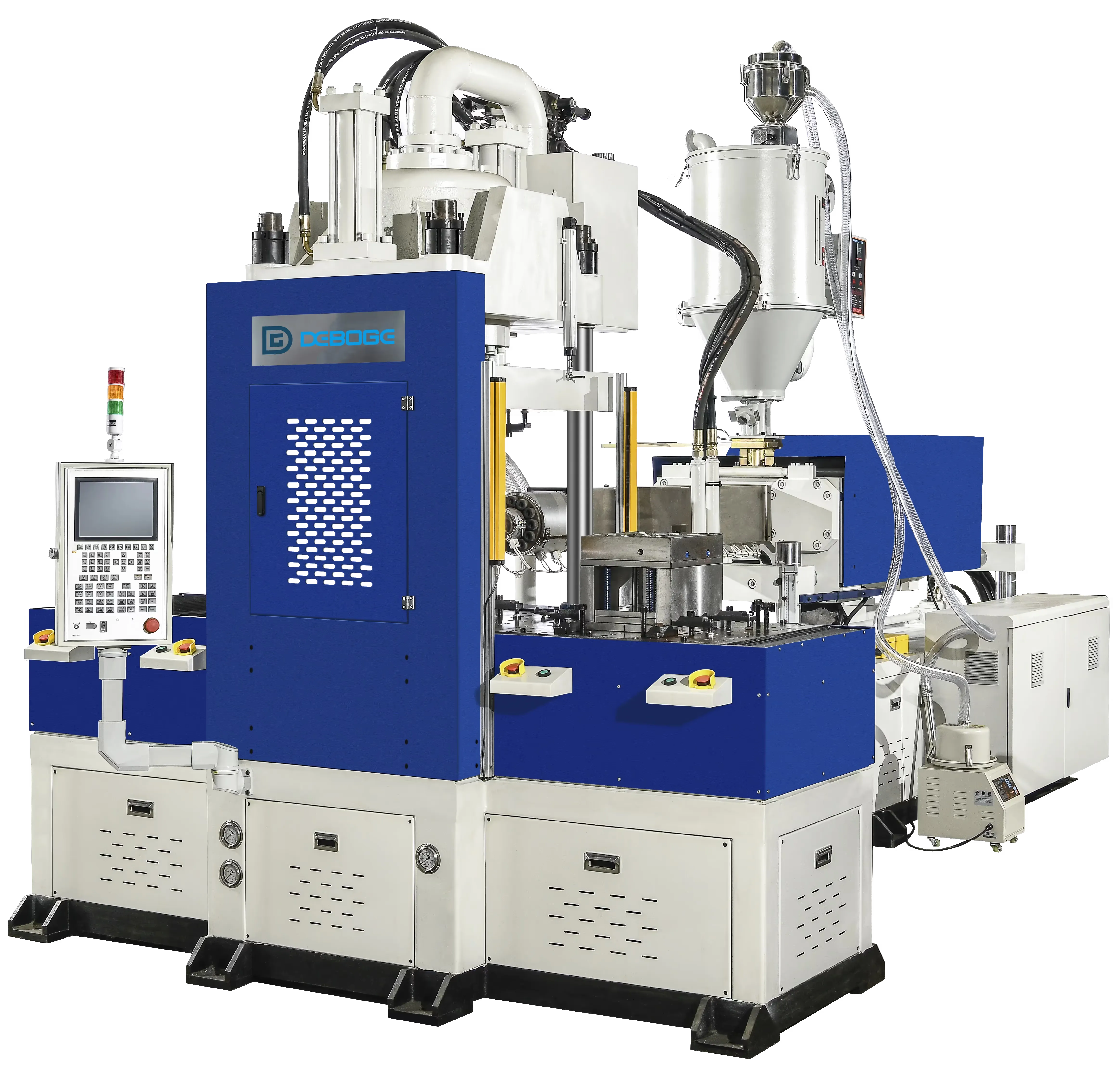
When Tonnage Matters
Three production scenarios that push clamp force requirements higher
Not every part needs high tonnage. But when your production involves any of these scenarios, the required clamp-force requirement often moves beyond smaller machine ranges, so the project should be reviewed against DA and DK high-tonnage configurations.
- Large Metal Inserts
- Heavy or oversized metal inserts require higher clamp force to keep the mold closed against injection pressure. The added mass of metal inserts increases the projected area and the force needed to prevent flash.
- Thick-Walled Parts
- Parts with thicker cross-sections need longer hold pressure and higher clamp force to compensate for material shrinkage during cooling. Higher tonnage maintains mold closure for the full holding phase.
- Multi-Cavity Molds
- Running multiple cavities increases the total projected area. Even when each part is modest in size, the combined cavity layout can move the project into a higher clamp-force discussion.
How clamp force is determined
- - Projected area: The surface area of your part and runner system as seen from the clamping direction is one of the main inputs for clamp-force review. Larger projected area usually pushes the project toward a higher-tonnage machine.
- - Material factor: Engineering plastics such as glass-filled PA, PBT, and PPS, as well as thermoset compounds such as BMC and phenolic, can require higher injection pressure than general-purpose materials. The material grade should be reviewed before selecting tonnage.
- - Metal insert effect: Inserts can increase effective projected area, change filling balance, and create uneven pressure distribution. Insert size, shape, and location should be included in the clamp-force review.
- - Selection allowance: The final model should leave practical room for material variation, process adjustment, and mold condition. The allowance depends on the reviewed part, material, and tooling data.
Compatible Series
DA and DK - two paths to higher tonnage
Both series reach well into the high-tonnage range. The choice between DA and DK comes down to injection direction, shot size requirements, and mold gating design. Each series page includes complete specification tables showing every model with its clamp force, screw options, shot weight, and dimensions.
DA Series
Standard Vertical Injection - Upper Range
Up to 800T | Vertical injection
DA Series covers 15T to 800T, with high-tonnage models starting around 160T. Vertical clamping with vertical injection - the straightforward choice when your part requires higher clamp force but fits a standard vertical injection workflow.
View series specificationsDK Series
Vertical Clamping | Horizontal Injection - Full High-Tonnage Range
Up to 1,000T | Horizontal injection
DK Series covers 90T to 1,000T for high-tonnage projects. Vertical clamping keeps inserts gravity-seated; horizontal injection supports larger shot weights and higher plasticizing rates. The highest-tonnage DK models handle up to 1,000T clamp force in this vertical clamping lineup.
View series specificationsFull specification tables - including tie-bar spacing, mold height ranges, and injection performance curves - are available on each series page. For guidance on which series fits your specific application, contact us with your part drawings and material specifications.
Typical Applications
Where high tonnage makes the difference
High-tonnage vertical machines are commonly selected for applications where the molded part is large, contains heavy metal inserts, uses engineering-grade materials at high injection pressures, or runs in multi-cavity tooling. The applications below are typical starting points for high-tonnage discussions.
Determining Your Tonnage
Is your application in the high-tonnage range?
If you are unsure whether your part requires high-tonnage equipment, these questions will help you and the engineering team evaluate the requirement. Answering "yes" to two or more suggests a high-tonnage evaluation is warranted.
Your part may need high tonnage if:
- - The projected area of your part, runner system, or metal insert is large for the mold layout
- - You are molding glass-filled, carbon-filled, or high-viscosity engineering resins
- - Your mold has multiple cavities and a combined projected area in the high range
- - Your part has thick wall sections requiring extended hold pressure under clamp
- - Metal inserts make up a significant portion of the molded part's total projected area
- - You have experienced flash or mold separation on lower-tonnage machines with this part
Next step: send your part data
Clamp-force review is much more reliable when the project data is clear. Send your part drawings with dimensions, material specification, mold layout if available, and estimated production volume for review. The engineering team can review:
- 1. Review the clamp-force requirement based on part geometry, material, and mold layout
- 2. Discuss a suitable model and table configuration from the DA or DK Series
- 3. Provide a specification sheet with the reviewed machine's full technical parameters
Related Machine Information
Frequently Asked Questions About High Tonnage Machines
What qualifies as "high tonnage" in vertical injection molding?
How do I know if my application requires high tonnage?
Which series should I choose for high-tonnage applications - DA or DK?
What table configurations are available for high-tonnage machines?
Does higher tonnage mean a larger machine footprint?
Not sure what tonnage your application requires?
Send your part drawings, material specifications, and mold details so the engineering team can review the clamp-force requirement and discuss a suitable high-tonnage machine direction for your production.