
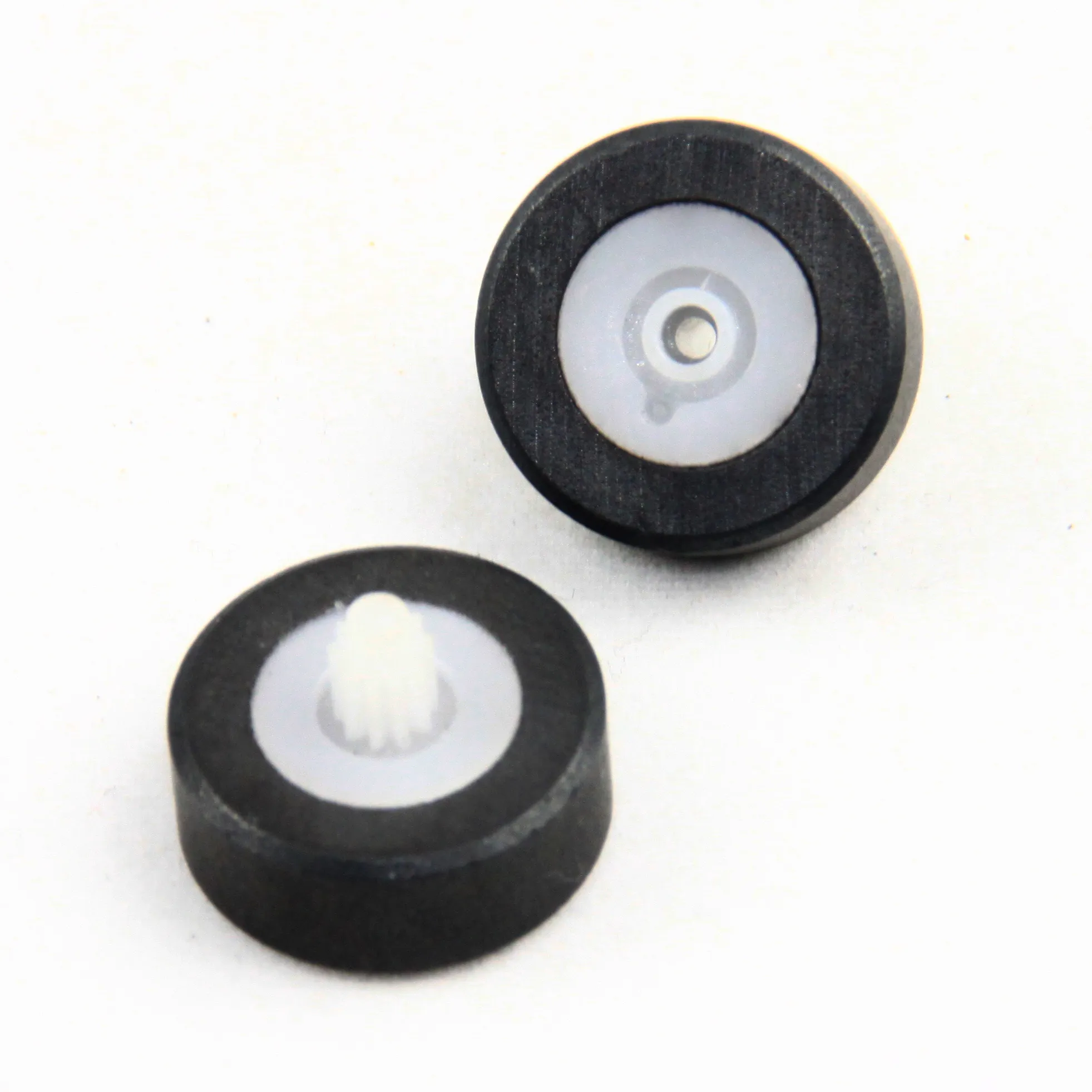
Overmolding
A second material is molded over a pre-formed substrate - often a soft-touch grip over a rigid core, or a plastic seal around a metal insert. Vertical clamping holds the substrate in position by gravity during the overmolding cycle.
DA and DC Series vertical machines can be reviewed for overmolding. Rotary table configuration is commonly considered when multi-station loading improves the production workflow.
Application Overview
What is overmolding and why use a vertical machine?
The process
A pre-formed substrate is placed into the lower mold. The vertical clamp closes, and a second material is injected over or around the substrate, bonding to it during cooling. The finished two-material part is then ejected.
This creates multi-material components without secondary assembly: soft-touch grips on rigid handles, seals around connectors, or protective jackets over cables - all in a single molding cycle.
Why vertical clamping matters for overmolding
The substrate must stay precisely positioned while the mold closes around it. In a horizontal machine, gravity works against retention - the substrate can shift. A vertical clamp closes from above, holding the substrate in place. This matters for:
- Soft-grip handles where TPE must bond evenly around a rigid core
- Cable and connector overmolding where precise seal geometry is critical
- Metal-to-plastic overmolding where the insert must not move during clamping
- Applications where the operator manually loads substrates and needs accessible mold area
Common Challenges
Production challenges in overmolding
Substrate positioning, material bonding, and cycle efficiency determine part quality and production cost in overmolding.
Substrate displacement during clamping
If the substrate shifts, material flows into wrong areas or leaves gaps. Vertical clamping uses gravity for retention. Rotary tables let the operator confirm substrate position at a dedicated loading station before the mold closes.
Material bonding quality
The overmold material must bond reliably to the substrate. Proper clamp force, injection temperature, and cooling time are critical; consistent injection pressure and temperature support repeatable bonding quality.
Cycle time efficiency with manual loading
Substrate loading can dominate cycle time if the mold area is cramped or loading motions are awkward. Rotary tables overlap loading with molding. Tie-bar-less DC Series removes front tie-bars for open access. The right configuration improves throughput significantly.
Configuration Review
Recommended machine configuration for overmolding
Starting points - final selection depends on substrate dimensions, material pair, mold design, and production volume.
Machine series
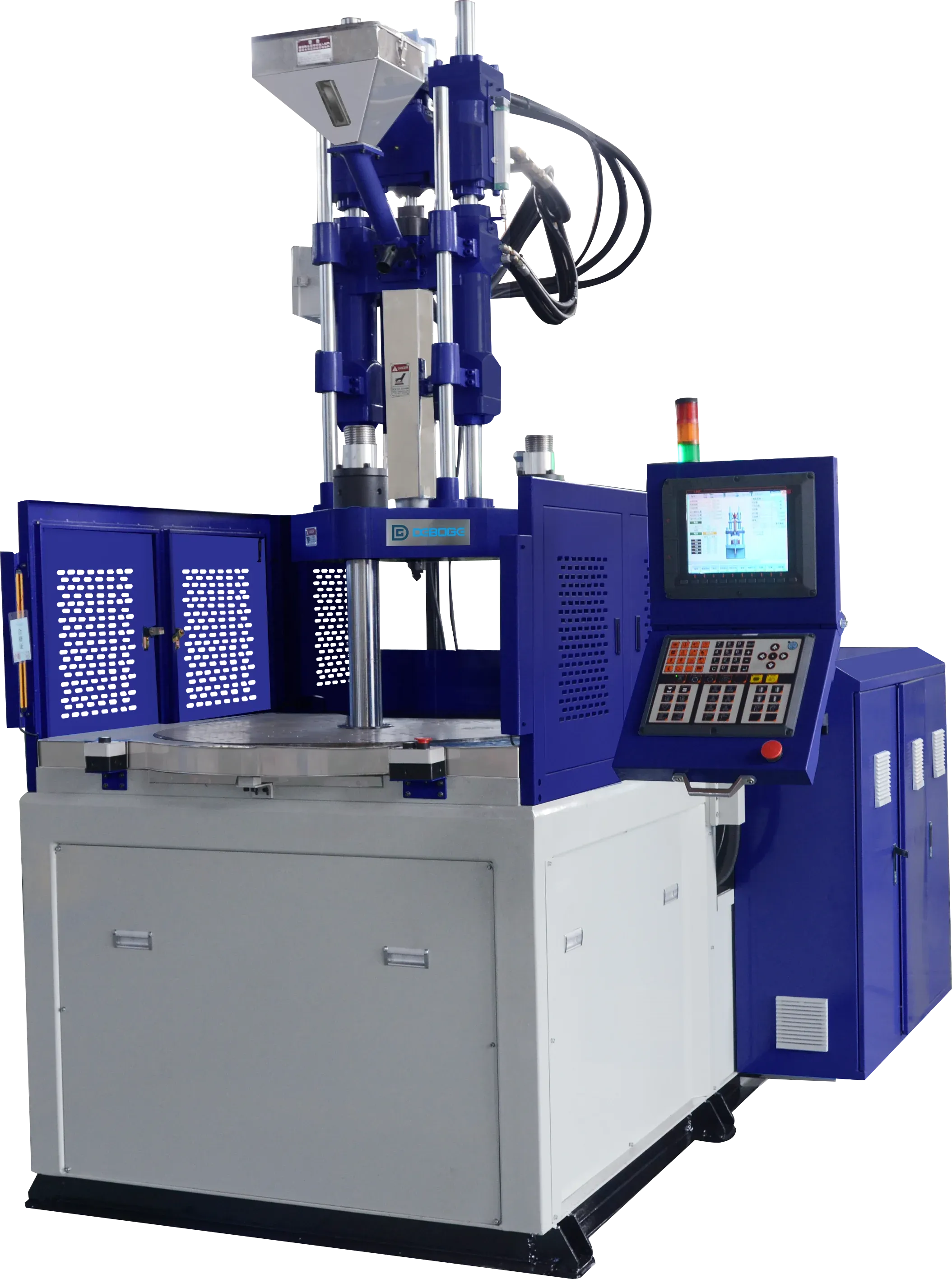
DA Series
Standard vertical clamping + vertical injection. Broad coverage - from small grips to large overmolded assemblies. Fixed, slide, or rotary table. 15T-800T.
View DA Series →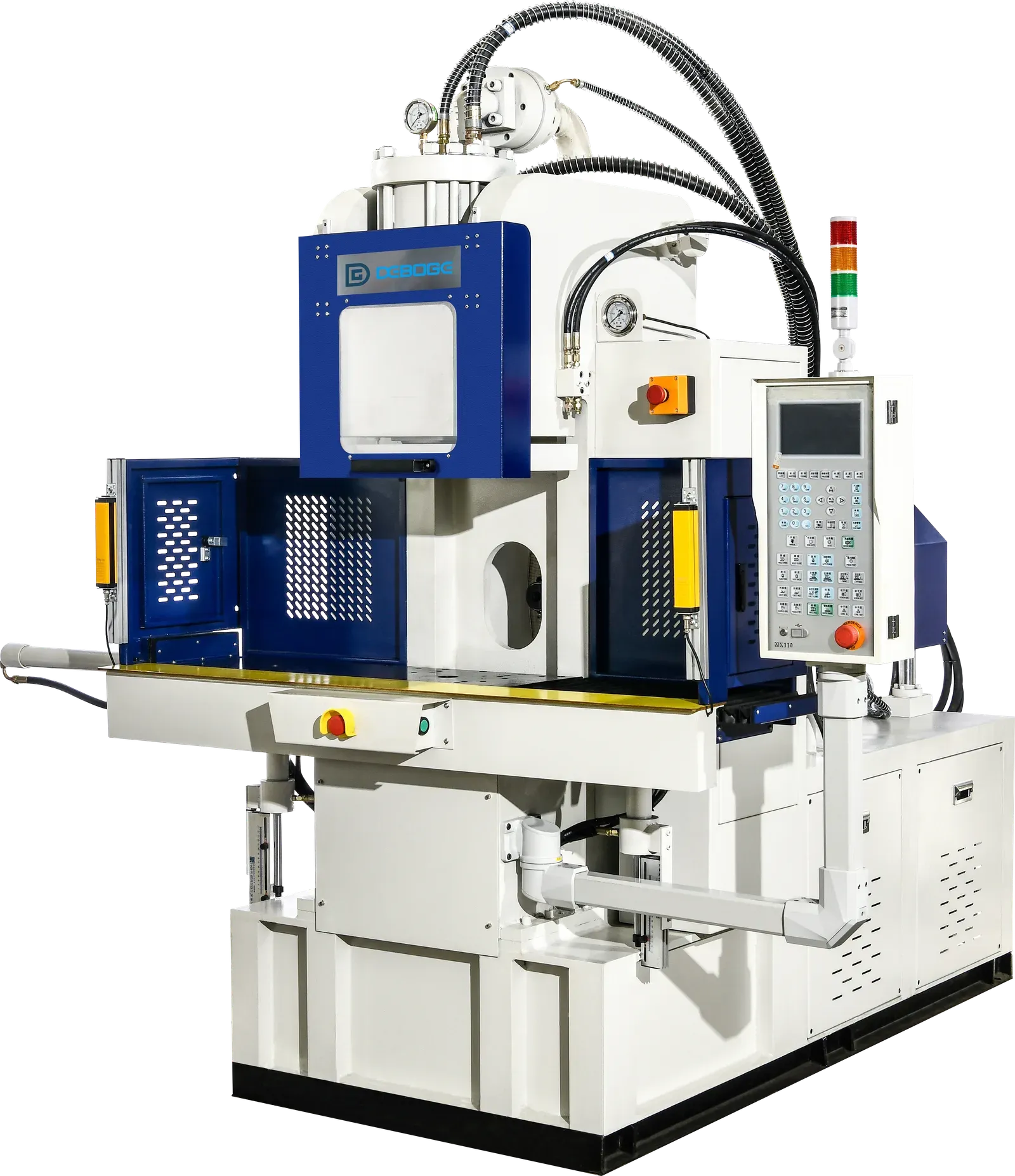
Machine series
DC Series
Tie-bar-less vertical clamping. No front tie-bars - open access for manual substrate loading. 45T-120T.
View DC Series →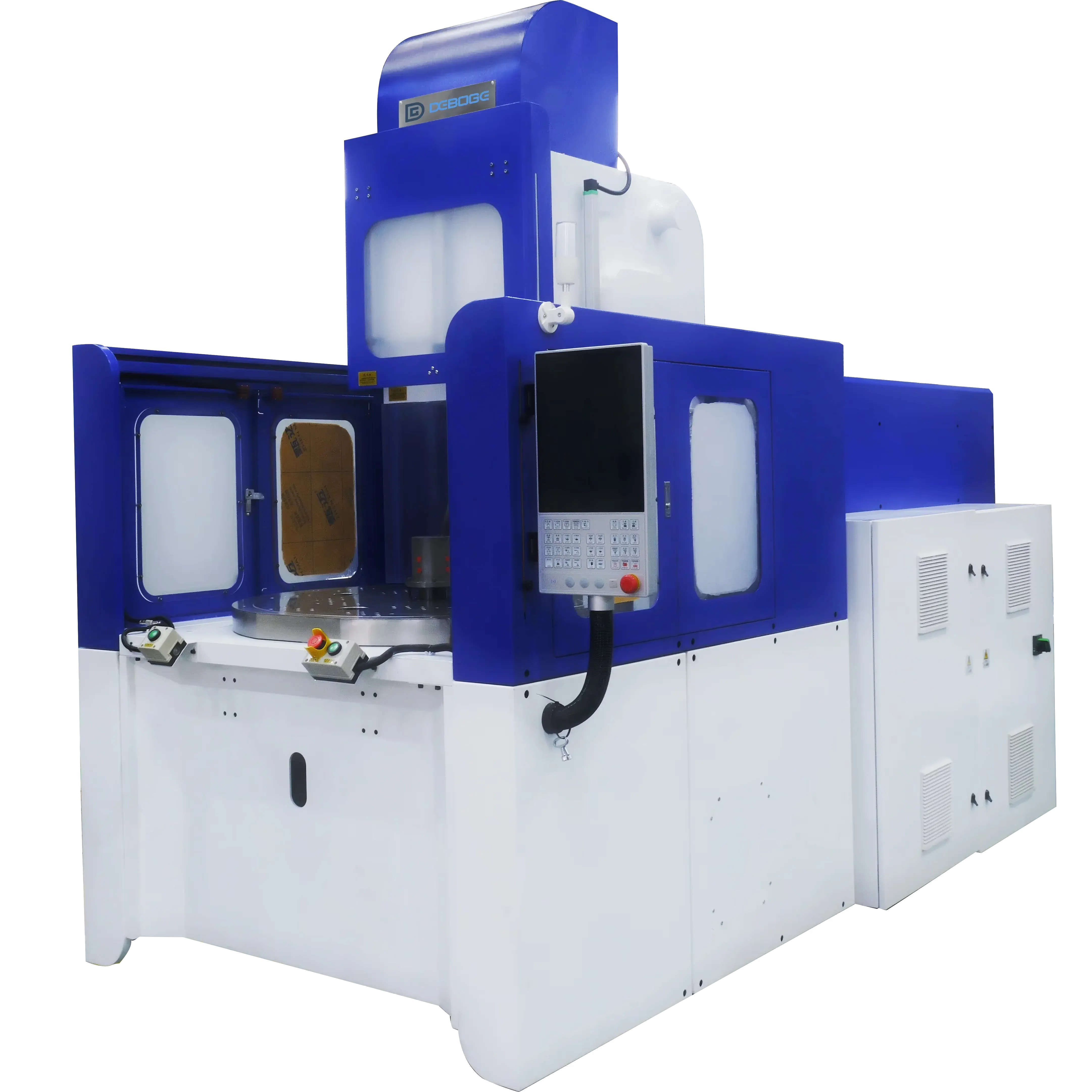
Table configuration
Rotary table
Multi-station rotating table. Load substrates at one station, mold at another - operator time overlaps cycle time. Suits medium-to-high-volume overmolding.
View Rotary Table Machines →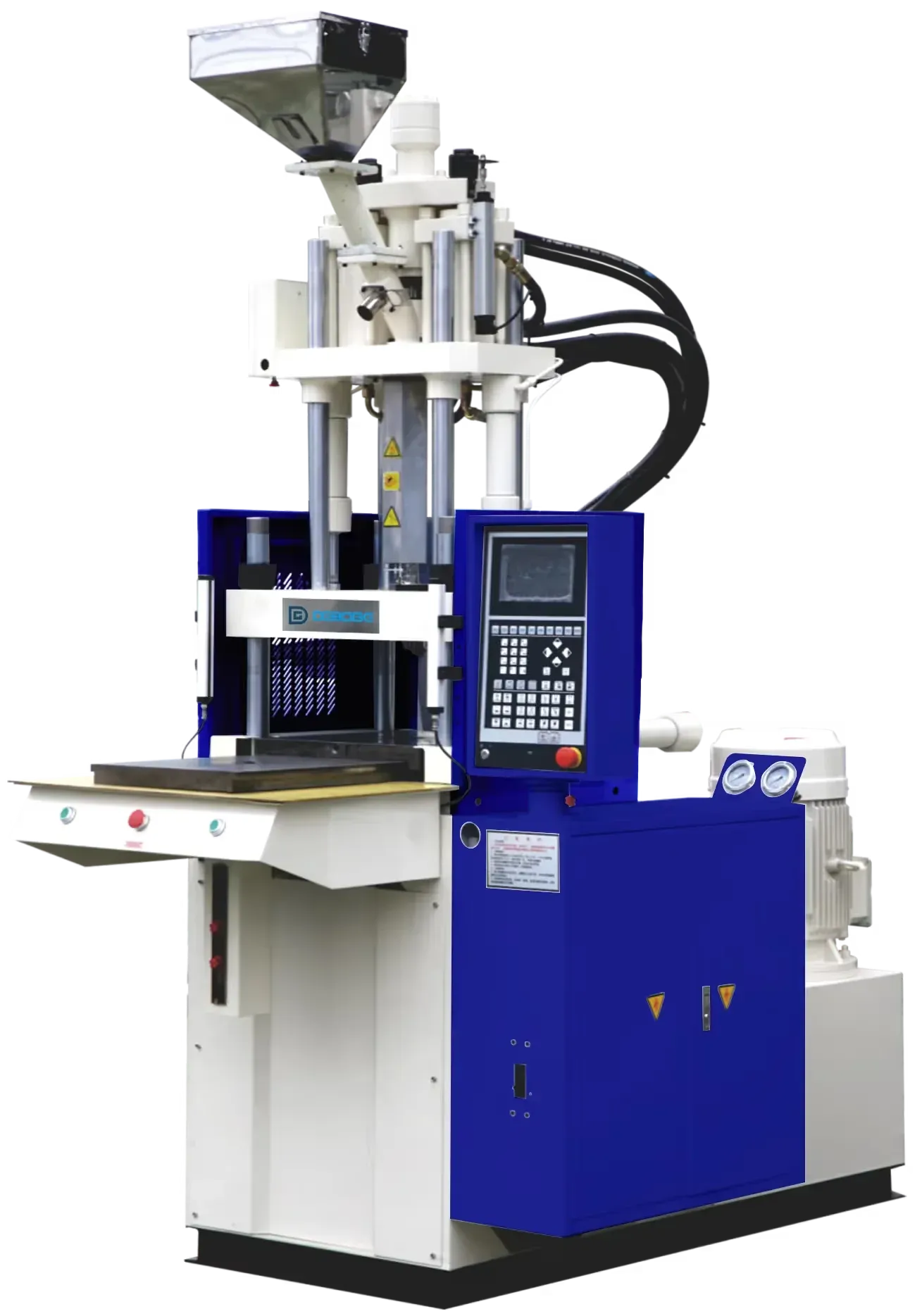
Table configuration
Slide table
Lower mold slides out for accessible substrate loading. Single or double slide. Suits larger overmolded parts needing careful substrate placement.
View Slide Table Machines →Machine size must be confirmed from project data - Review projected mold area, cavity count, material behavior, substrate size, and mold structure before selecting tonnage.
Materials
Typical materials for overmolding
Material pair compatibility is critical - the overmold material must bond to the substrate. Selection depends on end-use environment, mechanical requirements, and processing temperature.
TPE (Thermoplastic Elastomer)
Common for soft-touch grips, seals, and flexible sections. Bonds well to PP, PE, and ABS substrates. Wide hardness range for different tactile requirements.
TPU (Thermoplastic Polyurethane)
Higher abrasion resistance than TPE. Common for cable jackets, protective covers, and industrial grips. Good bonding to PC, ABS, and nylon substrates.
PP (Polypropylene)
Used as both substrate and overmold material. Good chemical resistance. Common for appliance components and general industrial parts. Cost-effective for high-volume production.
PA66 (Nylon)
Structural substrate material. Good mechanical strength and heat resistance. Often overmolded with TPE or TPU for grips and sealing surfaces on power tools and automotive parts.
PC+ABS
Common substrate for consumer electronics housings. Good impact resistance, surface finish, and dimensional stability. Compatible with TPE and TPU overmolding for seals and bumpers.
Silicone (LSR)
May be reviewed for flexible seals, healthcare-related grips, or kitchen and container parts where silicone behavior is required. Requires specialized LSR feeding and barrel design, plus material and compliance documentation review.
Products
Typical overmolded products
From consumer grips to industrial seals - these product categories represent common overmolding applications on Deboge vertical machines.
Soft-touch grips & handles
Rigid plastic or metal core with TPE/TPU overmold - tool handles, appliance grips, sports equipment.
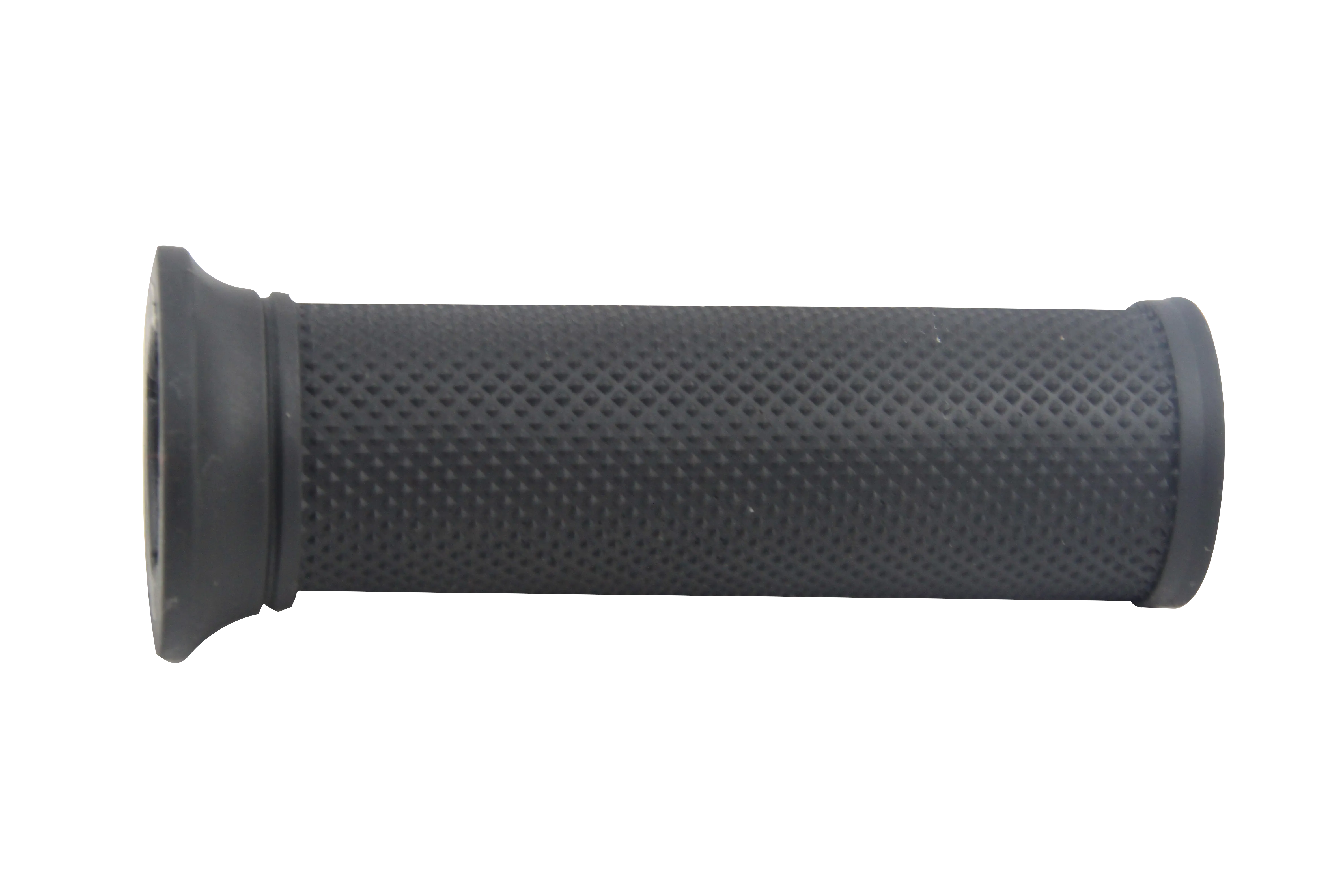
Handlebar & vehicle grips
Motorcycle and bicycle grips, steering wheel covers - multi-layer overmolding for comfort and durability.
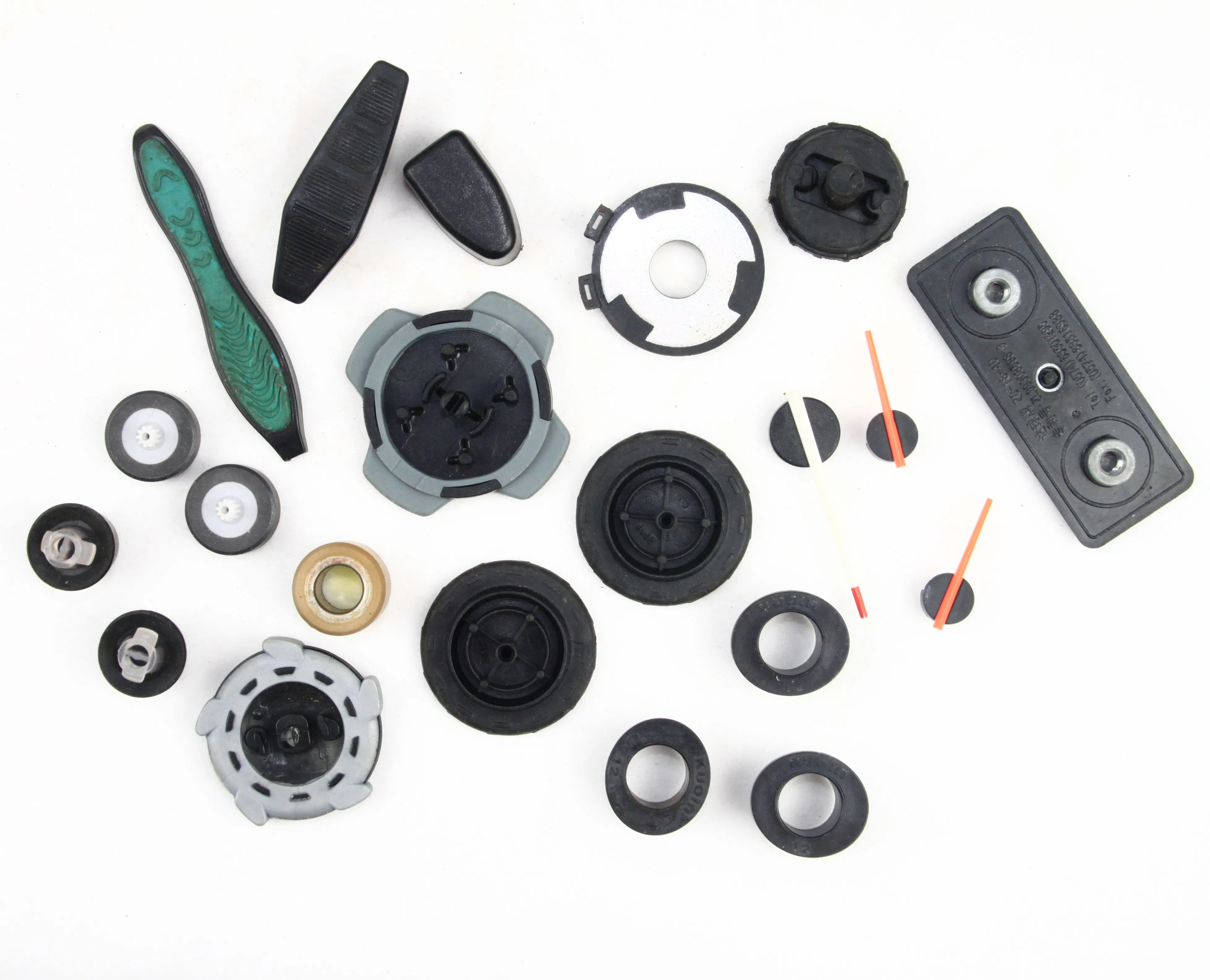
Cable assemblies & connectors
Cable strain reliefs, connector overmolds, wire harness junctions with protective TPU or PVC jackets.
Seals & protective covers
Gaskets, dust seals, connector boots, and protective housings with integrated sealing elements.
Related Machines and Resources
FAQ
Overmolding - frequently asked questions
What is overmolding and how does a vertical machine help?
Which table configuration is recommended for overmolding?
How should machine size be reviewed for overmolding?
Which machine series is commonly reviewed for overmolding?
What materials are commonly used in overmolding?
Can a machine be customized for a specific overmolding application?
How do I discuss machine configuration for overmolding?
Tell us about your overmolding application
Discuss machine configuration for your overmolding project
Send your product details, substrate and overmold materials, mold dimensions, and production target. The engineering team can review the project data and discuss machine series, table configuration, and machine-size direction.