
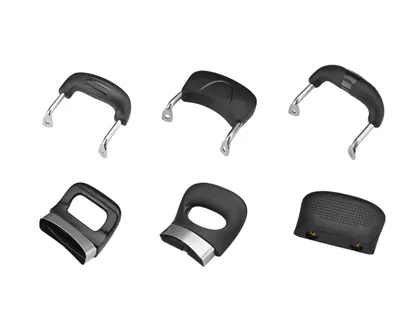
Thermoset / BMC Molding
Thermoset materials - BMC, Bakelite, melamine - cure irreversibly in a heated mold rather than simply cooling. This requires precise clamp force, consistent mold temperature, and specialized barrel and screw design for processing fiber-filled thermoset compounds.
DA and DK Series vertical machines can be reviewed for thermoset projects. Fixed platen or slide table configuration depends on part geometry, mold design, material type, and removal workflow.
Application Overview
What is thermoset molding and why use a vertical machine?
The process
Thermoset material - in pellet, granular, or BMC rope form - is fed into a heated barrel. The material softens and is injected into a heated mold where it undergoes an irreversible chemical cure (crosslinking). Once cured, the part is ejected - it cannot be re-melted.
Thermoset materials are selected when heat resistance, electrical insulation, or dimensional stability at temperature is required beyond standard thermoplastic behavior.
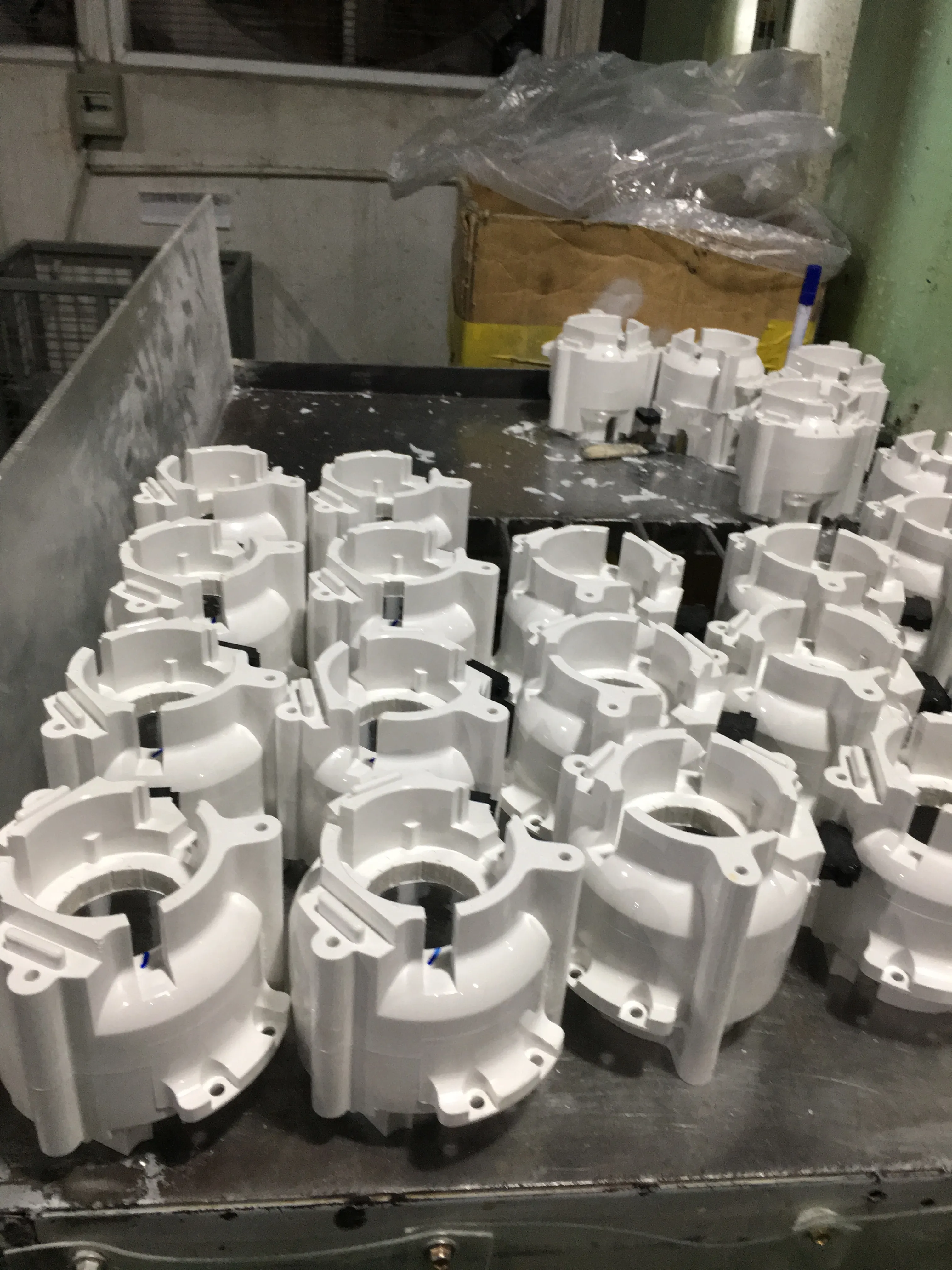
Why vertical clamping matters for thermoset processing
Thermoset molding requires stable, consistent mold closing throughout the curing cycle. A vertical clamp provides even pressure distribution, which matters for:
- Preventing flash during BMC processing where low-viscosity resin can leak from the mold
- Maintaining consistent mold temperature across the parting line during the cure cycle
- Insert molding with thermoset materials - metal inserts stay positioned by gravity
- Accessible mold area for operator removal of cured parts and cleaning of mold surfaces
Common Challenges
Production challenges in thermoset molding
Thermoset processing differs fundamentally from thermoplastics - material handling, cure control, and mold maintenance are distinct challenges.
Material handling and feed consistency
BMC is sticky, fiber-filled, and requires proper feeding. Bakelite pellets need consistent dosing. Barrel and screw specifications should be reviewed for the thermoset material - critical for shot-to-shot consistency and preventing material degradation in the barrel.
Mold temperature and cure cycle control
Thermoset molds need controlled and repeatable curing temperature throughout the cycle. Temperature variation can lead to incomplete cure, material degradation, flash, or dimensional variation, so clamp, heating, and cure time must be reviewed together.
Mold maintenance and material buildup
Thermoset materials can leave residue on mold surfaces over time. Slide tables improve access for regular mold cleaning. Deboge vertical machines with accessible mold areas help operators maintain mold condition without complex disassembly between runs.
Configuration Review
Recommended machine configuration for thermoset molding
Starting points - final selection depends on material type, part geometry, mold design, and production volume. Thermoset barrel and screw must be specified for the material.
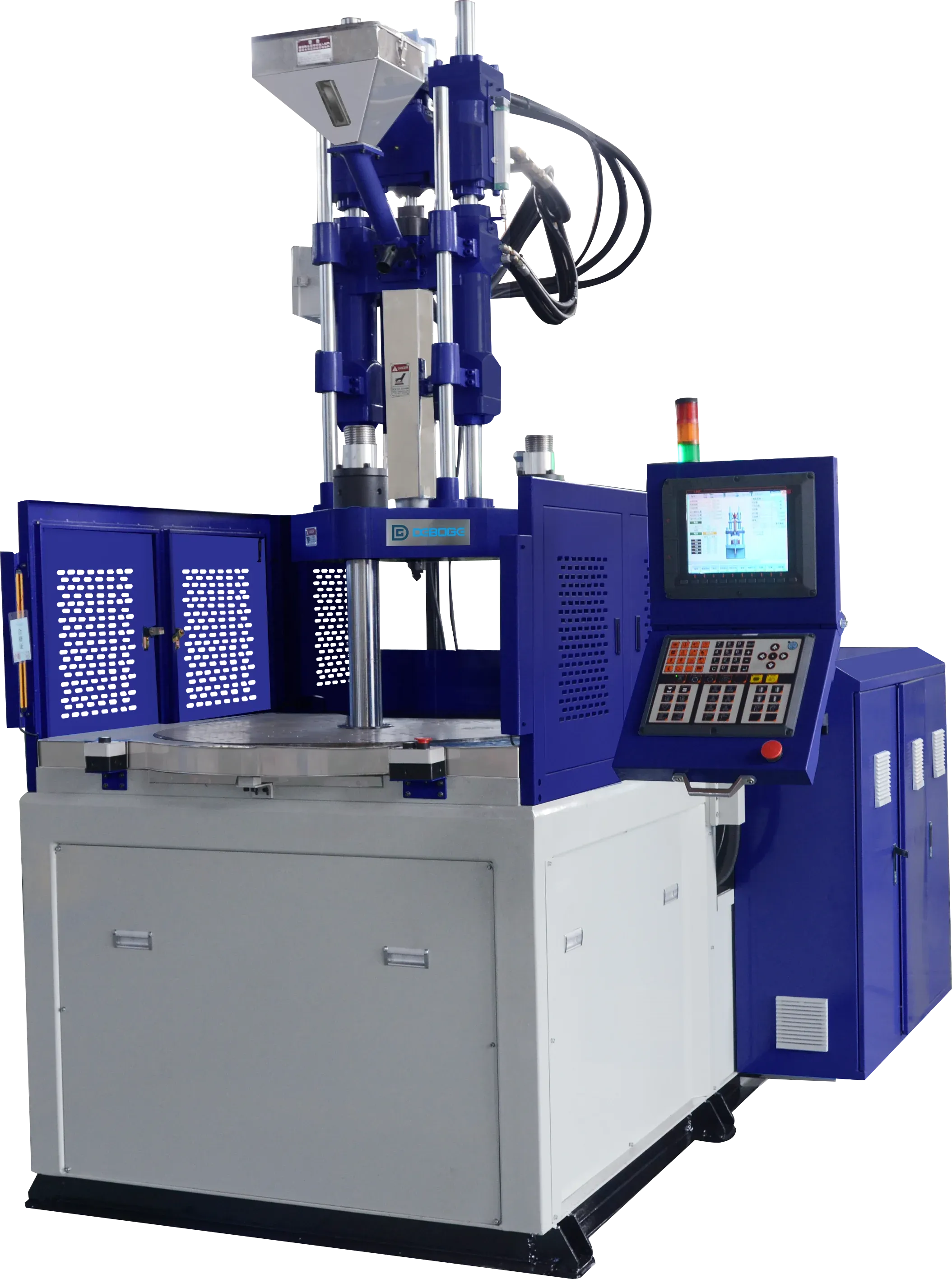
Machine series
DA Series
Standard vertical clamping + vertical injection. Commonly configured for BMC, Bakelite, and melamine processing. Fixed or slide table. 15T-800T.
View DA Series →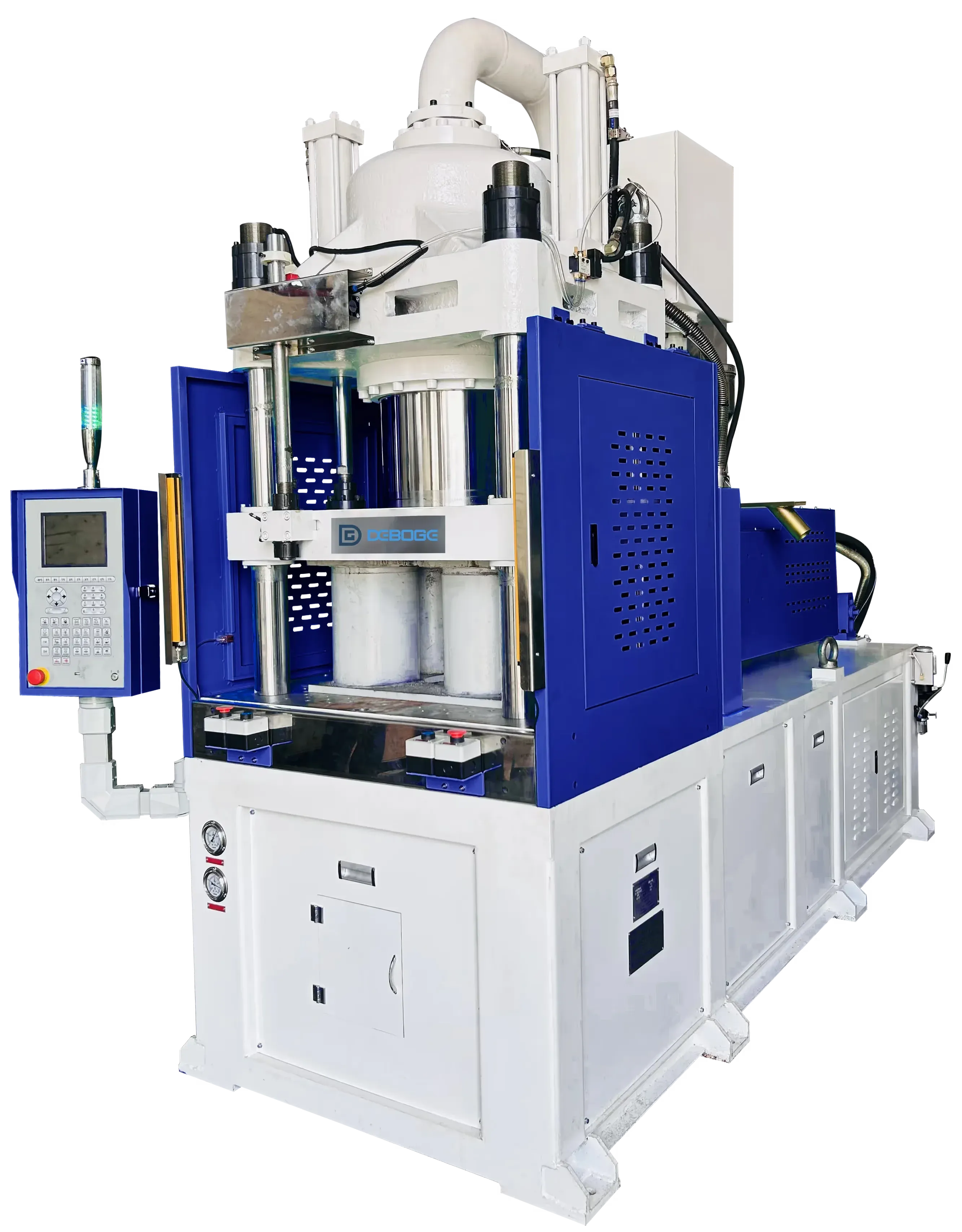
Machine series
DK Series
Vertical clamping + horizontal injection. May be considered for larger thermoset parts depending on mold design and material requirements.
View DK Series →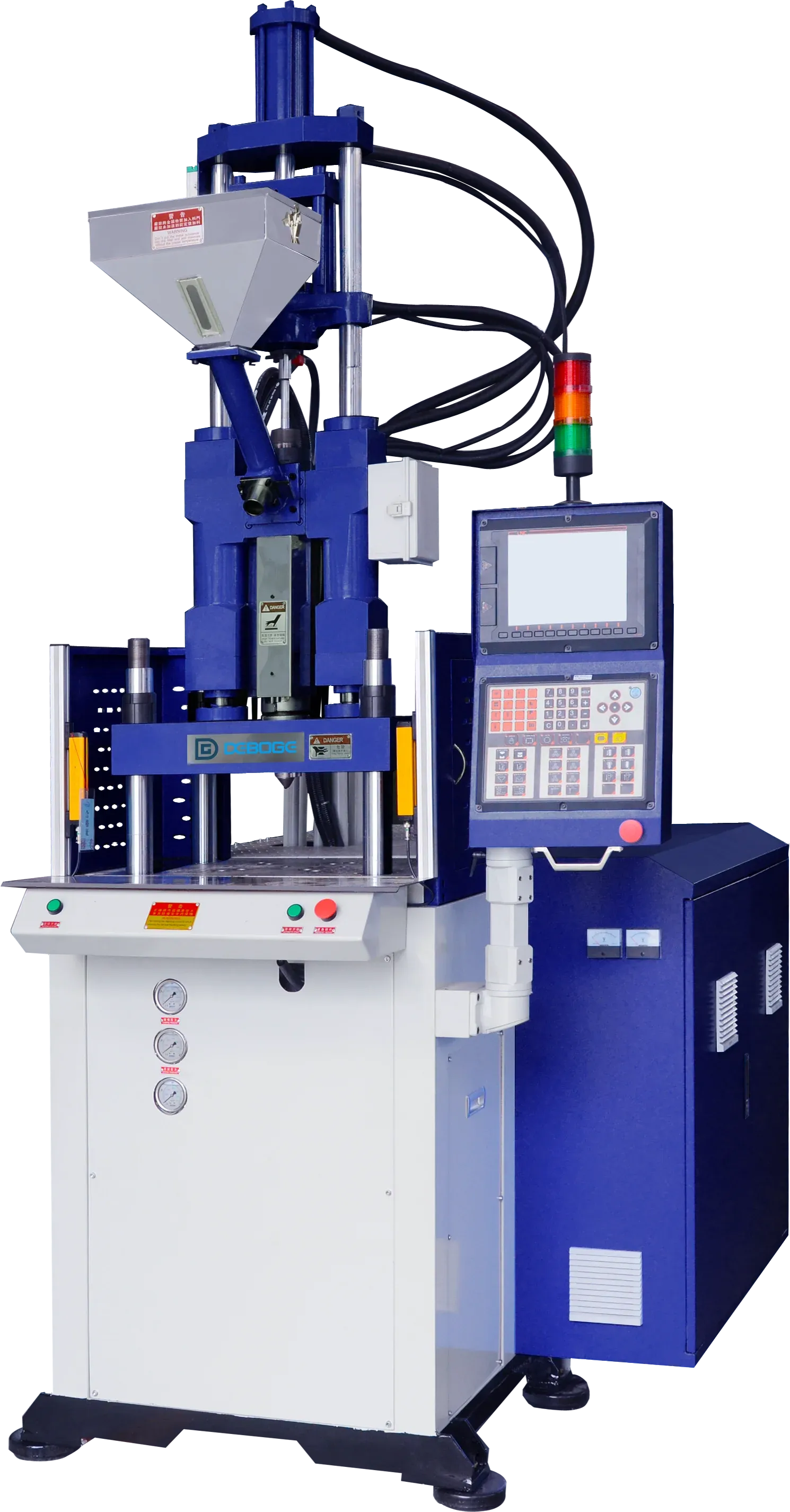
Table configuration
Fixed platen
Rigid, simple configuration. Suitable for straightforward thermoset parts where part removal and mold cleaning are manageable without table movement.
View Fixed Platen Machines →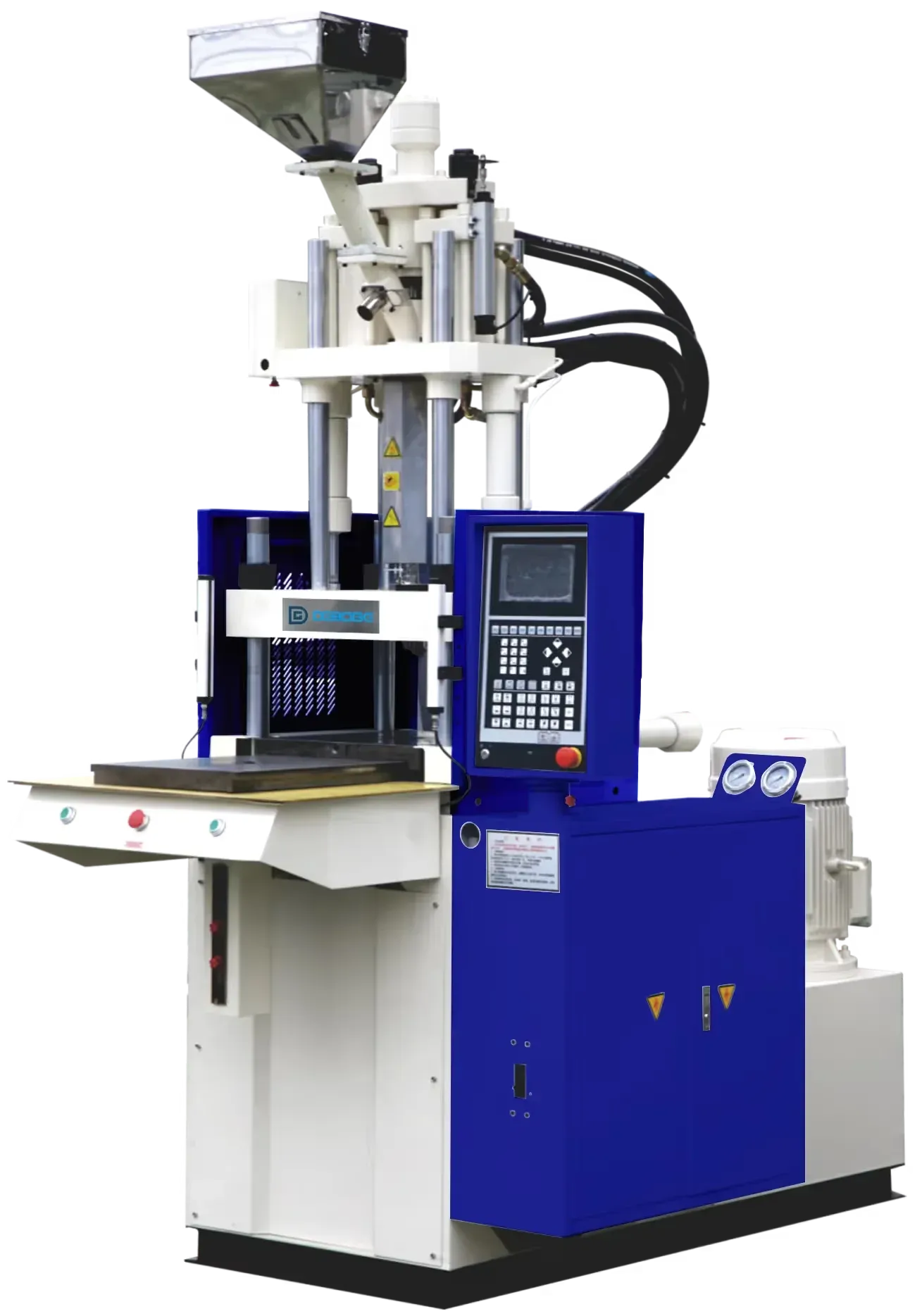
Table configuration
Slide table
Lower mold slides out for accessible part removal and mold cleaning. Commonly preferred for cookware handles and electrical parts with inserts.
View Slide Table Machines →Machine size must be confirmed from project data - Review projected mold area, material flow characteristics, cavity count, and clamp force required during the cure cycle.
Materials
Typical thermoset materials
Each thermoset material has specific processing requirements - barrel temperature, screw design, mold temperature, and cure time. Material handling and storage also affect processing quality.
BMC (Bulk Molding Compound)
Glass-fiber-reinforced thermoset polyester. Common for electrical housings, automotive under-hood parts, and industrial components where heat resistance, insulation, and dimensional stability are part of the material requirement.
Bakelite / Phenolic
Traditional thermoset used for cookware handles, pot knobs, electrical switch components, and appliance parts where heat resistance and electrical insulation are important.
Melamine
Hard thermoset used for tableware, kitchen utensils, and decorative household products. For tableware or kitchen applications, material grade and market-specific compliance documentation must be confirmed.
Epoxy Molding Compounds
Thermoset compounds used for electronic encapsulation and semiconductor packaging. Adhesion, shrinkage, moisture behavior, temperature, and cure control should be reviewed with the material supplier data.
Urea-Formaldehyde
Cost-effective thermoset for electrical fittings, closures, and household items. Good surface hardness and colorability. Common in electrical accessories and decorative items.
DAP (Diallyl Phthalate)
Specialized thermoset used in demanding electrical connector and insulation applications. Arc resistance, dimensional stability, and processing requirements should be checked against the selected material grade.
Products
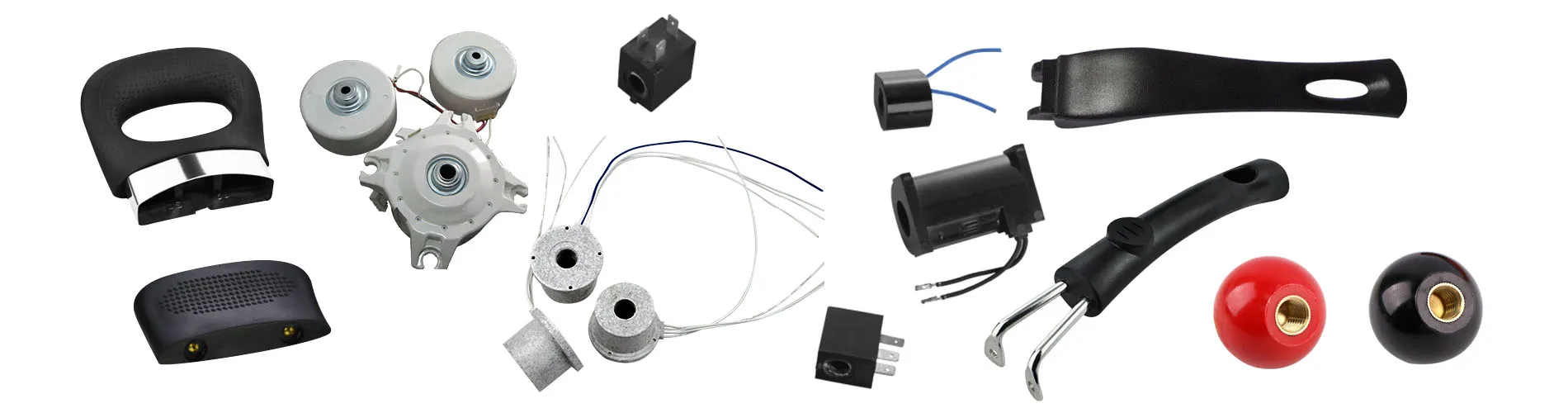
Typical thermoset molded products
Thermoset materials are chosen when heat resistance, electrical insulation, or dimensional stability at temperature is required beyond thermoplastic capability.
Cookware handles & knobs
Bakelite pot handles, pan knobs, and kitchen utensil grips - high heat resistance for direct stovetop and oven use.
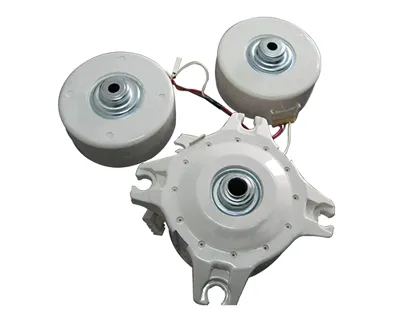
Electrical insulators & housings
BMC and phenolic electrical enclosures, terminal blocks, switchgear components requiring arc resistance and insulation.
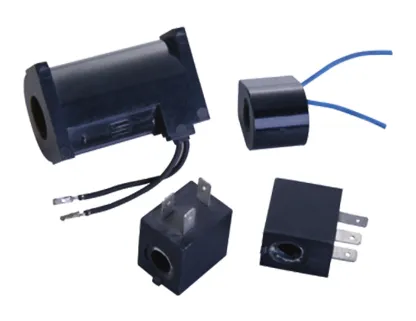
Industrial valve & pump components
BMC molded valve bodies, pump housings, and coil encapsulation - chemical and heat resistance for demanding environments.
Automotive under-hood parts
Thermoset components for high-temperature engine bay applications - connectors, sensor housings, and insulating parts.
Related Machines and Resources
FAQ
Thermoset / BMC molding - frequently asked questions
Why use a vertical injection molding machine for thermoset materials?
What is BMC and how is it different from standard thermoplastics?
Which table configuration is recommended for thermoset molding?
How should machine size be reviewed for thermoset and BMC molding?
Which machine series is commonly reviewed?
What materials can be reviewed for thermoset molding?
How do I discuss machine configuration for thermoset molding?
Tell us about your thermoset molding application
Discuss machine configuration for your thermoset molding project
Send your product details, thermoset material type, mold dimensions, and production target. The engineering team can review the machine configuration path, including barrel and screw review points.