
DC Series Tie-bar-less Vertical Clamping Machines machine image

DC Series Tie-bar-less Vertical Clamping Machines

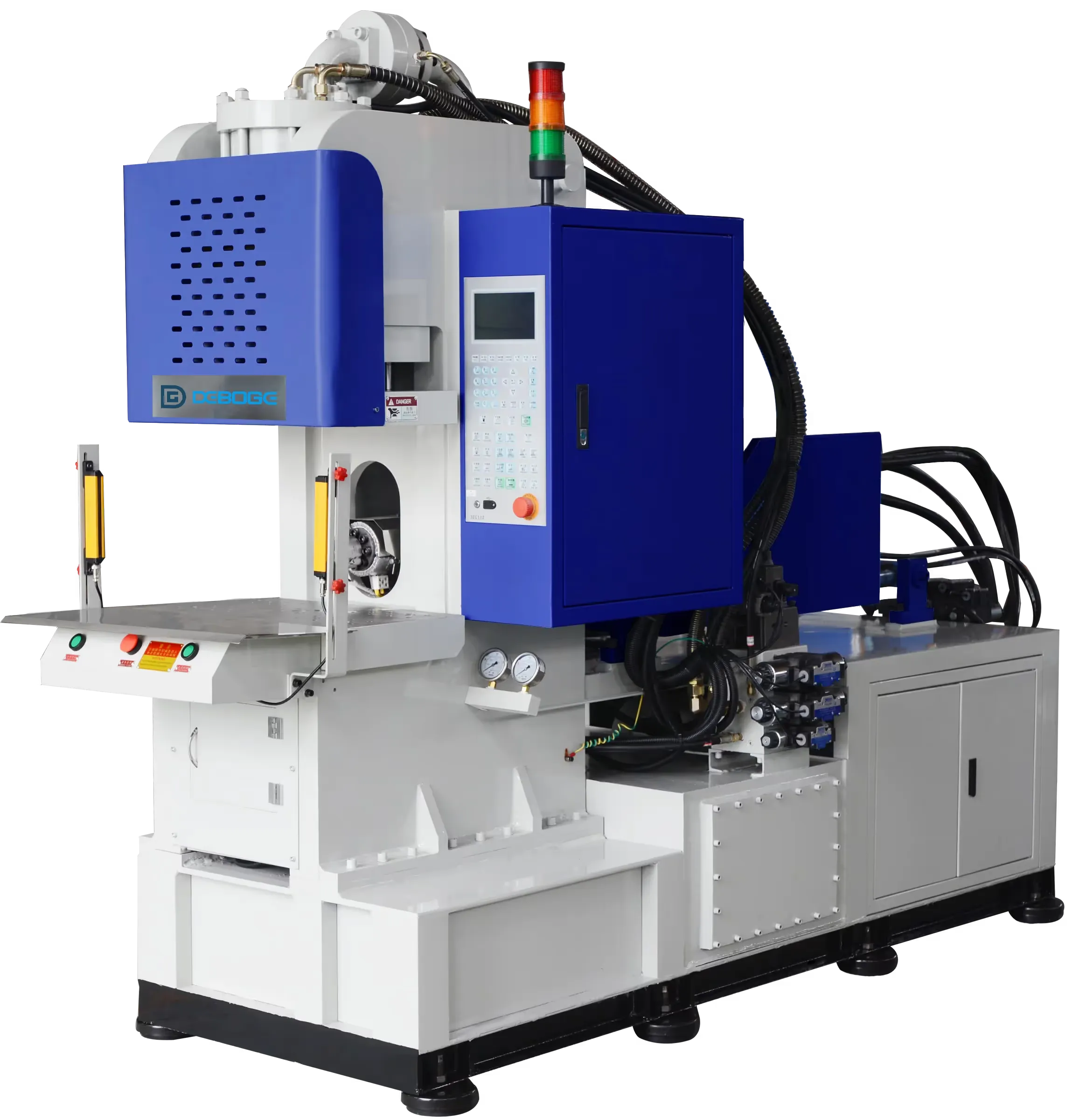
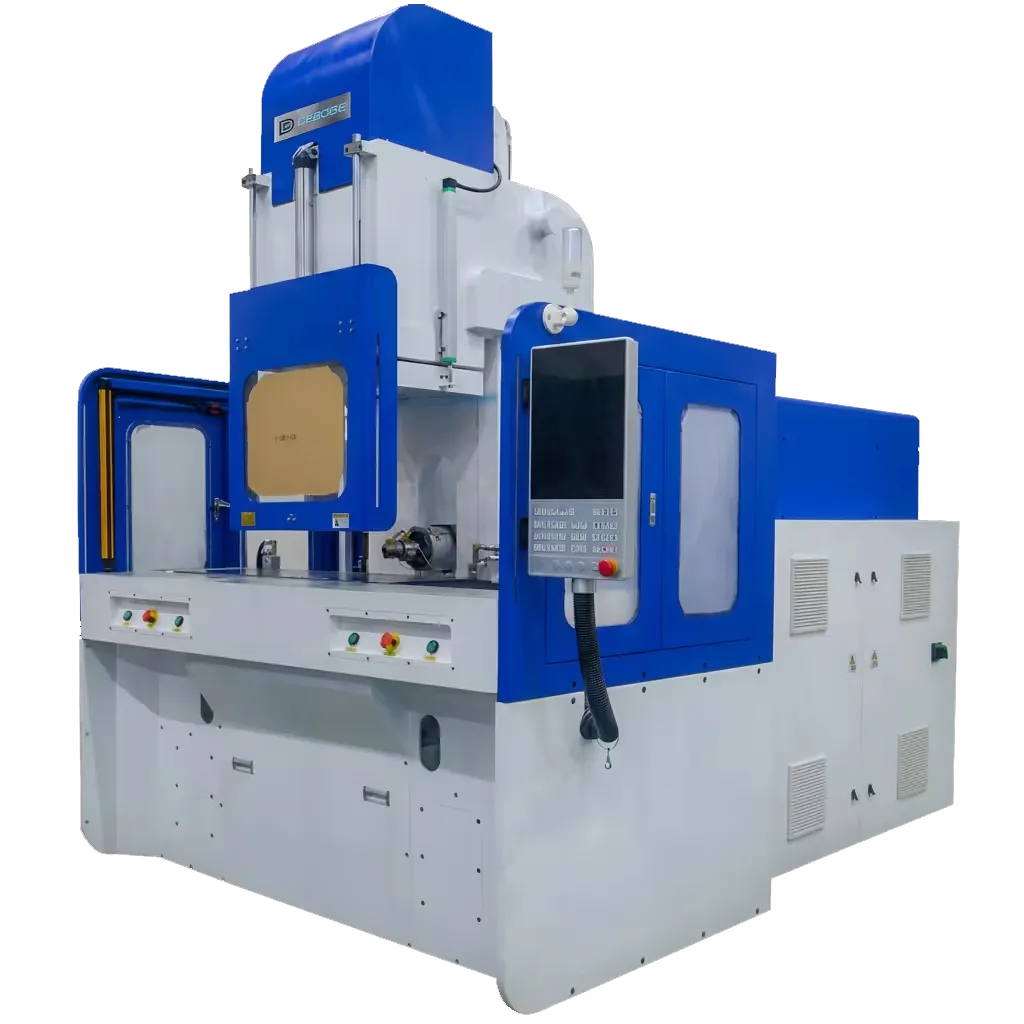
DC Series uses tie-bar-less vertical clamping to open the mold area for insert loading, cable routing, part handling, and faster access around the tool.

It is often reviewed when operator access matters as much as clamp force; the injection direction still depends on the selected configuration.

DC Series Platform

Open access. No tie-bars. Built for high-frequency insert molding.

DC Series removes the four tie-bars found on conventional vertical machines. The result is an open C-frame structure where operators can reach the mold from three sides - no columns to work around during insert placement, mold cleaning, or part removal. Covering 45T to 120T, DC is the go-to platform for connector, plug, and small precision insert molding.

  • Tie-bar-less design Unobstructed mold access from three sides - faster setups, easier loading
  • Compact footprint C-frame structure saves floor space - fits tighter production lines
  • Three table configurations Fixed platen, double slide, and rotary - all without tie-bars in the way
  • Larger mold capacity No tie-bar spacing constraints - molds can be wider than equivalent tie-bar machines
DC Series tie-bar-less vertical clamping machine with open front design

Key Structure

C-frame clamping - open on three sides, no tie-bars

Unlike conventional vertical machines that use four tie-bars to guide the clamping unit, DC Series uses a rigid C-frame structure. The clamp force is delivered through the frame itself, eliminating the need for corner columns. This opens the front and sides of the mold area, giving operators and automation equipment direct access to the mold without threading between tie-bars.

Clamping
C-frame vertical clamping - no tie-bars, open front and sides
Injection
Flexible injection orientation - vertical or horizontal, depending on configuration
Tonnage
45T-120T across 11 models - optimized for small-to-medium insert work

Why tie-bar-less matters

  • - Faster mold changes: No tie-bars to navigate around - molds lift out and drop in from above or from the front without obstruction.
  • - Easier insert loading: Operators can reach the mold from three sides. Multiple operators can load inserts simultaneously on multi-cavity molds.
  • - Larger mold envelope: Without tie-bars limiting the space between columns, wider molds can fit within the same machine footprint - useful for multi-cavity connector tooling.
  • - Automation-friendly: The open front and sides make it easier to integrate pick-and-place robots, conveyor belts, and vision inspection systems directly at the mold.

Configurations & Models

11 Models | 3 Table Types

Choose your table configuration,
then find the right model.

Each configuration is designed around how inserts are loaded and how loading interacts with the molding cycle - all without tie-bars obstructing the work area. Scroll through to compare. Full 25-parameter data sheets are available on request.
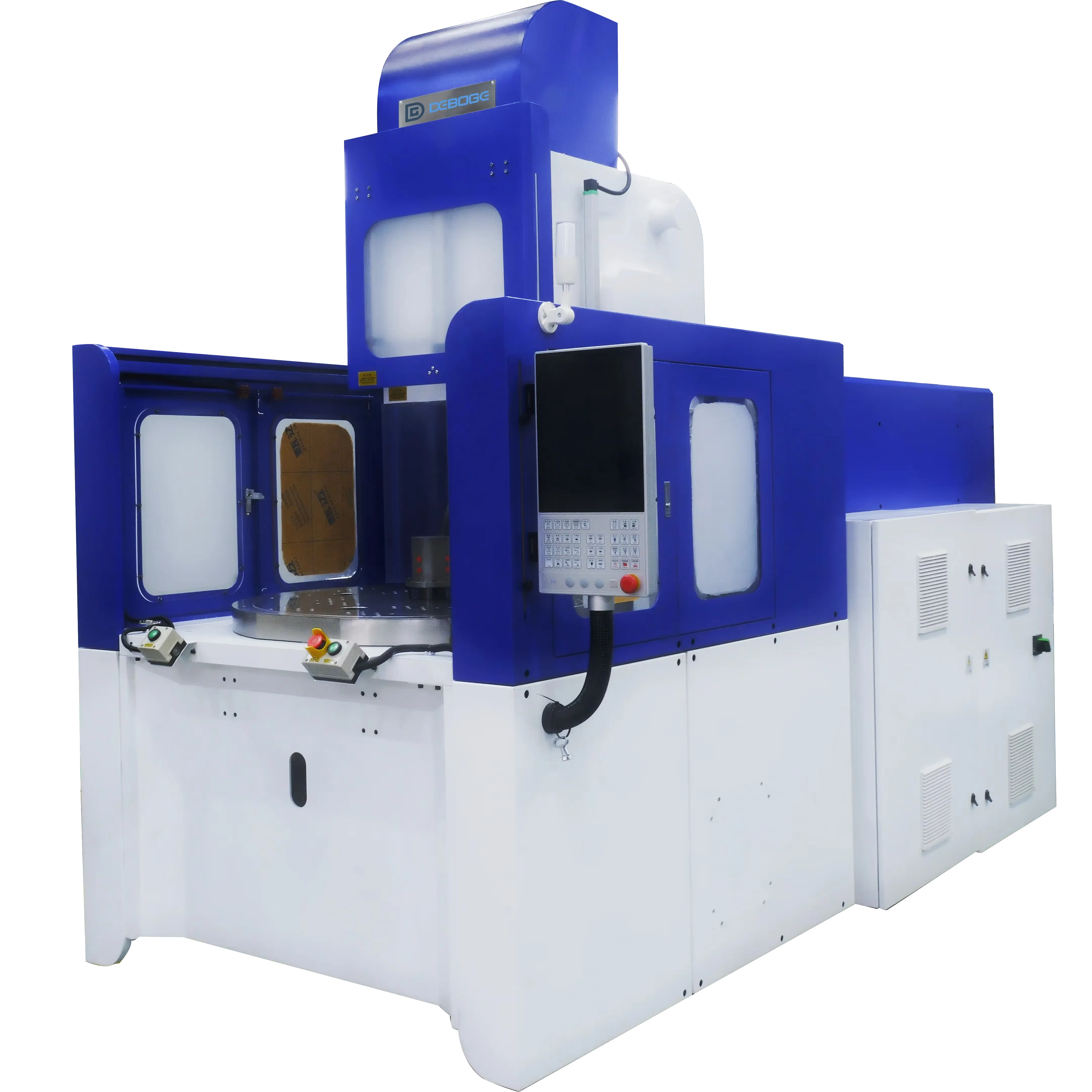
DC Series tie-bar-less fixed platen vertical clamping machine

Table Configuration

Standard - Fixed Platen (Tie-bar-less)

4 models | DC-450 - DC-1200

The lower platen stays fixed with one mold position. What sets DC apart: no tie-bars. The open-front design gives operators unrestricted access to the mold area - no columns to work around during insert placement or part removal. Often reviewed for straightforward production of connectors, plugs, and small precision parts.

DC Series tie-bar-less double slide table vertical clamping machine

Table Configuration

Double Slide Table

4 models | DC-450DS - DC-1200DS

Two alternating lower platens with the same tie-bar-less open structure. While one mold is under vertical clamp for injection, the other is outside for part removal and insert loading. The absence of tie-bars makes slide movement easier and gives operators clear sight lines across both stations.

DC Series tie-bar-less rotary table vertical clamping machine

Table Configuration

Rotary Table

3 models | DC-450R - DC-1200R

A rotating multi-station table inside a tie-bar-less frame. Operators load inserts at one station while molding runs at another - without tie-bars blocking access to any station. Commonly selected for high-cycle insert molding of connectors, plugs, and small precision components.

DC Series Model Specifications

11 models
Model Table Config Clamp Force (kN) Screw Diameter (mm) Shot Weight (g) Dimensions (m)
DC-450 Standard 450 36 / 40 185 / 233 2.3 x 1.0 x 2.3
DC-750 Standard 750 40 / 45 240 / 303 2.6 x 1.1 x 2.5
DC-1000 Standard 1,000 45 / 50 312 / 384 2.8 x 1.3 x 2.6
DC-1200 Standard 1,200 50 / 55 415 / 502 3.0 x 1.4 x 2.6
DC-450DS Double Slide 450 36 / 40 148 / 183 2.3 x 1.0 x 2.1
DC-750DS Double Slide 750 40 / 45 206 / 260 2.6 x 1.1 x 2.4
DC-1000DS Double Slide 1,000 50 384 2.9 x 1.5 x 2.8
DC-1200DS Double Slide 1,200 50 / 55 415 / 502 3.0 x 1.1 x 2.8
DC-450R Rotary 450 36 / 40 148 / 183 2.3 x 1.0 x 2.1
DC-750R Rotary 750 40 / 45 206 / 260 2.6 x 1.1 x 2.4
DC-1200R Rotary 1,200 46 / 52 325 / 415 3.0 x 1.1 x 2.8

Showing 5 key specifications for quick comparison. Full 25-parameter technical data sheets are available on request - share your application details to receive a complete specification package.

Typical Applications

DC Series is purpose-built for small, high-precision insert molding

The open-front tie-bar-less design makes DC the preferred choice for applications where operators need frequent, unobstructed access to the mold - particularly connectors, plugs, and small precision parts.

Frequently Asked Questions About DC Series

What makes DC Series different from standard vertical machines?
DC Series eliminates tie-bars - the four vertical columns that usually surround the mold area. Without tie-bars, the operator has an unobstructed open working area in front of and around the mold. This makes mold changes faster, insert loading easier, and allows for larger molds relative to the machine footprint. The clamping force is delivered through a C-frame structure rather than through tie-bars.
What types of products are commonly reviewed for DC Series machines?
DC Series is purpose-built for small-to-medium insert molding applications where operator access to the mold area matters. Typical products include cable connectors, power plugs, precision electronic components, small medical parts, and overmolded assemblies with pre-placed inserts. The open-front design is especially valuable when molds require frequent cleaning or insert changes.
Which table configurations does DC Series support?
DC Series supports three main table configurations: fixed platen for stable single-station molding, double slide table for alternating loading-and-molding workflows, and rotary table for multi-station continuous production. The tie-bar-less structure benefits all three configurations by keeping the work area clear of obstructions.
How does DC Series differ from DA and DK Series?
DC Series is defined by its tie-bar-less structure - no vertical columns around the mold. DA Series uses a conventional tie-bar structure with vertical injection, making it the broadest platform for general vertical molding. DK Series also uses tie-bars but with horizontal injection for larger-tonnage applications. Choose DC when mold accessibility and fast setup changes are more important than maximum tonnage.
How do I determine the right DC Series model for my application?
Model selection depends on your mold dimensions (must fit within the platen area), required clamp force (determined by the projected area of your molded part and material), shot weight, and insert loading workflow. Send your product drawings, material specifications, and production targets so the engineering team can review the DC Series model and table configuration path.

Ready to discuss your tie-bar-less clamping project?

Send your product details, material, mold information, and production targets so the engineering team can review the DC Series model and table configuration path.

Request DC Series Machine Recommendation