
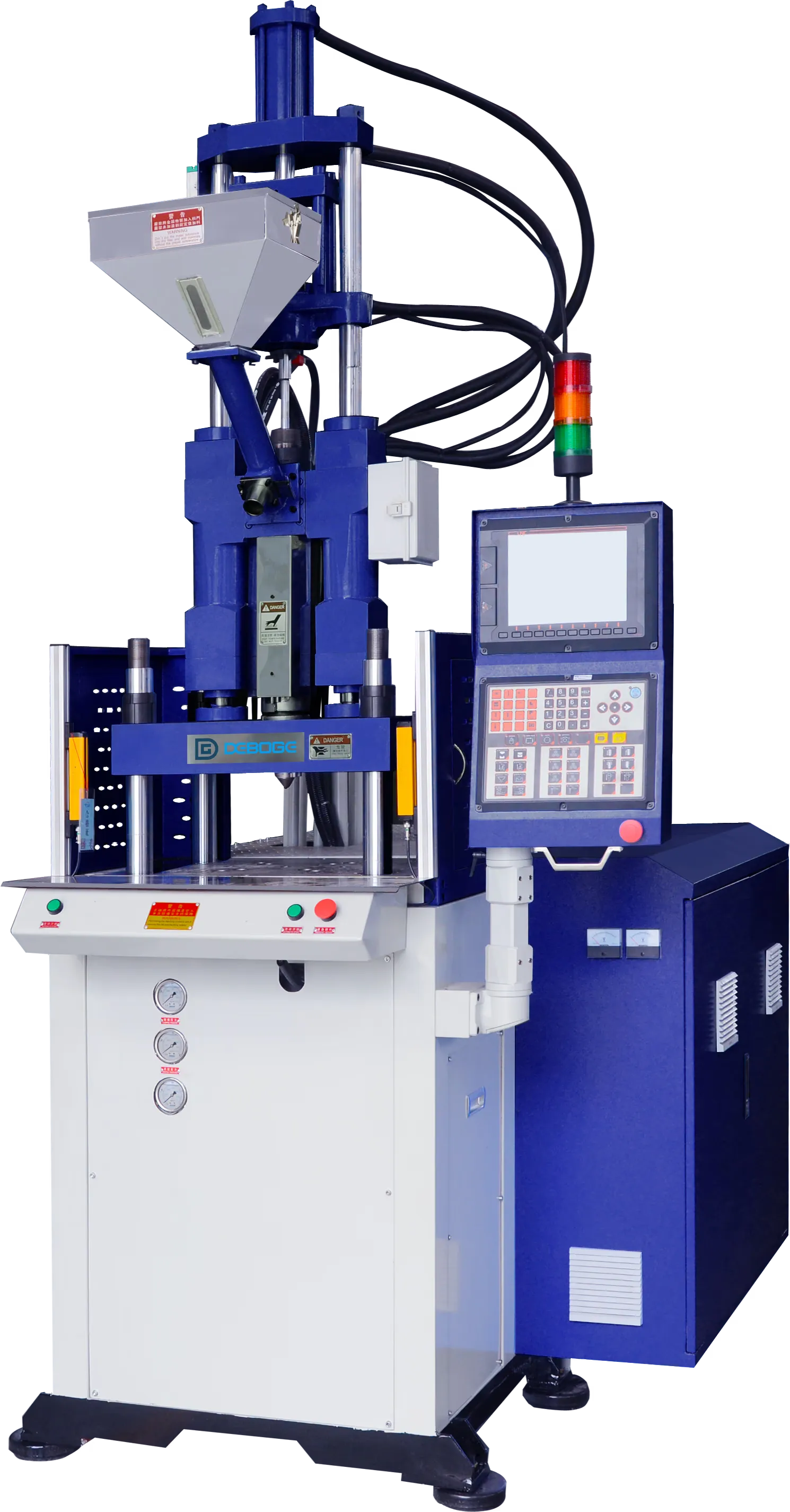
Fixed Platen Vertical Injection Molding Machines
Fixed platen machines keep the lower mold position stationary for projects where loading, clamping, injection, and part removal can happen in one stable work area.
They are a practical fit when mold access is simple, the workflow is stable, and extra table motion would add complexity without improving production.
Table Configuration
The most stable, straightforward clamping structure for simple mold layouts
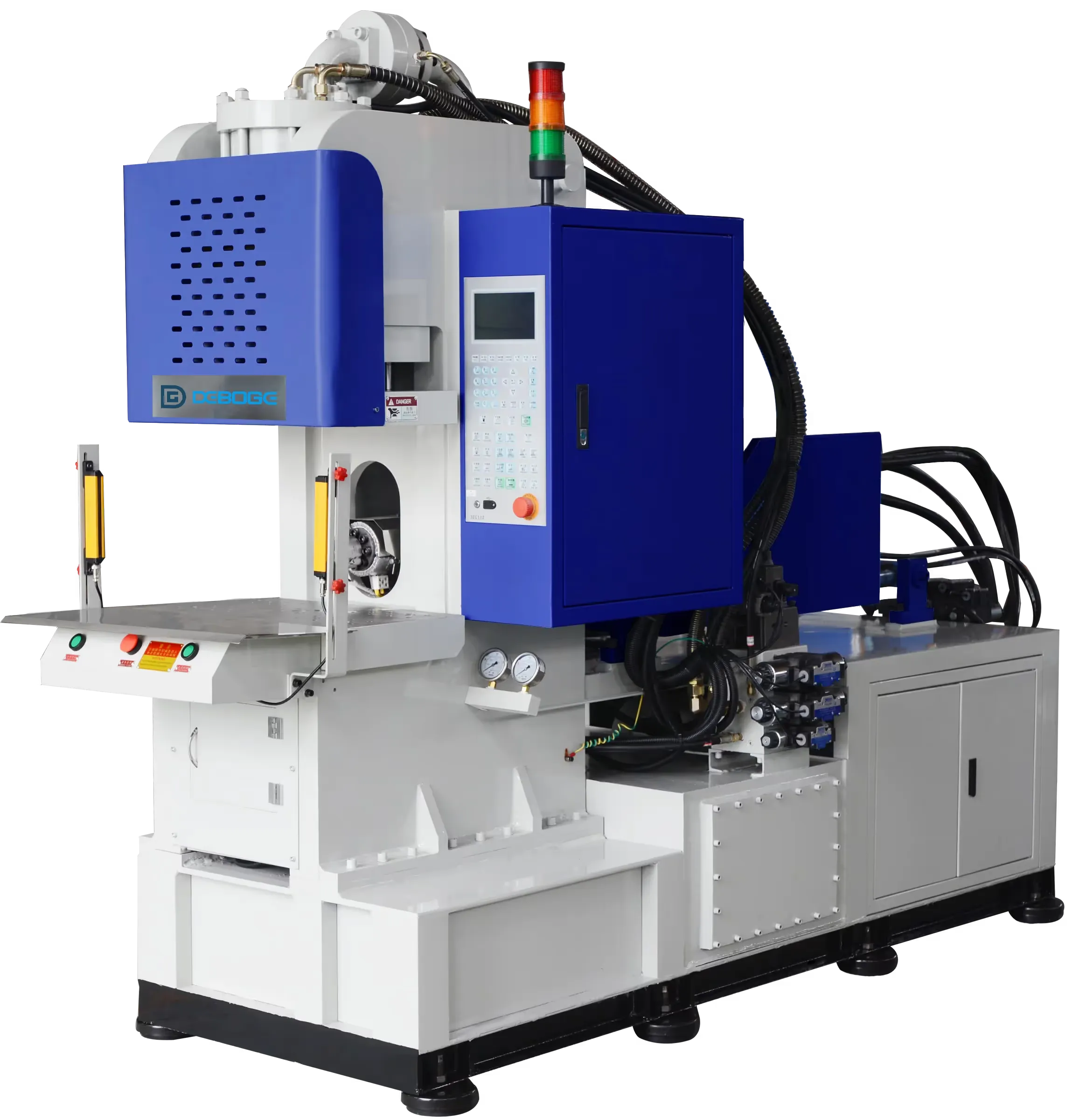
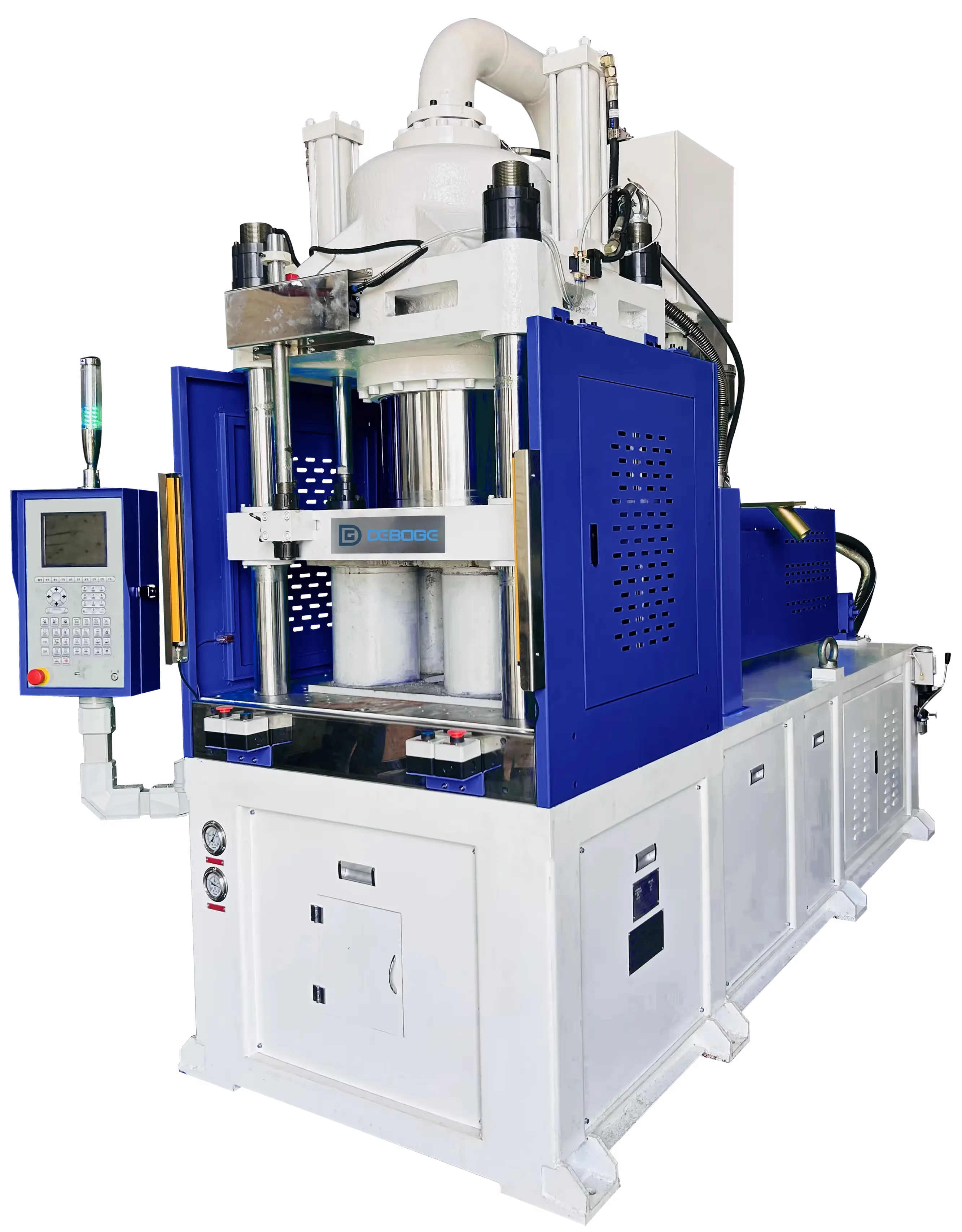
In a fixed platen configuration, the lower platen is mounted directly to the machine frame. All operations - insert placement, mold close, injection, mold open, part removal - happen at a single, stationary position. There is no slide rail to align, no rotary mechanism to index. The result: a rigid, repeatable molding station with fewer moving parts and lower maintenance overhead.
If your inserts can be placed directly into the open mold without moving the table out of the clamping area, a fixed platen is the most direct route from raw material to finished part - available across all three Deboge vertical molding platforms.
- Simpler mechanical structure No slide rails or rotary mechanisms to maintain or align over time
- More rigid clamping Stationary lower platen contributes to overall frame rigidity and consistent clamp distribution
- Available across all series From DA at 150 kN to DK at 4,000 kN - fixed platen spans the available vertical machine range
- Straightforward operation Single-station workflow - easier to train operators, simpler to integrate with automation
How It Works
Load. Clamp. Inject. Eject. One station, no table movement.
Every step of the molding cycle happens at the same fixed position. The lower platen stays bolted to the machine frame - no sliding, no rotating. This straightforward sequence repeats with minimal variation between cycles, making fixed platen machines predictable to operate and simple to maintain.
- 1. Load
- Operator places inserts into the open mold on the stationary lower platen.
- 2. Clamp & Inject
- The upper platen closes vertically. Material is injected into the mold cavity.
- 3. Eject
- The mold opens. The finished part is ejected or removed by the operator.
Why the fixed station matters
- - Thermoset & BMC molding: A rigid, vibration-resistant platform supports controlled material feeding for heat-sensitive and fiber-filled compounds. No moving table means no disturbance to material placement during the cycle.
- - Simple insert loading: When inserts are easy to place and the mold is accessible without table movement, fixed platen avoids the cost and maintenance of slide rails or rotary mechanisms that add no value to the process.
- - Stable automation integration: The stationary lower platen creates a fixed reference point for pick-and-place robots, conveyor alignment, and vision inspection - fewer variables to compensate for compared to a moving table.
- - Lower service footprint: No slide rails to lubricate, no rotary joints to inspect, no positioning sensors to recalibrate. Fewer moving parts means fewer maintenance intervals over the machine's service life.
Compatible Series
Fixed platen is available across all three Deboge platforms
Every Deboge vertical molding series includes fixed platen models (labeled "Standard" in specification tables). The right series depends on your injection direction preference, tonnage requirement, and whether you benefit from a tie-bar-less structure.
DA Series
Standard Vertical Injection
Vertical clamping with vertical injection. The broadest fixed-platen range - 10 models from 150 to 3,000 kN. Suits most general vertical molding applications.
View series detailsDC Series
Tie-bar-less Vertical Clamping
C-frame structure with no tie-bars for an open working area. 4 fixed-platen models from 450 to 1,200 kN. Often reviewed for connectors, plugs, and small precision insert work.
View series detailsDK Series
Vertical Clamping | Horizontal Injection
Vertical clamp with side injection for larger shot sizes. 6 fixed-platen models from 1,200 to 4,000 kN - the highest tonnage fixed-platen option for automotive and industrial parts.
View series detailsEach series page includes complete fixed platen ("Standard") specification tables - model numbers, clamp force, screw diameter, shot weight, and machine dimensions. Full 25-parameter data sheets are available on request.
Typical Applications
When a stationary mold platform is the right fit
Fixed platen works well for applications where the mold is accessible without moving the table and production stability is the primary consideration. It is the default configuration for thermoset molding and a practical choice for straightforward insert molding and overmolding workflows.
Choosing Your Configuration
If the mold doesn't need to move, keep it fixed
Each table configuration solves a different production problem. The decision starts with one question: does your insert loading workflow benefit from table movement?
Table stays still
Fixed Platen
- - Load and mold at the same position - simplest workflow
- - Fewest moving parts to maintain
- - Typical fit: stable production, simple insert placement, thermoset molding
You are here
Table slides out
Slide Table ->
- - Mold moves to the operator - hands stay out of clamping area
- - Single for batch work, double for alternating higher output
- - Typical fit: manual insert loading, small-to-medium batches, complex insert placement
Table rotates
Rotary Table ->
- - Multi-station rotation - load and mold in parallel
- - Each index delivers a finished part with no idle time
- - Typical fit: high-volume insert molding, continuous production, parallel workflows
Related Machine Information
Frequently Asked Questions About Fixed Platen Machines
What is a fixed platen configuration and when should I choose it?
Which machine series offer fixed platen configurations?
How does fixed platen compare to slide table and rotary table?
Can a fixed platen machine be converted to slide table or rotary later?
What are the maintenance advantages of a fixed platen configuration?
Not sure if fixed platen fits your application?
Send your product details, mold layout, and insert loading process so the engineering team can help evaluate whether a fixed platen or moving table configuration better suits your production.