
What Is Insert Molding?
Learn what insert molding means, how insert loading affects vertical molding workflow, and which machine structure questions should be reviewed before selection.
2026-07-11 | 9 min read | Category: Core Concepts
Quick Answer
Insert molding places a separate component into the mold before injection so the injected material forms around, through, or against that component.
Why is insert molding more than a simple plastic molding question? Start with the workflow, not only the machine name. The term helps a project team discuss the part, material, mold, loading method, removal method, and production target with the same meaning.
Use this page as a concept reference, not as a final machine specification, mold design rule, or processing parameter recommendation.
What Insert Molding Means in a Molding Project
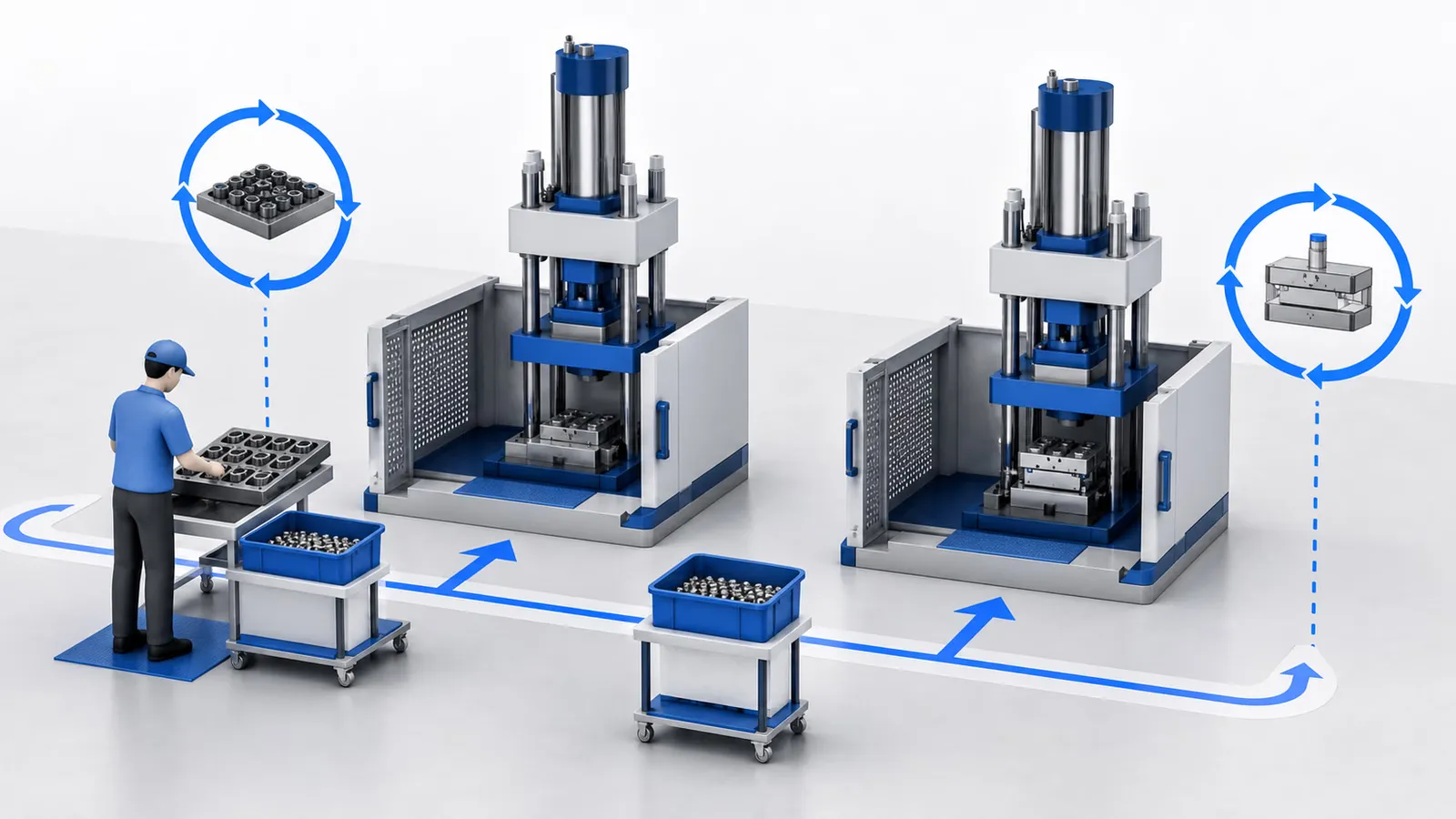
In insert molding, the molded result depends on both material flow and insert handling. The insert must be present, correctly oriented, stable during mold close, and protected from movement during injection. A machine that looks suitable from a clamping or injection capacity view may still be a poor fit if the loading step is slow, the mold area is hard to reach, or the finished part is difficult to remove. This is why Deboge project discussions usually connect insert molding to vertical clamping, table configuration, fixture design, and operator workflow.
Use insert molding as a workflow question, not only a product label. Confirm how the insert is loaded, held, checked, molded around, and removed before comparing clamping structure, injection direction, table configuration, or automation options.
Why It Matters for Machine Selection
The most important selection question is how the insert reaches the cavity. Manual loading, fixture loading, semi-automatic loading, and robot loading create different requirements for mold access, table movement, safety devices, and cycle planning.
| Review point | Why it matters |
|---|---|
| Insert geometry | Small terminals, large metal pieces, cables, and flexible parts require different access and holding methods. |
| Loading repeatability | Determines whether manual loading remains practical or whether fixtures or automation should be reviewed. |
| Mold access | Controls visibility, hand movement, fixture clearance, and safe loading position. |
| Part removal | Finished parts may stick, bend, or require careful removal depending on insert and material behavior. |
How to Compare Related Options
The best option depends on the actual part and production method. Use the comparison below as a review map, then confirm the project details with drawings, samples, material information, and mold concept.
| Concept | Practical meaning |
|---|---|
| Simple insert molding | One or several rigid inserts loaded manually with clear visibility. |
| Cable or wire insert molding | Requires routing and support outside the cavity, often making side access important. |
| Metal insert molding | Focuses on insert seating, thermal behavior, and position stability. |
| Automation-ready insert molding | Requires early planning for feeding, loading, signals, guarding, and maintenance access. |
What to Check Before Requesting a Recommendation
Before asking Deboge to recommend a machine structure, collect the information that explains the real production task. Clear project evidence is more useful than a broad keyword.
| Review point | Why it matters |
|---|---|
| Insert samples or drawings | Show shape, orientation, tolerance-sensitive areas, and whether the insert is rigid or flexible. |
| Mold concept | Show cavity layout, loading side, fixture points, and how the insert is held. |
| Production method | Explain manual, semi-automatic, or automatic loading expectations. |
| Quality concerns | Include insert shift, flash around inserts, exposed insert, short shot, or removal problems if the process already exists. |
Common Mistakes to Avoid
- Choosing the machine from product name alone.
- Ignoring insert loading time when calculating output.
- Treating fixture design as separate from machine selection.
- Waiting until after machine selection to discuss automation access.
How This Connects to Other Resource Pages
Knowledge Base pages explain the concept. Machine pages show available machine structure directions. Guides help compare options when a project is closer to inquiry. Troubleshooting and material pages help when an existing process already has symptoms.
- Insert Loading
- Metal Insert Molding
- Insert Molding Application
- Insert Molding Machine Selection Guide
FAQ
What makes insert molding different from normal injection molding?
A separate component is loaded before injection, so the machine must support insert placement, mold access, stability during mold close, and part removal.
Why are vertical machines often discussed for insert molding?
Vertical clamping can make the lower mold half easier to access and can help inserts stay seated before mold close.
Does every insert molding project need automation?
No. Many projects remain manual or semi-automatic. Automation should be reviewed when loading time, consistency, safety, or volume requirements justify it.
What should be reviewed before choosing an insert molding machine?
Review insert shape, loading method, mold access, part removal, material behavior, target output, and future automation plans.
Related Reading
Need technical information specific to your application?
Deboge engineering can answer your machine structure, configuration, and process questions directly.