
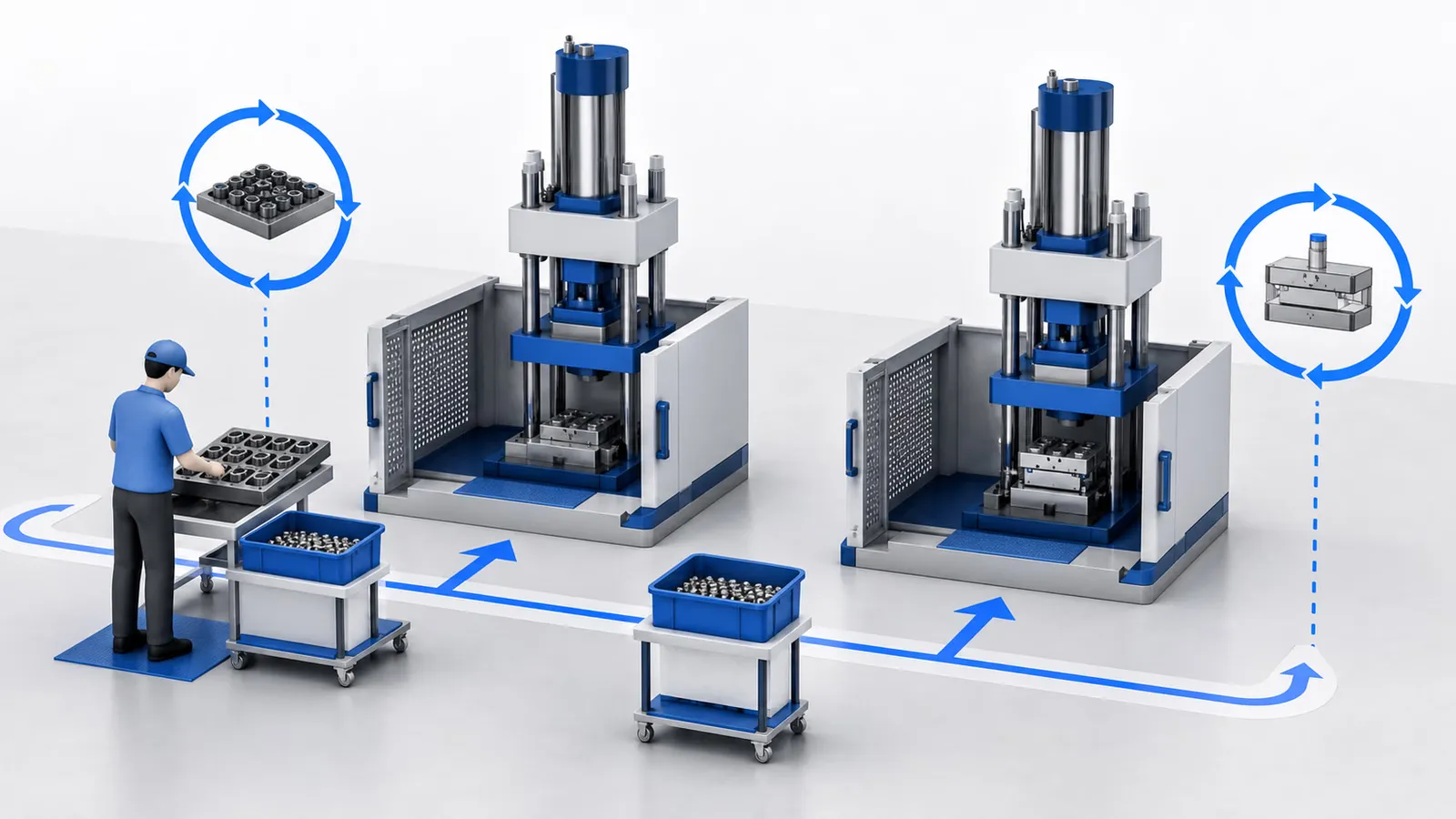
Insert Molding Machine Selection Guide
Select a vertical molding machine for insert molding by reviewing insert loading, fixture support, table configuration, mold access, part removal, and production rhythm.
2026-07-11 | 9 min read | Category: Choose by Application
Insert molding machine selection starts with the object being loaded into the mold. The insert may be metal, plastic, electrical, threaded, flexible, or pre-assembled, and the way it is positioned can drive machine structure and table configuration.
This guide focuses on practical review points: insert loading, fixture support, mold access, table choice, part removal, and production rhythm. It does not replace project review, but it helps prepare the right questions.
Quick Answer
For insert molding, review insert geometry, placement accuracy, fixture support, operator or robot access, table configuration, part removal, and cycle rhythm before choosing the machine. Vertical clamping is often useful, but the final structure depends on the real workflow.
When This Guide Is Most Useful
Use this guide when the product includes inserts placed before molding and the main selection question is how to load, hold, mold, and remove the part repeatably.
Selection Path
Define the insert and its position
Record the insert material, shape, quantity per cycle, orientation, critical surfaces, and tolerance expectations. Small changes in insert position can change fixture and access requirements.
Review fixture support
A fixture may be needed to hold inserts before mold close. The fixture height, weight, access direction, and maintenance needs should be reviewed with the table choice.
Choose table configuration from the loading workflow
Fixed platen may fit simple loading. Slide table can help when inserts are easier to load outside the main mold area. Rotary table can be reviewed when repeated loading and molding stations improve workflow.
Check removal and inspection
The molded insert part may be rigid, flexible, attached to a cable, or sensitive to pulling direction. Part removal and inspection should be included before confirming the machine path.
Decision Points to Review
| Review point | Why it matters | What to prepare |
|---|---|---|
| Insert geometry | Shape, weight, and position affect fixture and loading method. | Drawings, photos, sample inserts, and orientation notes. |
| Loading repeatability | Repeatable placement helps reduce insert shift and scrap. | Manual steps, fixture concept, and operator access. |
| Mold access | Operators or robots need enough clearance for placement and checking. | Mold layout, table concept, and access direction. |
| Part removal | Removal can damage inserts or slow production if not reviewed. | Removal method, ejector concept, and collection plan. |
How to Compare Common Options
| Option | When it may fit | What to verify |
|---|---|---|
| Fixed platen | Insert loading is simple and accessible in the mold area. | Operator reach, safety, and removal clearance. |
| Slide table | Insert placement is easier when the lower mold area moves outward. | Fixture stability, slide direction, and loading height. |
| Rotary table | Multiple stations help separate loading, molding, cooling, and unloading. | Station sequence, indexing clearance, and production rhythm. |
Information to Prepare Before Asking for a Recommendation
| Information | Why Deboge needs it |
|---|---|
| Insert samples or drawings | They show handling difficulty and fixture needs. |
| Part drawing | It connects the insert position to the final molded geometry. |
| Mold concept | It shows gate direction, clamping area, and access needs. |
| Loading method | It determines whether manual, assisted, or automated handling should be reviewed. |
Common Mistakes to Avoid
- Choosing the machine before proving the insert can be loaded repeatably.
- Ignoring fixture height and access when comparing table options.
- Not reviewing part removal until after the mold concept is fixed.
- Assuming all insert molding projects need the same table configuration.
How This Guide Connects to Other Resources
Use this guide with the insert loading knowledge page and the table configuration guide. For metal-specific projects, continue with the metal insert molding guide. For cable assemblies, use the cable connector overmolding guide.
Related Reading
- What Is Insert Molding?
- Insert Loading
- Metal Insert Molding Machine Selection Guide
- Fixed Platen vs Slide Table vs Rotary Table Guide
FAQ
Why are vertical molding machines often used for insert molding?
Vertical clamping can make lower mold loading practical, and gravity can help keep inserts seated before mold close. The final structure still depends on the project.
Is fixed platen enough for insert molding?
It can be enough when loading and removal are simple. Slide table or rotary table should be reviewed when access, timing, or station separation matters.
What causes insert shift in machine selection discussions?
Insert shift can be related to fixture support, placement repeatability, mold close movement, material flow, or removal method. The machine discussion should include these factors.
What should be sent for insert molding review?
Send part drawings, insert drawings or samples, mold concept, material information, loading method, removal method, and target production plan.
Related Reading
Ready to confirm a machine selection?
Send your product details, mold specs, and production requirements. Deboge engineering will review and recommend a specific configuration.