
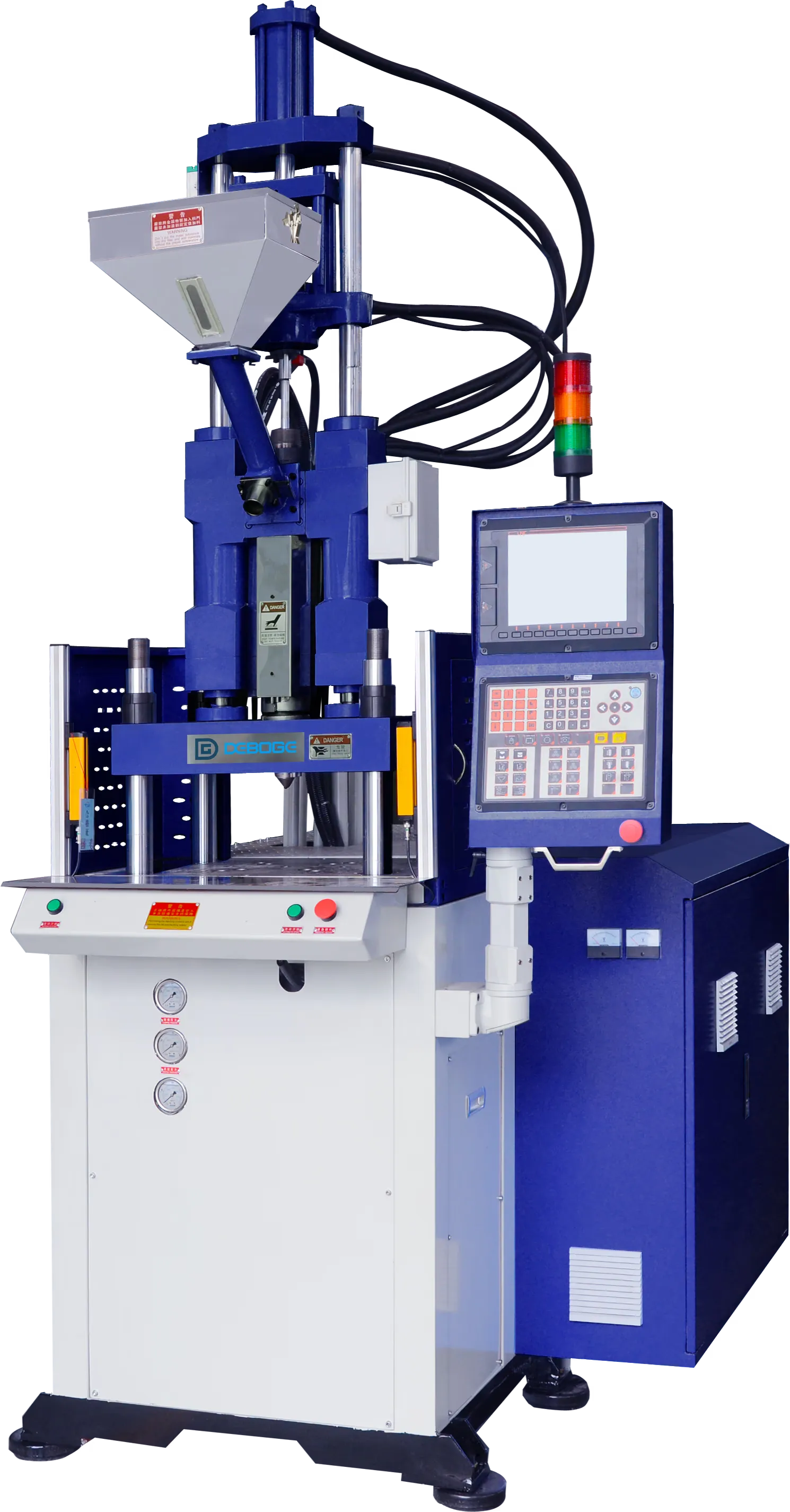
What Is Vertical Injection Molding?
Understand vertical injection molding, vertical clamping, injection direction, insert loading, table layouts, and the project details that affect machine selection.
2026-07-11 | 9 min read | Category: Core Concepts
Quick Answer
Vertical injection molding is a machine concept built around a vertically opening and closing mold area. In many machines the injection unit also injects vertically, but the word vertical should be checked carefully because it may describe the clamping direction, not only the injection direction.
When someone asks for a vertical injection molding machine, what do they usually need to clarify? Start with the workflow, not only the machine name. The term helps a project team discuss the part, material, mold, loading method, removal method, and production target with the same meaning.
Use this page as a concept reference, not as a final machine specification, mold design rule, or processing parameter recommendation.
What Vertical Injection Molding Means in a Molding Project
The useful starting point is the molding workflow. A vertical clamping structure leaves the lower mold area accessible while the mold is open, so inserts, cables, terminals, substrates, or other pre-placed parts can be positioned before mold closing. The machine then closes the mold, injects material according to the actual injection unit layout, holds and cools or cures the part, and opens again for removal. The structure is often discussed for insert molding and overmolding because the product is not only shaped by material flow; it is also shaped by how accurately the operator or automation system can load the insert before each cycle.
Use the term vertical injection molding as a starting point, not a final machine choice. First confirm what happens around the mold: clamping direction, injection direction, table movement, loading access, material behavior, part removal, and any automation boundary.
Why It Matters for Machine Selection
Machine selection should not stop at the phrase vertical injection molding machine. The project team still needs to confirm clamping structure, injection direction, table movement, mold access, insert loading method, part removal, material family, and future automation expectations.
| Review point | Why it matters |
|---|---|
| Insert loading | Confirms whether fixed platen access is enough or whether slide table, rotary table, or open clamping access should be reviewed. |
| Injection direction | Separates vertical clamping from vertical injection so the mold, gate, and material flow discussion stays accurate. |
| Table configuration | Shows whether loading and molding happen in the same position or can be separated into stations. |
| Material behavior | Changes the review for cooling, curing, barrel heating, mold temperature, and part removal. |
How to Compare Related Options
The best option depends on the actual part and production method. Use the comparison below as a review map, then confirm the project details with drawings, samples, material information, and mold concept.
| Concept | Practical meaning |
|---|---|
| Fixed platen | Simple mold area, direct access, useful when loading and removal are straightforward. |
| Slide table | Moves the loading position out of the clamping zone for clearer access. |
| Rotary table | Uses indexed stations when repeated loading and removal need a more continuous rhythm. |
| Tie-bar-less vertical clamping | Keeps the vertical clamping concept while improving side access around the mold area. |
What to Check Before Requesting a Recommendation
Before asking Deboge to recommend a machine structure, collect the information that explains the real production task. Clear project evidence is more useful than a broad keyword.
| Review point | Why it matters |
|---|---|
| Product information | Photos, drawings, or samples that show inserts, cables, wall thickness, and molded area. |
| Mold status | Existing mold, planned mold, cavity count if known, and mold access constraints. |
| Workflow expectation | Manual loading, fixture loading, robot loading, part removal, and target output. |
| Material information | Material family, grade if available, drying or curing notes, and current defects if the process already exists. |
Common Mistakes to Avoid
- Assuming every vertical machine injects vertically.
- Choosing a table type before reviewing insert loading and part removal.
- Discussing tonnage or shot capacity before the product, material, mold, and workflow are understood.
- Ignoring whether automation may be added later.
How This Connects to Other Resource Pages
Knowledge Base pages explain the concept. Machine pages show available machine structure directions. Guides help compare options when a project is closer to inquiry. Troubleshooting and material pages help when an existing process already has symptoms.
- Vertical Clamping
- Insert Molding
- Machine Selection Step by Step
- Standard Vertical Injection Molding Machines
FAQ
Does vertical injection molding always mean vertical injection?
No. The word vertical often describes the clamping direction. Some machines combine vertical clamping with horizontal injection, so the actual machine structure should always be checked.
Why is vertical molding common for insert projects?
The lower mold area is accessible while the mold is open, and gravity can help keep inserts seated before mold close. This can make loading, checking, and removal more practical.
Is fixed platen enough for every vertical molding project?
No. Fixed platen can be enough for simple loading, but slide table, rotary table, or tie-bar-less access may be reviewed when loading, cable routing, removal, or automation requires more space.
What should be sent before asking for a machine recommendation?
Send product photos or drawings, insert details, material information, mold concept, loading method, part removal method, and expected production volume.
Related Reading
Need technical information specific to your application?
Deboge engineering can answer your machine structure, configuration, and process questions directly.