
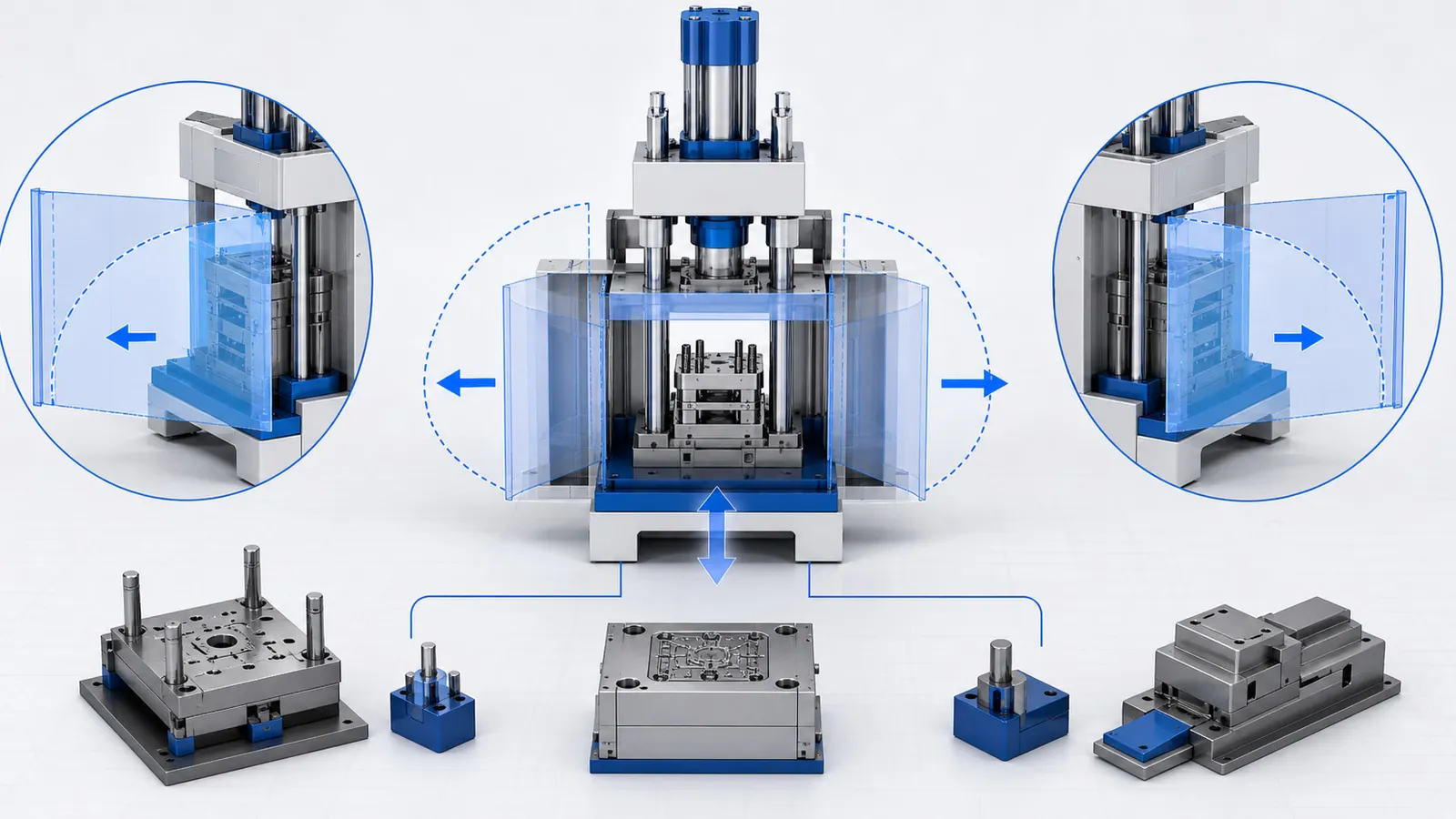
What Does Mold Access Mean?
Learn what mold access means in vertical injection molding and how reach, visibility, table movement, tie-bars, fixtures, and removal paths affect machine review.
2026-07-11 | 8 min read | Category: Process and Workflow Concepts
Quick Answer
Mold access means the practical space and visibility available for loading inserts, checking position, removing parts, maintaining the mold, and using fixtures or automation around the mold area.
Why is mold access a production issue, not only an operator comfort issue? Start with the workflow, not only the machine name. The term helps a project team discuss the part, material, mold, loading method, removal method, and production target with the same meaning.
Use this page as a concept reference, not as a final machine specification, mold design rule, or processing parameter recommendation.
What Mold Access Means in a Molding Project
A process that looks simple on a drawing can become slow or unstable if the mold area is hard to reach. Operators may need to place inserts, route wires, check orientation, remove finished parts, clear runners, or inspect defects. Automation may need an approach path. Maintenance teams may need access for cleaning, setup, and changeover. Poor mold access can create longer loading time, higher defect risk, and more difficult troubleshooting.
Mold access should be checked before choosing the table or frame style. Operators, fixtures, robots, cleaning tools, and maintenance work all need usable space around the mold, and poor access can create slow loading, part damage, or difficult troubleshooting.
Why It Matters for Machine Selection
Mold access affects whether a project should review fixed platen, slide table, rotary table, tie-bar-less vertical clamping, or custom automation-ready layout. It also affects safety guarding and factory layout.
| Review point | Why it matters |
|---|---|
| Reach and visibility | Determines whether loading and checking can be done repeatably. |
| Side clearance | Important for cables, long inserts, fixtures, and robot approach. |
| Table movement | Can move the loading position out of the clamping area. |
| Maintenance access | Affects setup, mold changeover, cleaning, and daily inspection. |
How to Compare Related Options
The best option depends on the actual part and production method. Use the comparison below as a review map, then confirm the project details with drawings, samples, material information, and mold concept.
| Concept | Practical meaning |
|---|---|
| Front access only | May work for simple parts loaded from one side. |
| Side access needed | Often relevant for cables, long inserts, or fixtures. |
| Slide-out access | Improves the loading position by moving the mold base outward. |
| Open clamping access | Reduces side restrictions around the mold area. |
What to Check Before Requesting a Recommendation
Before asking Deboge to recommend a machine structure, collect the information that explains the real production task. Clear project evidence is more useful than a broad keyword.
| Review point | Why it matters |
|---|---|
| Loading side and operator position | Show where the operator stands and which direction inserts enter the mold. |
| Product extension outside mold | Cables, wires, long inserts, or fixtures may need side clearance. |
| Mold height and opening space | Helps review reach, visibility, and removal path. |
| Automation or guarding plan | Shows whether external equipment will limit access after installation. |
Common Mistakes to Avoid
- Looking only at machine capacity and ignoring the work around the mold.
- Assuming the operator can load any insert if the mold is open.
- Forgetting part removal and inspection when reviewing access.
- Adding automation later without preserving robot approach and maintenance space.
How This Connects to Other Resource Pages
Knowledge Base pages explain the concept. Machine pages show available machine structure directions. Guides help compare options when a project is closer to inquiry. Troubleshooting and material pages help when an existing process already has symptoms.
FAQ
What does mold access include?
It includes reach, visibility, side clearance, part removal, fixture movement, robot approach, maintenance access, and safety boundary around the mold.
Why does mold access affect machine choice?
Different machine structures create different loading and removal positions, so access can decide whether fixed platen, slide table, rotary table, or open clamping is better.
Is mold access only important for manual loading?
No. Automation, maintenance, inspection, and part removal also depend on practical access around the mold area.
What information helps Deboge review mold access?
Send product photos, mold layout, loading side, fixture concept, operator position, and any access problem photos or videos.
Related Reading
Need technical information specific to your application?
Deboge engineering can answer your machine structure, configuration, and process questions directly.