
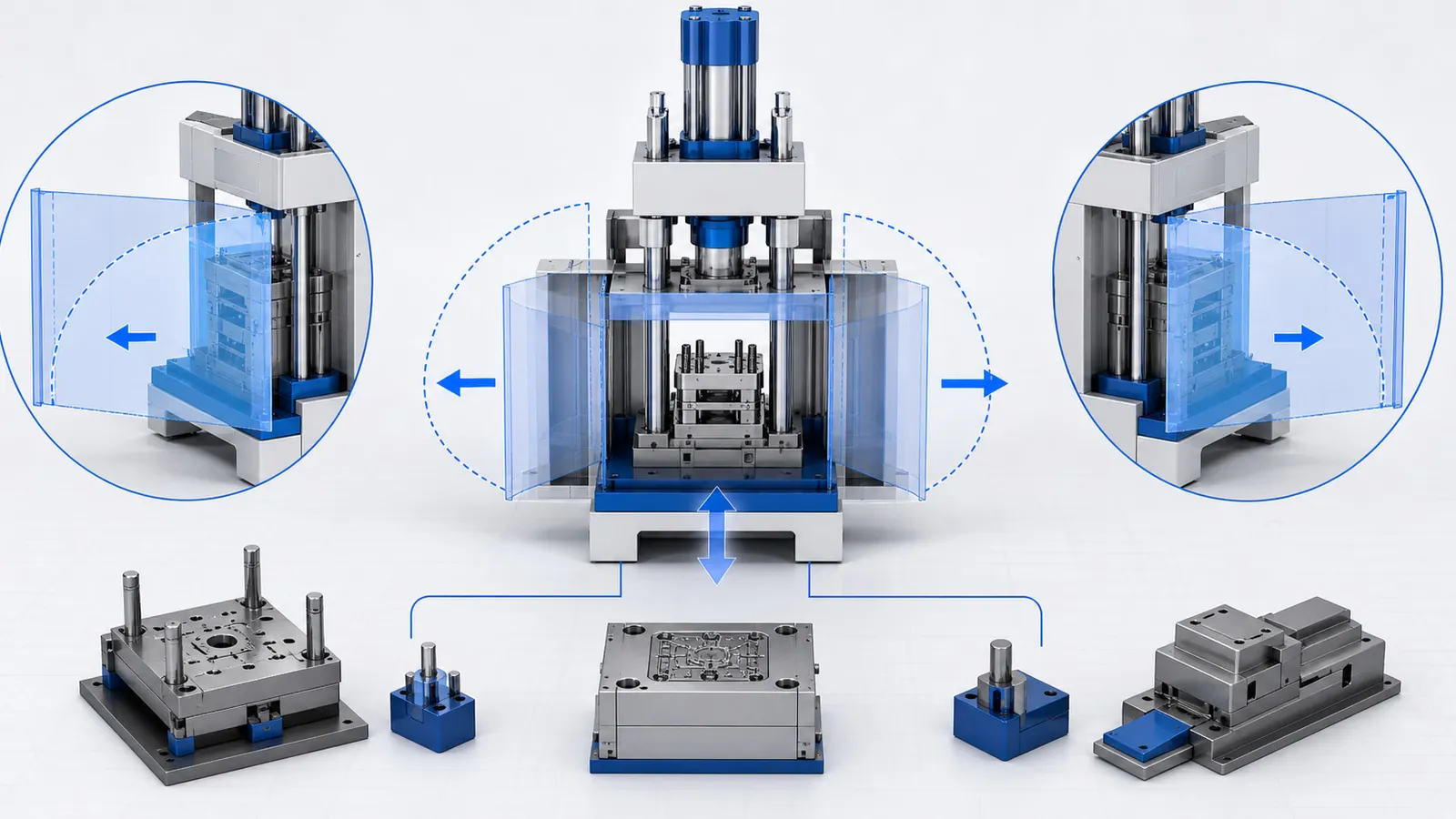
Mold Access in Vertical Injection Molding: What to Review
Review mold access before selecting a vertical injection molding machine, including operator reach, insert loading, side clearance, and table movement.
2026-07-03 | 7 min read | Category: Production Insights
Mold access should be reviewed before selecting a vertical injection molding machine. Your team should understand how the operator or automation reaches the mold, places inserts, removes parts, checks position, and maintains the tooling. A machine that looks correct on paper can still create workflow problems if access is poor.
This article supports the broader machine selection guide.
Access Is a Production Factor
Mold access affects every cycle. If the operator must reach around tie-bars, cables, fixtures, guards, or the machine frame, loading may become slower and less consistent. If the automation path is blocked, the workcell may need redesign. If maintenance access is poor, setup and troubleshooting take longer.
The machine discussion should therefore include the physical work around the mold, not only the clamping and injection structure.
Front Access, Side Access, and Open Access
Some projects need only front access. Others need side access because inserts, wires, or fixtures must be positioned from different directions. In some cases, open access around the mold area becomes a major selection point.
Tie-bar-less vertical clamping machines are discussed when open mold access is important. DC Series means tie-bar-less vertical clamping, and injection direction depends on configuration. If open access is not needed, a conventional structure may be more suitable.
Table Movement Changes Access
The table configuration also affects access. A fixed platen machine keeps the mold in the clamping area. A slide table machine moves the lower mold half out for loading. A rotary table creates station-based access.
The right choice depends on how the operator or automation interacts with the mold. Do not choose table type only from the product category. Choose it from the work sequence.
Review Insert Loading
For insert molding, access should be reviewed with the insert in mind. Ask:
- Where does the insert enter the mold?
- How many inserts are loaded each cycle?
- Does the operator need both hands?
- Are there wires or flexible parts outside the cavity?
- Does the insert need a fixture?
- Does the operator need to inspect position before closing?
These details can change whether insert molding should use fixed platen, slide table, rotary table, or open clamping structure.
Review Maintenance and Changeover
Access is not only about production cycles. Mold change, cleaning, adjustment, and troubleshooting also matter. If a machine is difficult to access during setup, downtime can increase. Explain whether the project involves frequent mold changes, trial runs, or stable long-term production.
For custom projects, include maintenance access in the layout discussion. It is easier to plan around access early than to correct it after the machine and automation are installed.
What to Send for Review
Useful information includes mold drawings, insert photos, loading videos, fixture sketches, factory layout, operator position, and any automation concept. Send these through Contact Deboge so the machine recommendation can account for practical access rather than only part geometry.
Related Reading
Have a question about this topic?
Contact Deboge engineering for technical questions specific to your application and production requirements.