
Barrel Heating
Barrel heating controls material preparation inside the injection unit. Learn how it affects melt stability, defects, and machine selection discussions.
Topic: Process Parameters | Also known as: barrel heater
Barrel heating refers to the heater bands and temperature control zones around the injection barrel. Its job is to help prepare material before injection by supporting stable melting, flow, and plasticizing behavior.
On a vertical injection molding machine, barrel heating should be reviewed as part of the injection unit, not as an isolated feature. The correct discussion depends on the material, screw and barrel configuration, shot requirement, cycle pattern, and how long the material stays inside the barrel before each injection.
Quick Answer
Barrel heating prepares the material inside the injection unit before it is pushed into the mold. It is not the same as mold temperature control. When barrel heating is unstable or mismatched with material behavior, the project may show filling problems, color change, burn marks, bubbles, or inconsistent shot weight.
For machine selection, barrel heating should be discussed together with plasticizing capacity, screw diameter, material grade, shot requirement, and the full production workflow.
What Barrel Heating Does
The barrel is the section where material is fed, heated, moved by the screw, and prepared for injection. Heating zones around the barrel help bring the material into a processable condition before it enters the mold.
Barrel heating is different from mold temperature control. The barrel prepares the material before injection. Mold temperature affects how the material fills, cools, cures, releases, or keeps its surface condition after it reaches the cavity.
For thermoplastic projects, barrel heating is usually discussed together with melting, plasticizing capacity, screw diameter, shot weight, and material residence time. For thermoset or silicone projects, the heating and curing discussion may involve different material behavior and should be confirmed with the actual project details.
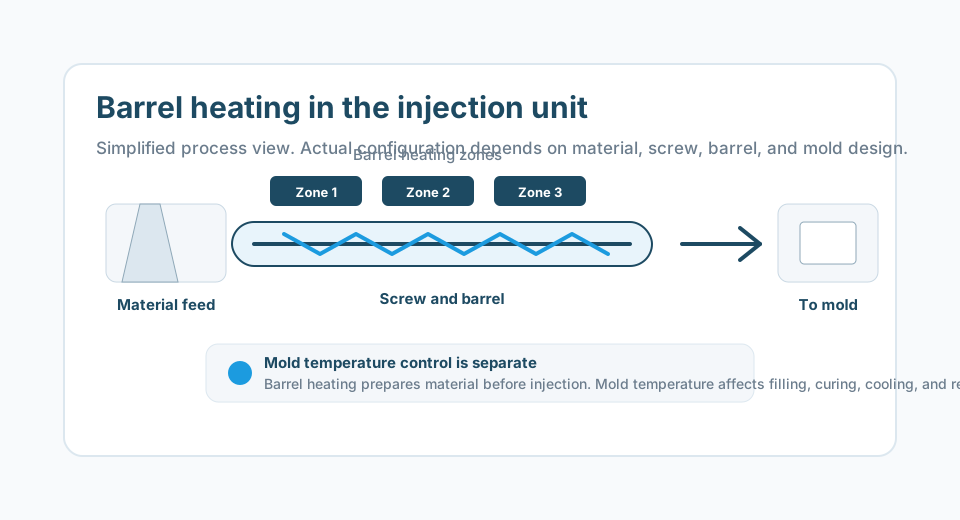
The diagram is simplified. Actual heater layout, screw and barrel configuration, and control method depend on the material and machine configuration.
Barrel Heating vs Related Temperature Terms
| Term | What It Refers To | Why It Matters |
|---|---|---|
| Barrel heating | Heating around the injection barrel before material enters the mold | Supports material preparation, melting, flow, and plasticizing stability |
| Temperature control zone | A controlled heating area on the barrel or mold temperature system | Helps operators discuss which area is being adjusted or monitored |
| Mold temperature control | Temperature management inside or around the mold | Affects filling, cooling, curing, surface condition, and part release |
| Residence time | How long material stays in the barrel before injection | Long or inconsistent waiting time may affect material condition |
Why It Matters
Unstable barrel heating can make the same machine behave differently from cycle to cycle. If the material is not prepared consistently, the project may show short shots, color change, burn marks, flow hesitation, bubbles, or unstable shot weight.
Barrel heating also affects machine selection because the injection unit must match the material and production rhythm. A project with a small shot, long waiting time, or manual insert loading may create a different residence-time concern from a fast automatic production cell. A project with a larger shot or higher output target may require closer review of plasticizing capacity and recovery time.
This is why barrel heating should not be judged only by the number of heating zones or a temperature value in a specification sheet. Those details matter, but they only become meaningful when connected to the material grade, part weight, mold layout, and cycle expectation.
What to Check Before Machine Selection
When barrel heating is relevant to a machine discussion, prepare the following information before asking for a recommendation:
- Material type and grade, including whether it is thermoplastic, thermoset, silicone, or a filled material.
- Estimated shot weight or part weight, if available.
- Mold cavity count and whether inserts, cables, terminals, or metal parts are loaded before molding.
- Expected loading method, such as manual loading, slide table workflow, rotary table workflow, or automation.
- Any known production issue from a current process, such as short shot, material degradation, inconsistent shot weight, or startup scrap.
- Whether the project needs stable repeat production or is still in trial and mold validation.
These details help engineering review whether the injection unit, barrel heating, screw size, and production sequence are aligned with the actual molding task.
Symptom Check
Barrel heating should be reviewed with the full process. The table below helps separate useful signals from assumptions.
| Symptom Seen in Production | Barrel Heating May Be Relevant When | Other Areas to Check |
|---|---|---|
| Short shot | Material flow changes after startup, pause, or cycle change | Injection pressure, material drying, venting, gate design, shot setting |
| Burn mark or color change | Material may be staying too long in the barrel or overheating in part of the process | Venting, screw recovery, residence time, trapped gas, material condition |
| Bubbles or voids | Melt preparation is unstable or material condition changes during production | Material drying, feeding, injection speed, mold temperature, part geometry |
| Inconsistent shot weight | Feeding and plasticizing behavior changes between cycles | Hopper feeding, screw check behavior, back pressure, screw recovery, material flow |
| High startup scrap | Material condition differs between startup and stable running | Purging practice, temperature stabilization, process records, mold condition |
This table is not a defect diagnosis by itself. It is a practical way to decide whether barrel heating belongs in the investigation.
Common Problems Connected to Barrel Heating
Barrel heating is not the only cause of molding defects, but it is often one of the areas worth checking when material behavior changes during production.
Short shot can appear when material flow is not stable enough to fill the cavity. Burn marks or color change may point to overheating, trapped gas, material residence time, or venting issues. Bubbles or voids may involve material drying, feeding, injection behavior, or temperature control. Inconsistent shot weight may be connected to feeding, plasticizing, screw recovery, or control settings.
Because these symptoms can have several causes, avoid changing barrel temperature alone without checking the whole process. The safer starting point is to record the material, temperature settings, actual temperature behavior, cycle time, loading time, and the moment when the defect appears.
How It Relates to Vertical Injection Molding
Vertical machines are often used for insert molding, overmolding, cable and connector molding, power plug molding, and parts that require manual or semi-automatic loading. In these projects, the time between shots may be affected by how quickly inserts are loaded and how the table moves.
If loading time changes, material residence time inside the barrel can also change. That is one reason barrel heating should be reviewed together with table configuration and workflow, not only with the injection unit specification.
For example, a fixed platen workflow, a slide table workflow, and a rotary table workflow can create different loading and waiting patterns. The right machine discussion should connect barrel heating with the full cycle, not just the heating hardware.
Questions to Prepare Before Contacting Deboge
If barrel heating is part of your project question, send practical production context rather than only a target temperature value.
| Question | Why It Helps |
|---|---|
| What material grade will be used? | Different materials react differently to heating, residence time, and shear. |
| What is the estimated shot weight or part weight? | The injection unit and recovery discussion depend on the material amount prepared each cycle. |
| How are inserts loaded? | Manual loading, slide table operation, rotary table operation, and automation can create different waiting patterns. |
| What defect or instability is already visible? | The symptom helps decide whether to review barrel heating, feeding, mold venting, injection settings, or another area first. |
| Is the mold already built? | Existing mold design can limit what can be changed in the process or machine configuration. |
Where You May See This Term
- Machine specification sheets, usually near injection unit and temperature zone information.
- Quotation preparation, especially when material type and shot requirement are being checked.
- Process troubleshooting, when defects appear after startup, material change, or cycle change.
- Machine selection discussions involving screw diameter, plasticizing capacity, or production rhythm.
FAQ
Is barrel heating the same as mold temperature control?
No. Barrel heating prepares material inside the injection unit before injection. Mold temperature control affects the material after it enters the mold cavity.
Can barrel heating problems cause molding defects?
Yes, unstable material preparation can be related to short shots, color change, burn marks, bubbles, or inconsistent shot weight. These symptoms should still be checked together with material, feeding, venting, injection settings, and mold conditions.
Should machine selection be based on barrel heating zones alone?
No. Heating zones are only one part of the injection unit review. Material grade, shot requirement, screw diameter, plasticizing capacity, residence time, mold layout, and production workflow should also be considered.
What information helps Deboge review barrel heating for a project?
Useful information includes material type and grade, part or shot weight, mold cavity count, loading method, cycle expectation, current defect symptoms, and whether the project is in trial or repeat production.
Useful Next Pages
Related Reading
Need this term explained for your project?
Send Deboge the part, material, mold, and production context. We can explain the term in relation to machine selection or process review.