
Material Feeding Problem
Material Feeding Problem explained for vertical injection molding projects, including defect review, likely causes, and practical troubleshooting steps.
Topic: Troubleshooting | Also known as: feeding issue
An issue where material does not feed consistently into the plasticizing or injection system.
Quick Answer
Material Feeding Problem is a troubleshooting symptom or defect term used in vertical injection molding project discussions. You may also see it written as “feeding issue”.
In practical review, the term matters because it can influence where the symptom appears, when it appears, process records, material condition, mold condition, and machine movement evidence. It often appears together with Hopper Capacity, Plasticizing Capacity.
This glossary page explains the term for communication and project preparation. It is not a final specification, processing setting, or machine recommendation.
What Material Feeding Problem Means in a Molding Project
An issue where material does not feed consistently into the plasticizing or injection system.
In a real project, Material Feeding Problem should be connected to the part, material, mold, and production workflow. A term that looks simple on a specification sheet can have a different meaning once the mold opens, inserts are loaded, material is prepared, and parts are removed.
Use this term to keep the discussion tied to real project evidence instead of jumping directly to a machine model. The right conclusion depends on the molded part, material, mold layout, loading method, process record, and production goal.
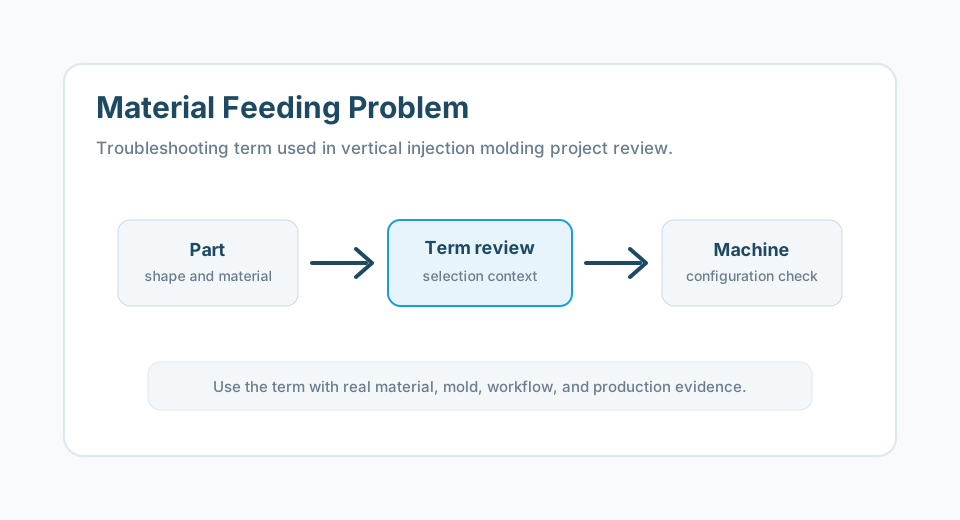
The diagram is simplified. It is meant to show the review logic, not a specific Deboge machine structure or final technical layout.
How It Affects Machine Selection or Process Review
| Review Area | What to Check | Why It Matters |
|---|---|---|
| Part and product requirement | Confirm the molded part, insert, tolerance, appearance, or handling requirement connected to Material Feeding Problem. | The same term can lead to different decisions when the product shape or insert loading method changes. |
| Material behavior | Confirm material type, grade, heating or cooling behavior, and any known handling requirement. | Material behavior affects injection, curing, cooling, release, and defect risk. |
| Mold and access | Review mold size, cavity layout, parting line, ejection, and access around the mold. | Mold design can limit what the machine, operator, or automation can realistically do. |
| Machine configuration | Review clamping structure, injection direction, table type, and auxiliary equipment needs. | A suitable machine discussion connects structure and workflow instead of relying on one term. |
| Production rhythm | Review cycle time, loading time, startup scrap, and whether the process is manual, semi-automatic, or automated. | Workflow changes can affect repeatability, labor time, and process stability. |
When This Term Appears in Project Discussion
It usually appears when the team is trying to separate material behavior, mold condition, machine setting, and workflow causes before changing the process.
For early inquiry, Material Feeding Problem helps clarify the question. For machine selection, it should be used together with drawings, samples, material information, and production expectations. For troubleshooting, it should be checked against actual symptoms and process records.
Symptom or Decision Check
| Situation | What It May Indicate | What to Review Next |
|---|---|---|
| The project team is comparing machine types | Material Feeding Problem may be part of a structure, workflow, or process requirement. | Compare the machine layout with the mold, material, and loading method. |
| The current process is unstable | The issue may involve more than the term itself. | Record when the symptom appears and review material, mold, settings, and movement sequence. |
| The specification sheet looks unclear | The term may need project context before it can be interpreted. | Ask what the value, component, or function means for the actual molded part. |
| The part requires inserts or manual handling | The term may affect access, waiting time, or production rhythm. | Review insert loading, part removal, safety guarding, and table configuration. |
| Automation is being considered | The term may affect fixture, robot, or production cell planning. | Confirm what remains manual, what can be automated, and what evidence is needed. |
This table is not a diagnosis by itself. It is a way to decide what information should be checked before changing settings, choosing a machine, or redesigning a workflow.
What to Prepare Before Contacting Deboge
| Information to Prepare | Why It Helps |
|---|---|
| Part photo, drawing, or sample | Helps connect Material Feeding Problem to the real shape, insert position, and handling requirement. |
| Material type and grade | Helps avoid assumptions about heating, cooling, curing, feeding, or release behavior. |
| Mold status and cavity layout | Shows whether the discussion is still in planning or already limited by an existing mold. |
| Current process evidence | Photos, trial notes, defect timing, and setting records make the review more practical. |
| Production target | Helps connect the term to cycle planning, manual labor, automation, or output expectations. |
Common Mistakes to Avoid
- Do not use Material Feeding Problem as a shortcut for final machine selection.
- Do not compare machines by one term without checking the mold and material.
- Do not treat a specification value as final proof of suitability.
- Do not change process settings without recording the symptom, timing, and current setup.
- Do not assume that a solution for one molded part will apply to a different material, insert, or mold layout.
Related Terms to Review
FAQ
What does Material Feeding Problem mean in vertical injection molding?
Material Feeding Problem is a troubleshooting symptom or defect term used to discuss where the symptom appears, when it appears, process records, material condition, mold condition, and machine movement evidence. It should be interpreted with the actual material, mold, part, and production workflow.
Why does Material Feeding Problem matter for machine selection?
It matters because the term can affect how the machine is configured, how the mold area is accessed, how the cycle is planned, or how process stability is reviewed before a recommendation is made.
Can Material Feeding Problem be judged from a specification sheet alone?
Usually no. A specification sheet is useful, but final judgment should also consider material behavior, mold layout, part geometry, loading method, and production target.
What should be prepared before asking Deboge about Material Feeding Problem?
Prepare the material, part or product information, mold status, current process evidence, and the production goal so the term can be reviewed in the correct project context.
Useful Next Pages
Related Reading
Need this term explained for your project?
Send Deboge the part, material, mold, and production context. We can explain the term in relation to machine selection or process review.