
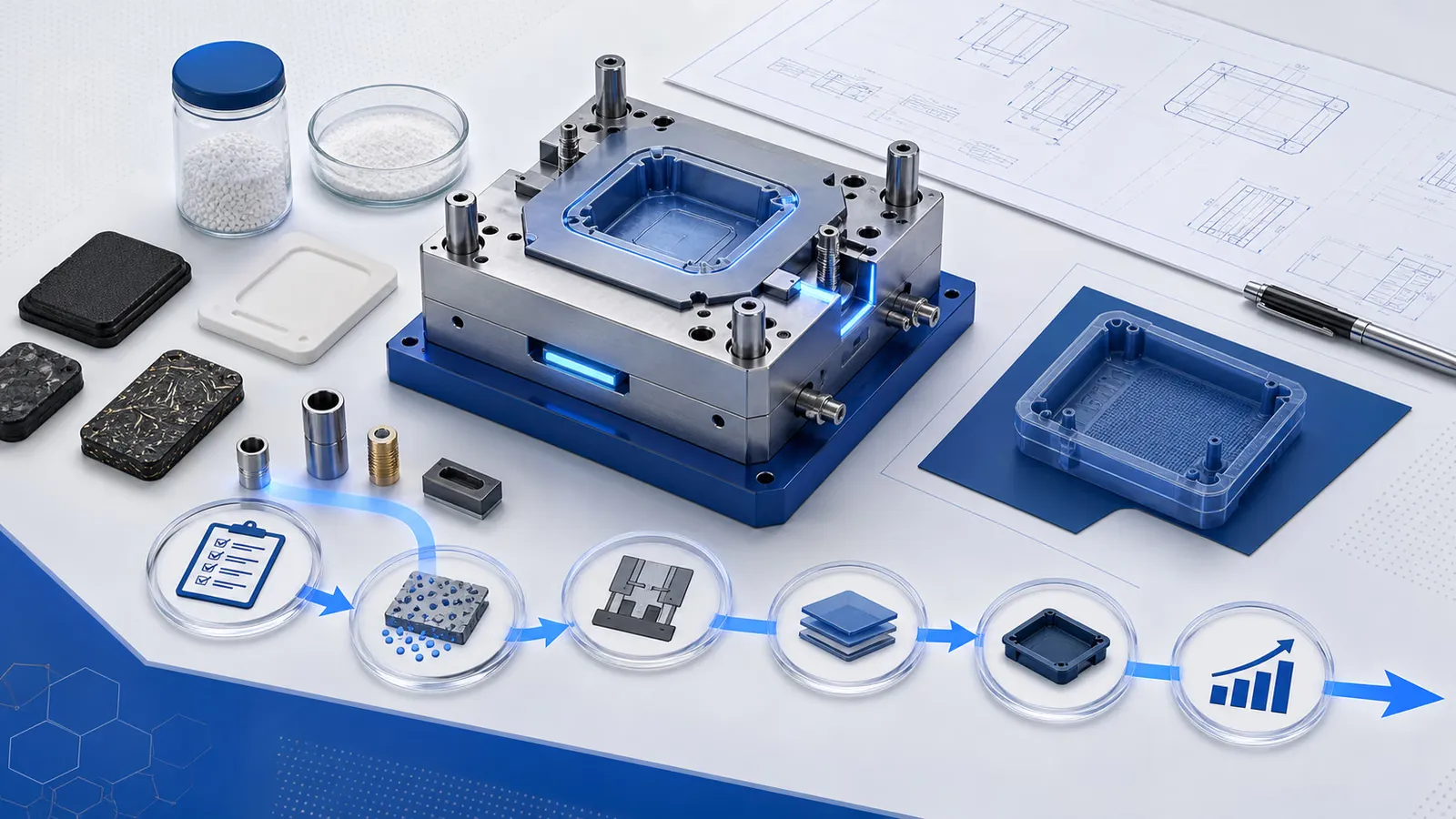
Thermoset Molding Projects: What to Discuss Before Machine Selection
A practical article on thermoset molding project discussions, including material behavior, mold concept, curing workflow, and machine selection inputs.
2026-07-06 | 8 min read | Category: Application Notes
Thermoset molding projects should begin with material and process discussion, not only machine size. Material family, curing behavior, mold heating, insert loading, and part removal can all affect the machine conversation. Your team should prepare material information and mold concept details before asking for a final machine recommendation.
For material reference, start with thermoset materials. For application context, see thermoset molding.
Why Thermoset Is a Different Conversation
Thermoplastics soften when heated and harden when cooled. Thermoset materials cure through a different process and do not simply remelt after curing. This changes the way your team should discuss molding workflow, mold temperature, material feeding, residence time, and part removal.
This article does not define final processing settings. Those must come from material data, mold design, and engineering review. The goal here is to prepare better questions for machine selection.
Start with the Material Family
If the project uses BMC, phenolic, Bakelite-type material, or another thermoset family, provide the material data sheet and supplier recommendations. The material supplier may specify handling, storage, curing, and processing windows. Those details should be part of the machine discussion.
Useful starting pages include BMC material notes and Bakelite phenolic material notes.
Avoid describing the project only as “thermoset part.” The machine discussion needs to know the specific material family and the molded part requirement.
Mold Concept and Heating
Thermoset projects require careful mold discussion. The mold concept should include heating method, cavity layout, insert position if applicable, venting concept, demolding method, and how the operator or automation will access the mold.
If the mold already exists, share drawings and photos. If the mold is not designed yet, explain the part geometry and expected production method. Deboge can then discuss whether the project should begin with standard vertical injection molding machines or a custom vertical molding solution.
Insert Loading and Part Removal
Many thermoset parts are molded around metal inserts or electrical components. If inserts are used, the loading process should be described in detail. How are inserts oriented? Are they preheated? Are they manually loaded? Does the finished part require careful removal because of shape or surface requirements?
These details affect table configuration and mold access. A fixed platen may work for simple loading. Slide table or rotary table concepts may be discussed when loading time and access become important.
Questions to Prepare
A thermoset inquiry should include:
- Material family and data sheet.
- Product drawing and part function.
- Insert details if applicable.
- Mold drawing or mold concept.
- Heating and curing information if already specified.
- Loading and unloading method.
- Production target and operator arrangement.
These details help prevent a shallow quotation conversation. The discussion becomes about process fit rather than only machine naming.
Link Thermoset Pages Correctly
Thermoset material reference belongs in the Materials section. Blog articles like this one support project planning and preparation. If you need a stable material reference, use the thermoset materials page. If you are ready to discuss a project, send material and mold details through Contact Deboge.
Related Reading
Have a question about this topic?
Contact Deboge engineering for technical questions specific to your application and production requirements.