
BMC Material in Vertical Injection Molding
A practical guide to BMC material for vertical injection molding, including typical applications, molding considerations, machine configuration notes, and review points.
2026-07-11 - 6 min material note - Category: Thermoset Materials
BMC, or Bulk Molding Compound, is a fiber-filled thermoset compound used in applications where molded parts need heat resistance, dimensional stability, and electrical insulation. It is different from standard thermoplastics: the material cures in a heated mold and cannot be re-melted after curing.
For vertical injection molding projects, BMC should be evaluated as a material-process-machine combination. The material grade, fiber content, mold heating method, feed behavior, part geometry, and production target all affect machine configuration.
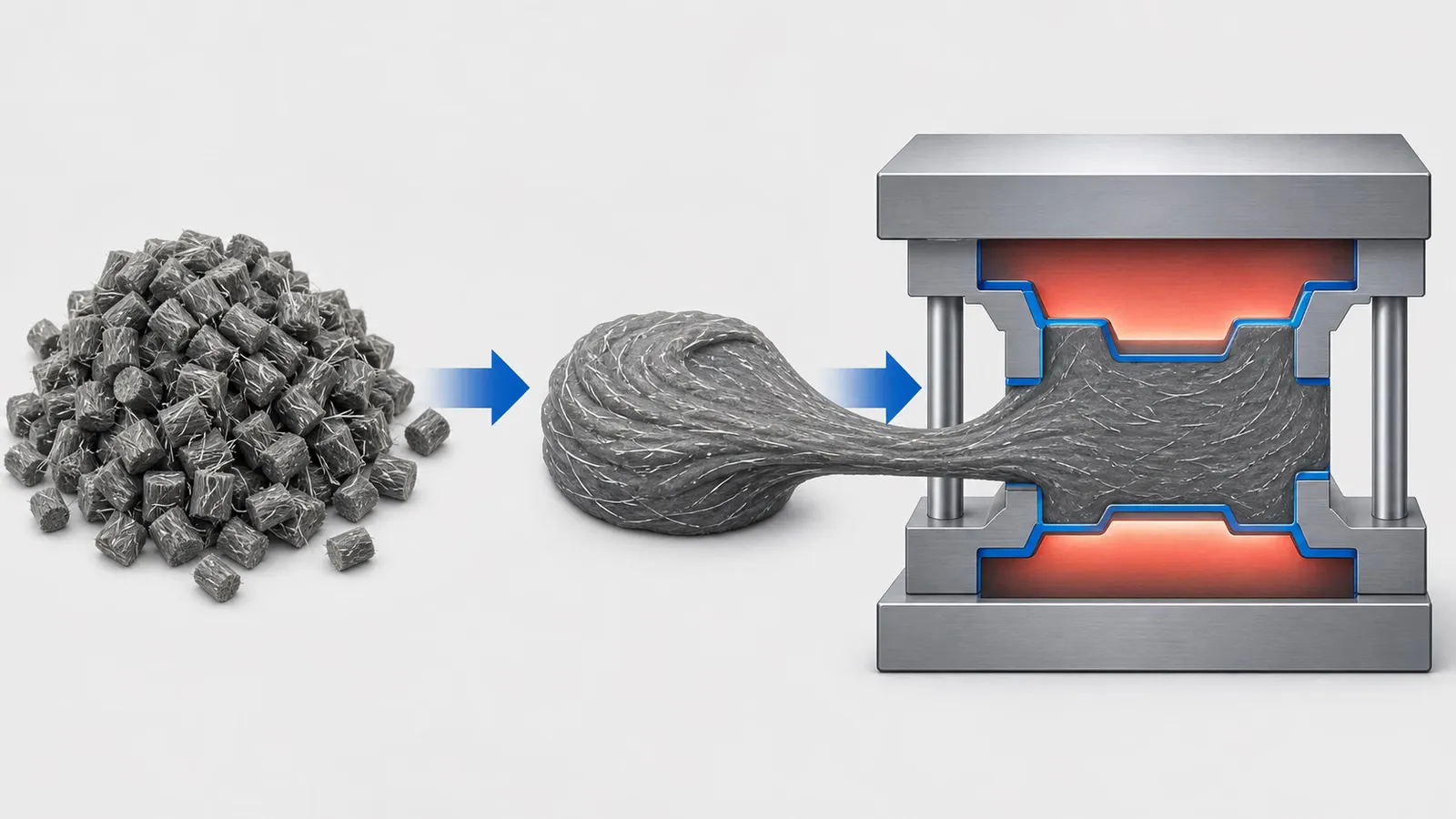
The image above is an illustrative process concept, not a photo of a Deboge machine or a verified customer project.
Typical Applications
BMC is often considered for electrical housings, industrial insulating components, automotive under-hood parts, appliance components, and molded parts with embedded metal inserts. In vertical molding, it is especially relevant when inserts must be loaded into the mold before the material is injected.
These applications commonly connect to thermoset molding and electronics and electrical components. The page should not be read as a universal compatibility list; Deboge should review the actual product and material details before recommending a machine direction.
Molding Considerations
BMC processing requires attention to feed consistency, material residence time, mold temperature, clamping stability, and part removal. Because BMC cures in the mold, the process window is different from thermoplastic injection molding.
Key review points include:
- Whether the BMC form and viscosity suit the planned feeding method.
- Whether the screw and barrel configuration match the compound.
- Whether the mold heating and venting approach match the material behavior.
- Whether the projected area and cavity count require a higher clamping-force range.
- Whether inserts or metal components need a fixed platen, slide table, or other loading workflow.
Common Production Challenges
Common BMC production issues include flash at the parting line, inconsistent fill, incomplete cure, material buildup, and difficulty removing cured parts from the mold. These are not solved by machine selection alone. The material, mold, heating system, clamp force, injection unit, and operating method must be reviewed together.
When insert loading is part of the process, operator access and repeatable insert positioning also matter. A slide table can help move the lower mold out for easier loading and removal, while a fixed platen may fit simpler mold layouts.
Machine Configuration Notes
DA Series Standard Vertical Injection Molding Machines are a starting point for many vertical thermoset discussions because they use vertical clamping and vertical injection with multiple table options. Fixed platen machines may fit simpler parts, while slide table configurations may help when inserts or part-removal access are important.
The final configuration should be confirmed with Deboge engineering based on BMC grade, part size, projected area, mold structure, feed method, and production target.
Related Reading
Related Reading
FAQ
Material review questions
Can every vertical injection molding machine process BMC?
Why is BMC often discussed with electrical parts?
What information should be sent for a BMC machine review?
Need material-specific machine advice?
Send the exact material grade, product drawing, insert or substrate details, mold layout, and production target so Deboge can review the machine configuration discussion.