
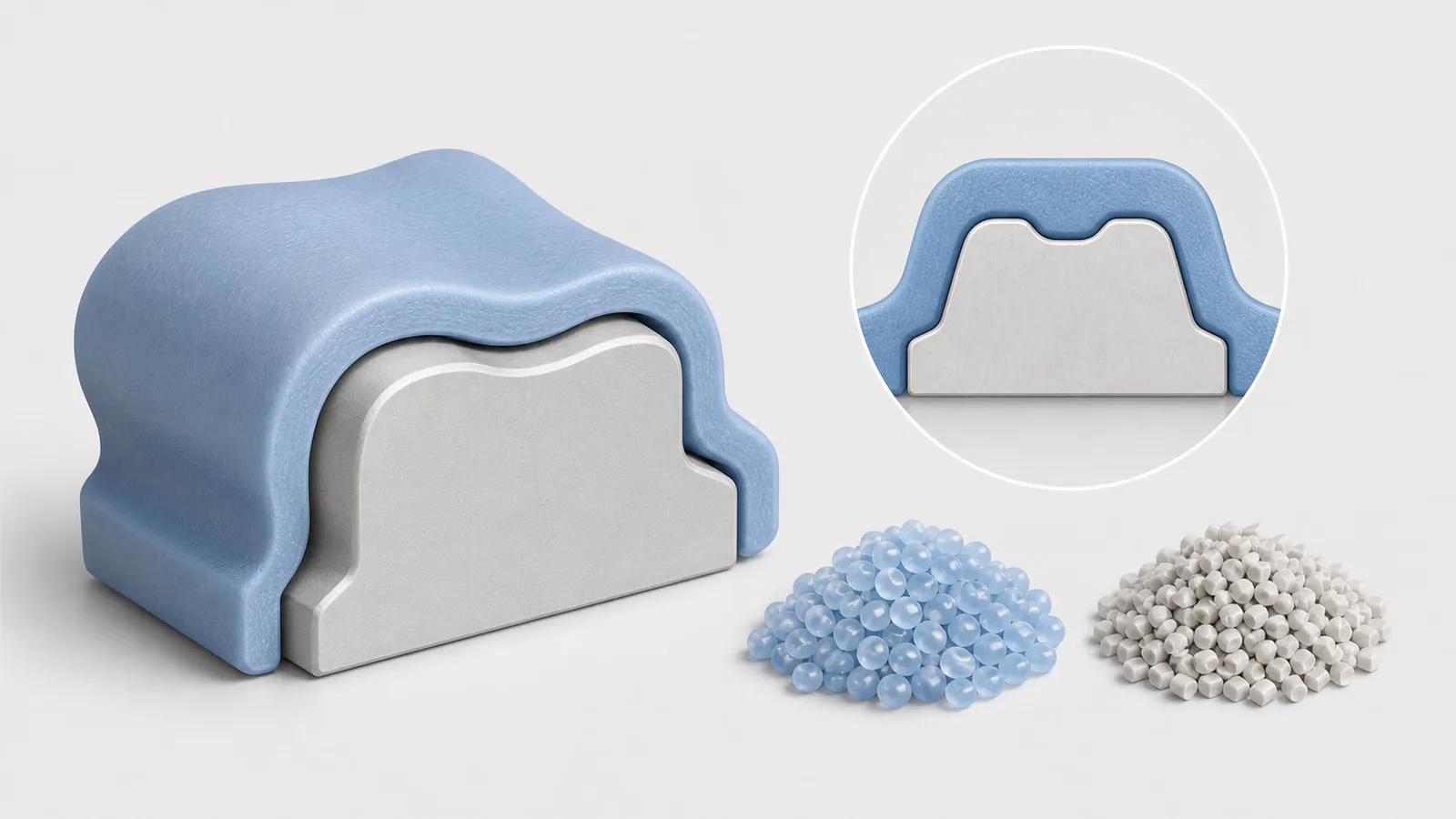
TPE Adhesion Problems in Overmolding: What to Review
Review TPE adhesion problems by checking substrate material, surface condition, TPE grade, mold design, temperature stability, handling workflow, and validation needs.
2026-07-12 - 6 min material note - Category: Soft & Flexible Materials
TPE adhesion problems happen when the soft material does not bond or hold to the substrate as expected. The issue may appear during demolding, bending, assembly, or later functional testing.
Adhesion is a material-pairing and process-validation question. Machine access and loading repeatability matter, but they cannot confirm bonding by themselves.
What You May See
- TPE peels away from the substrate.
- Soft layer lifts at edges or corners.
- Adhesion differs between cavities or operators.
- Parts pass at demolding but fail after bending or assembly.
- Surface contamination or handling changes affect results.
Review Points
Before changing machine settings, review:
- Exact TPE grade and substrate material.
- Material supplier adhesion guidance.
- Substrate surface condition, cleaning, or treatment.
- Time between substrate preparation and molding.
- Mold temperature guidance and gate location.
- Insert or substrate seating before injection.
- Handling, bending, and validation test requirements.
Machine Configuration Notes
Vertical clamping can help when the substrate must be placed into the mold before overmolding. Slide table machines may improve loading access, but adhesion still depends on material pairing, surface condition, mold design, and validated process conditions.
If adhesion varies by operator or station, review fixture support and loading workflow together with the material and mold.
Related Reading
Related Reading
FAQ
Material review questions
Can a machine alone solve TPE adhesion problems?
Need material-specific machine advice?
Send the exact material grade, product drawing, insert or substrate details, mold layout, and production target so Deboge can review the machine configuration discussion.