
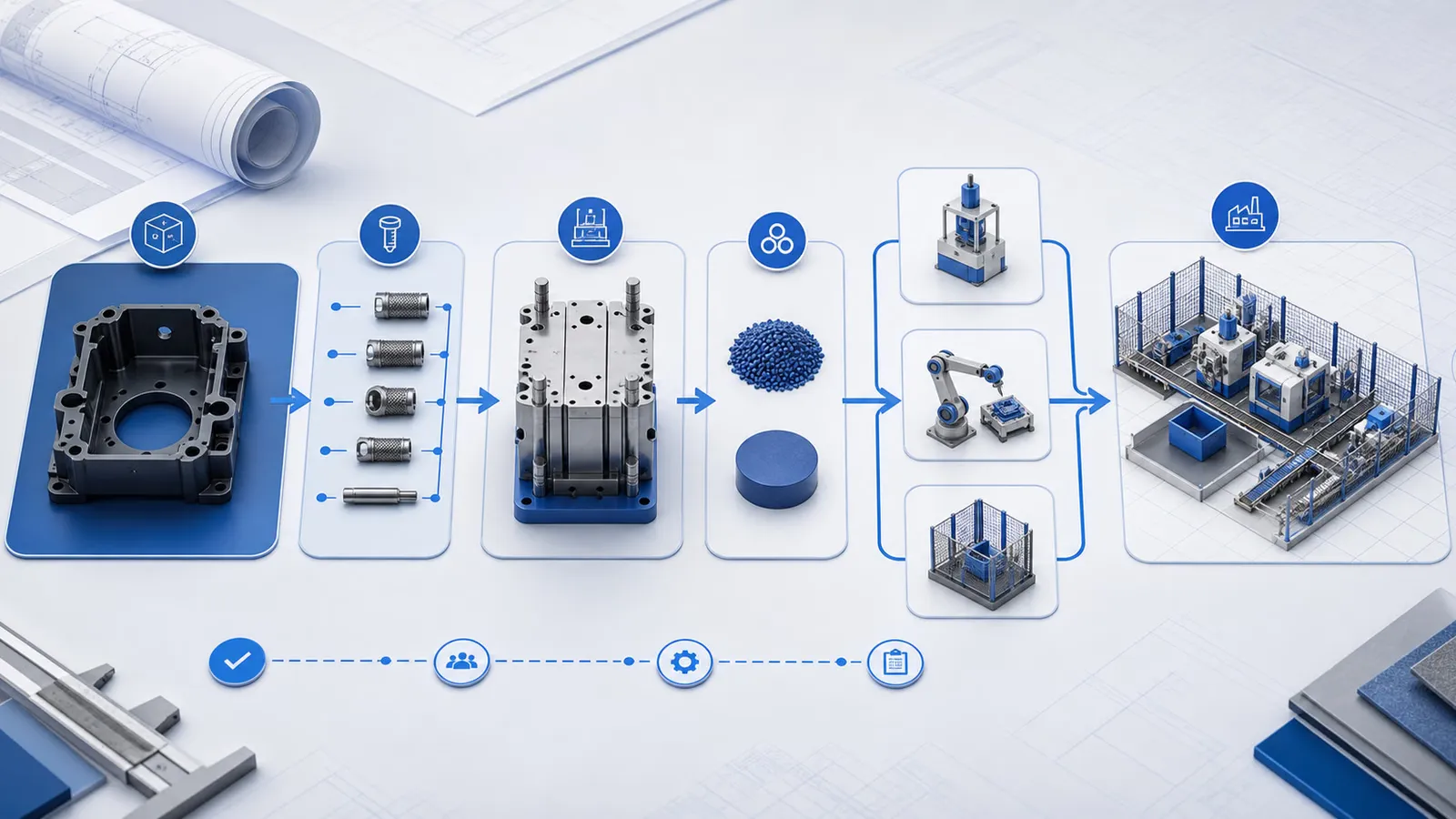
What Information to Prepare Before Machine Selection
Prepare product, mold, material, insert loading, automation, and production information before requesting a vertical molding machine recommendation.
2026-07-11 | 9 min read | Category: Start Here
Machine selection becomes easier when the project information is organized before the first technical discussion. A vertical molding project can involve the molded part, insert loading, mold access, material behavior, safety planning, auxiliary equipment, and future automation.
This guide explains what to prepare and why each item matters. It is not a request to finish every detail before contacting Deboge. It is a way to show what is known, what is estimated, and what still needs review.
Quick Answer
Prepare product drawings or photos, insert or substrate details, material data, mold concept, loading and part removal workflow, production target, automation expectations, factory constraints, and the main decision you want help with.
When This Guide Is Most Useful
Use this guide before sending a project inquiry, before a factory visit, or before internal approval meetings. It is especially useful when the project includes inserts, cables, thermoset or LSR materials, or automation plans.
Selection Path
Prepare the product information first
The part drawing, sample photo, application, and functional requirements create the foundation for the review. If the product has inserts, cables, terminals, or metal parts, include how they are positioned and what must stay visible or protected after molding.
Describe the mold concept clearly
Even an early mold concept helps Deboge understand gate direction, opening space, mold height, platen fit, fixture movement, and part removal. If the mold is not designed yet, share the assumptions instead of leaving the topic blank.
Explain the production workflow
Machine selection should support the real workflow. Include who loads the parts, where loading happens, how parts are removed, whether inspection is needed at the table, and whether robots or fixtures may be added.
State the project goal
The same product can lead to different machine discussions depending on output target, labor plan, automation level, factory layout, and budget stage. State the practical goal so the review does not drift into a generic catalog answer.
Decision Points to Review
| Review point | Why it matters | What to prepare |
|---|---|---|
| Product details | Part geometry and function influence mold and machine review. | Drawing, sample photos, application notes, and critical surfaces. |
| Insert or substrate details | The object being loaded can drive fixture, table, and access decisions. | Quantity, material, dimensions, orientation, and handling notes. |
| Mold assumptions | Mold size and gate direction affect structure and platen review. | Mold layout, expected dimensions, and ejection or removal method. |
| Production target | Output and labor plan affect station separation and automation readiness. | Target volume, shift plan, operator count, and future expansion notes. |
How to Compare Common Options
| Option | When it may fit | What to verify |
|---|---|---|
| Known information | The project has confirmed drawings, material, or mold data. | Whether the files are current and complete. |
| Estimated information | The design is still developing but review can start. | Which assumptions may change later. |
| Open questions | The team needs engineering input before deciding. | The exact decision that needs support. |
Information to Prepare Before Asking for a Recommendation
| Information | Why Deboge needs it |
|---|---|
| Photos and drawings | Visual information reduces misunderstandings about access and insert placement. |
| Material data sheet | Material behavior affects feeding, heating, curing, and removal review. |
| Workflow notes | The machine should be reviewed around the full cycle, not only injection. |
| Factory and automation notes | Layout and future workcell plans can affect machine options. |
Common Mistakes to Avoid
- Sending only a product name without drawings or photos.
- Waiting until after machine selection to discuss mold access.
- Not saying whether production starts manual and may become automated later.
- Treating estimated data as final without marking it clearly.
How This Guide Connects to Other Resources
After preparing the information package, use the machine selection checklist to confirm nothing important is missing. Then use the application or structure guide that matches the main decision.
Related Reading
- Machine Selection Checklist
- Step-by-Step Machine Selection Guide
- Project Information Sheet
- Custom Vertical Molding Solutions
FAQ
Do I need final mold drawings before asking for machine selection help?
No. Early mold assumptions can start the discussion, but the final machine confirmation should use confirmed mold data.
What if the material has not been finalized?
Share the material candidates and mark them as open items. Material behavior can affect heating, feeding, curing, and removal questions.
Should automation plans be shared even if automation is not required now?
Yes. Future automation can affect table configuration, access, signals, safety planning, and layout, so it should be discussed early.
What is the most important file to send first?
A product drawing or clear sample photo is usually the best starting point, followed by material information, mold assumptions, and workflow notes.
Related Reading
Ready to confirm a machine selection?
Send your product details, mold specs, and production requirements. Deboge engineering will review and recommend a specific configuration.