
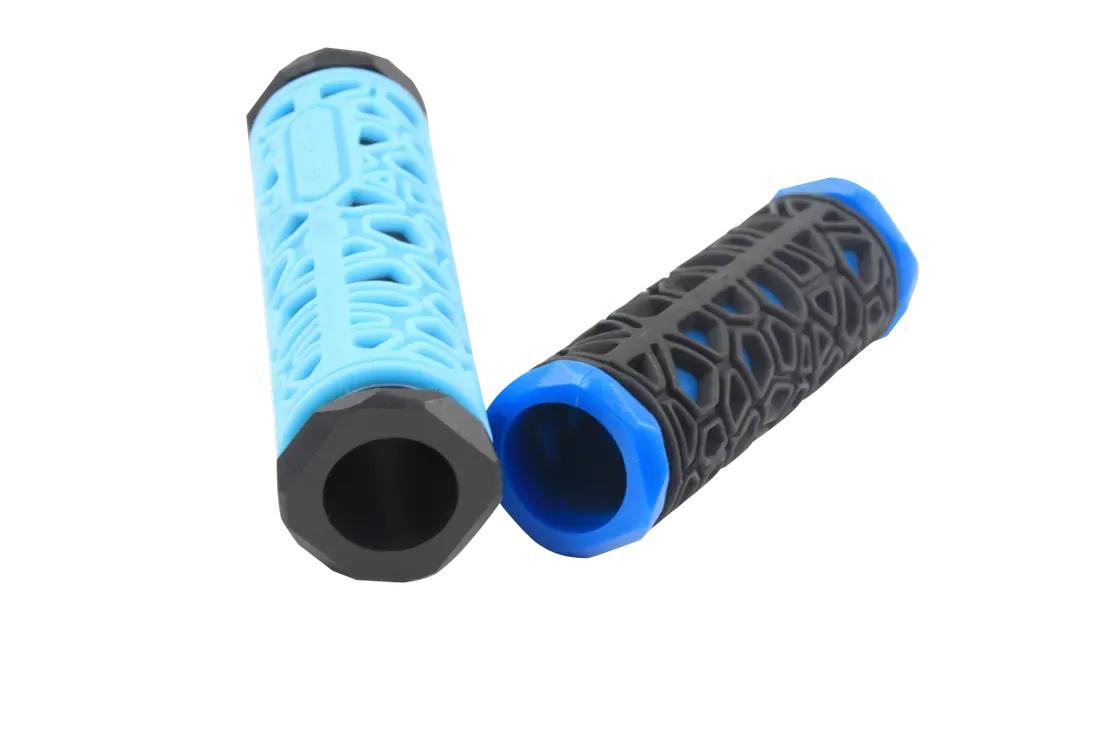
Two-Color Handlebar Grip Molding: A Rotary Core Project in India
See two-color rotary core molding for an Indian handlebar grip project, plus applications in plier handles, screwdriver handles and utility knife housings.
2026-09-29 | 6 min read | Industry: Bicycle accessories
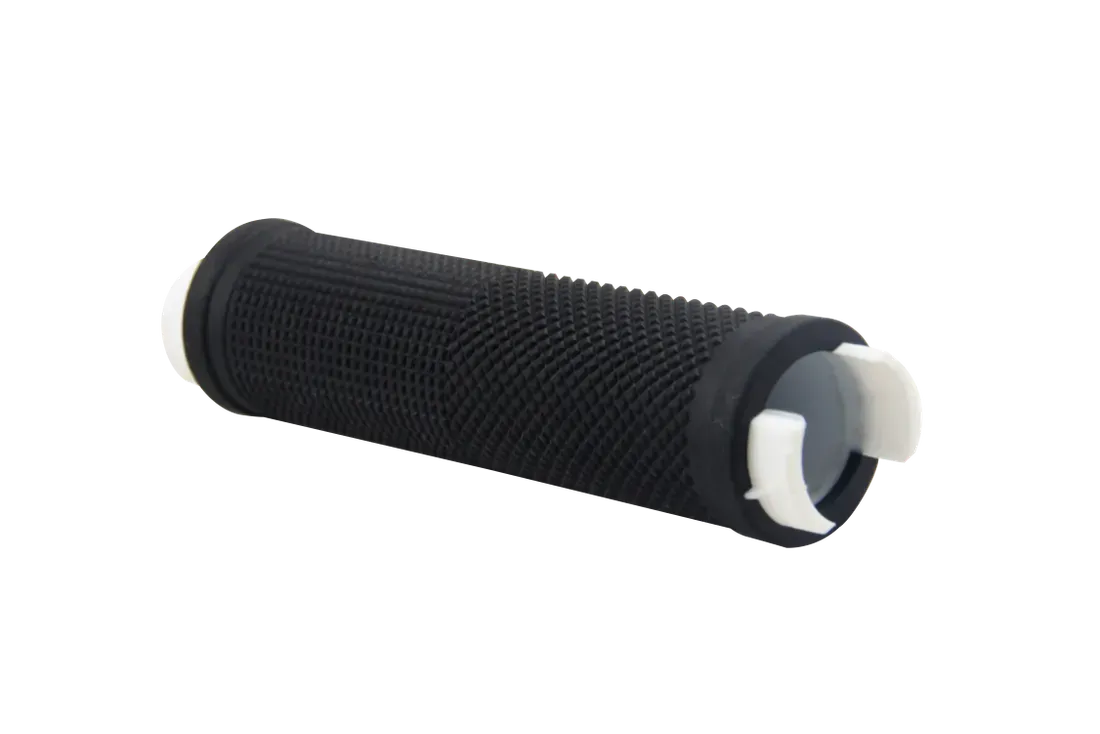
An Indian bicycle-accessories manufacturer needed to mold handlebar grips with a plastic inner structure and a soft outer covering. The production challenge was to form both layers in sequence while keeping the first-molded part correctly positioned for the second injection.
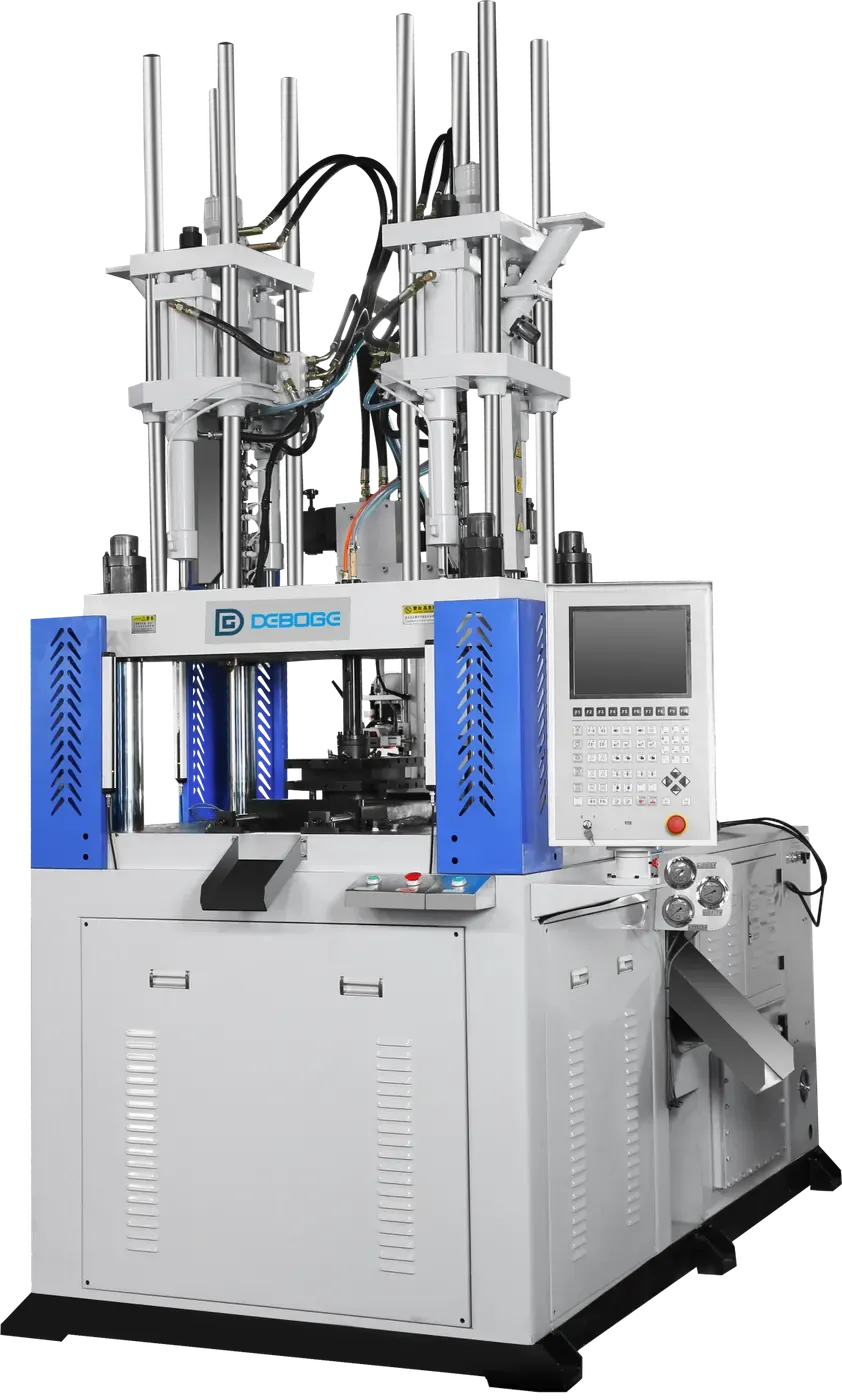
DEBOGE supplied one two-color rotary core injection molding machine, configured with one two-cavity mold and two material loaders. The project uses an approximately 60-second cycle. A rotating core carries the part between molding stages, followed by release at a dedicated discharge position.
The same machine approach also supports other two-color handle products, including plier handle sleeves, screwdriver handles and utility knife housings, with tooling and process settings matched to each product.
The product: an inner structure and an outer grip surface
The inner plastic section establishes the grip’s basic form, including its fit around the handlebar. The outer layer provides the contact surface for the user’s hand. Its coverage, texture and color layout therefore need to be considered alongside the dimensions of the inner part.
For this type of overmolding application, the second stage must form the outer layer around a part that has already been molded. How that part is supported and transferred is a central machine and mold design consideration.
Project configuration
The Indian customer’s configuration links the two molding stages within one machine.
| Item | Configuration in this project |
|---|---|
| Customer location and industry | India; bicycle accessories |
| Product | Handlebar grip with a plastic inner structure and soft outer layer |
| Machine | 1 two-color rotary core injection molding machine |
| Mold | 1 mold with 2 cavities |
| Cycle time | Approximately 60 seconds for this project |
| Material feeding | 2 material loaders |
| Finished-part release | Dedicated discharge position |
The two-cavity configuration produces two grips per cycle. The approximately 60-second figure is a reference for this particular product and mold; another handle geometry, material combination or wall thickness needs its own cycle assessment.
How the rotary core molding sequence works
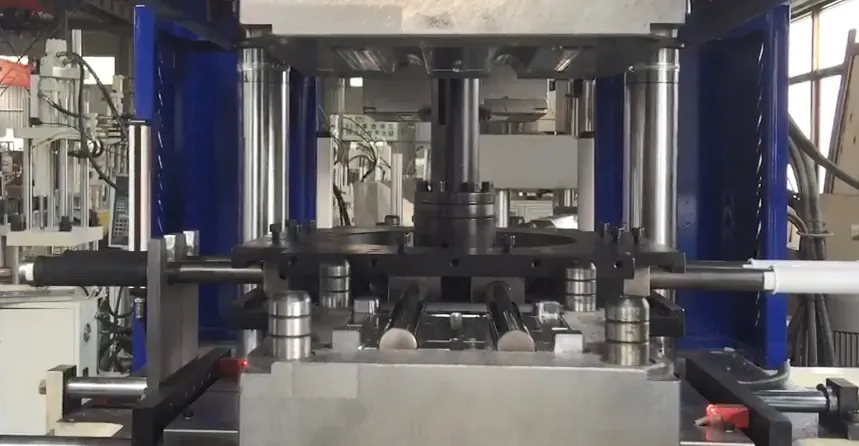
The process begins with the inner plastic part. After the first injection, the rotating shaft mechanism transfers it to the outer-layer molding stage. The finished grip then moves to the discharge position for release.
| Stage | Operation | Purpose |
|---|---|---|
| 1. First injection | Mold the inner plastic structure | Establish the base geometry for the grip |
| 2. Rotary core transfer | Move the first-molded part with the rotating shaft mechanism | Keep the part located during transfer to the next stage |
| 3. Outer overmolding | Mold the soft outer layer around the inner part | Form the specified grip surface and color coverage |
| 4. Discharge | Release the finished grip at the dedicated drop-off position | Complete the handling sequence for collection |
The practical benefit is that the first-molded part does not have to be removed and manually repositioned between the two main molding operations. Keeping this transfer within the machine reduces a repeated handling step and gives the next molding stage a defined part position.
What matters when molding the second layer
Positioning and outer-layer coverage
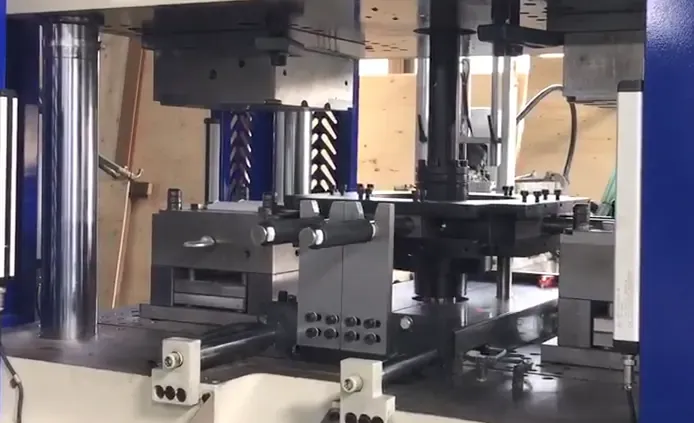
The mold needs to locate and support the first-molded part so the outer layer forms in the intended position. Areas that remain exposed, the boundaries between colors and the required outer-layer thickness should all be defined in the product drawing. The rotating core and second-stage tooling must work together to maintain that relationship.
Materials and the layer interface
A two-color machine provides the molding sequence; the selected materials and interface design still need to suit the finished product. For a new grip, DEBOGE should review the inner and outer material grades, required softness, contact conditions and acceptance criteria with the customer. Color and appearance alone do not establish how the layers will perform together.
The overmolding process overview explains the relationship between a preformed part and its subsequent molded layer.
Feeding and finished-part release
Two material loaders support feeding for this project’s two-stage process. Feeding arrangements should be planned alongside the molding sequence, while the discharge position needs to release the completed grip without interfering with its newly formed outer surface.
Beyond handlebar grips: two-color tool handles and housings
This machine is also suitable for two-color tool handle sleeves and related molded products. The application extends to:
- Plier handle sleeves: a shaped inner section combined with an outer grip area.
- Screwdriver handles: a supporting handle body with a second-color grip surface.
- Utility knife housings: molded housing sections with defined second-color grip areas.
- Other handle and grip products: designs that need a first-molded structure followed by a second molding operation.
These are additional applications for the machine, separate from the Indian customer’s handlebar grip project. Each product needs matching tooling and a review of its dimensions, material requirements, transfer clearances and release method. Changing from a cylindrical grip to a tool housing, for example, requires the core and mold arrangement to suit the new shape.
DEBOGE can assess these requirements through its custom vertical molding solutions. The starting point is the product and its molding sequence, so the proposed configuration fits the intended handle or housing.
Preparing a two-color handle project
To begin a technical review, send product drawings or samples together with:
- The inner and outer material grades, colors and required surface feel.
- Dimensions, intended layer coverage and any assembly or fit requirements.
- The desired cavity count and accepted output target per shift.
- Requirements for part transfer, finished-part collection and inspection.
This information allows DEBOGE to discuss the machine configuration, mold arrangement, feeding equipment and discharge approach as a coordinated process.
Common questions
Is this machine limited to bicycle handlebar grips?
No. It can also be configured for two-color plier handle sleeves, screwdriver handles, utility knife housings and other suitable handle products. The mold and process need to match the new product.
Why use a rotary core between the two injections?
In this project, the rotary core carries the first-molded part to the next molding stage. This avoids removing and manually relocating the part between the inner-layer and outer-layer operations.
Will every two-color handle run at a 60-second cycle?
No. Approximately 60 seconds is the reference for this handlebar grip project. Cycle time for another product must be assessed with its materials, geometry, mold and handling sequence.
Can the same mold make all these handle products?
No. Plier sleeves, screwdriver handles and utility knife housings have different shapes and functional requirements. They require suitable tooling even when they use the same general two-stage molding approach.
Discuss your handle or housing project
For a handlebar grip, tool handle sleeve or two-color housing, send DEBOGE the product drawing or sample and explain the intended inner and outer sections. Our engineering team can review the molding sequence and discuss a suitable equipment configuration.
Discuss your two-color handle molding requirements with DEBOGE.
Related Reading
Have a similar application?
Contact Deboge engineering to discuss your production requirements and machine configuration.