
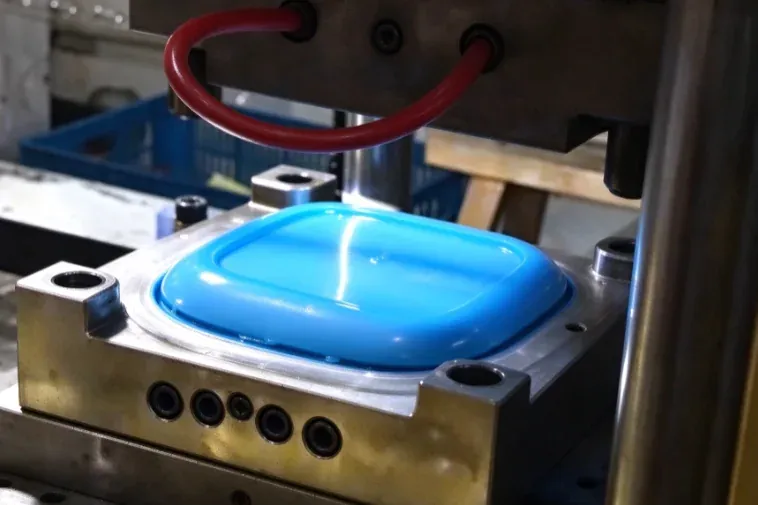
Overmolding a Preformed Plastic Plate on a Double-Slide Machine
See how a double-slide vertical machine overmolds preformed plastic plates, with one lower mold available for unloading and preparation while the other runs.
2026-11-10 | 3 min read | Industry: Household products
A shallow plastic plate already has its shape when it reaches this machine. In this DEBOGE project, the operator seats the plate in a matching lower tool for a second injection molding step. The machine molds additional material onto the preform. Two sliding tables let the operator handle one plate while another is under the vertical clamp.
Locating the preformed plate for the second shot
In overmolding, the preform itself defines one surface of the cavity for the new material. A shallow plate can appear seated along one edge while a corner on the opposite side sits high. That changes the space available for the second shot and can pinch the plate as the tool closes.
The loading check therefore starts with the contour. The operator needs a clear view of the perimeter and a repeatable way to seat the plate against the locating surfaces. During a tooling trial, use the drawing to check where the added material should stop and which visible surfaces need protection from contact marks.
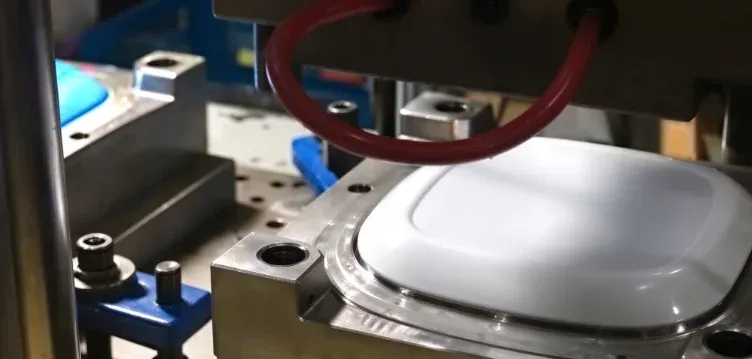
How the two slide tables share one clamp
With the first lower mold under the clamp, the machine closes the tool and injects material for the second shot. At the outside station the operator removes the previously molded plate, checks the seating surfaces and positions the next preform. After the mold opens and the outside station is ready, the tables exchange positions. The prepared plate goes under the clamp and the newly molded plate comes out for removal.
The 10-second clip shows the slide movement and manual part removal at the outside station.
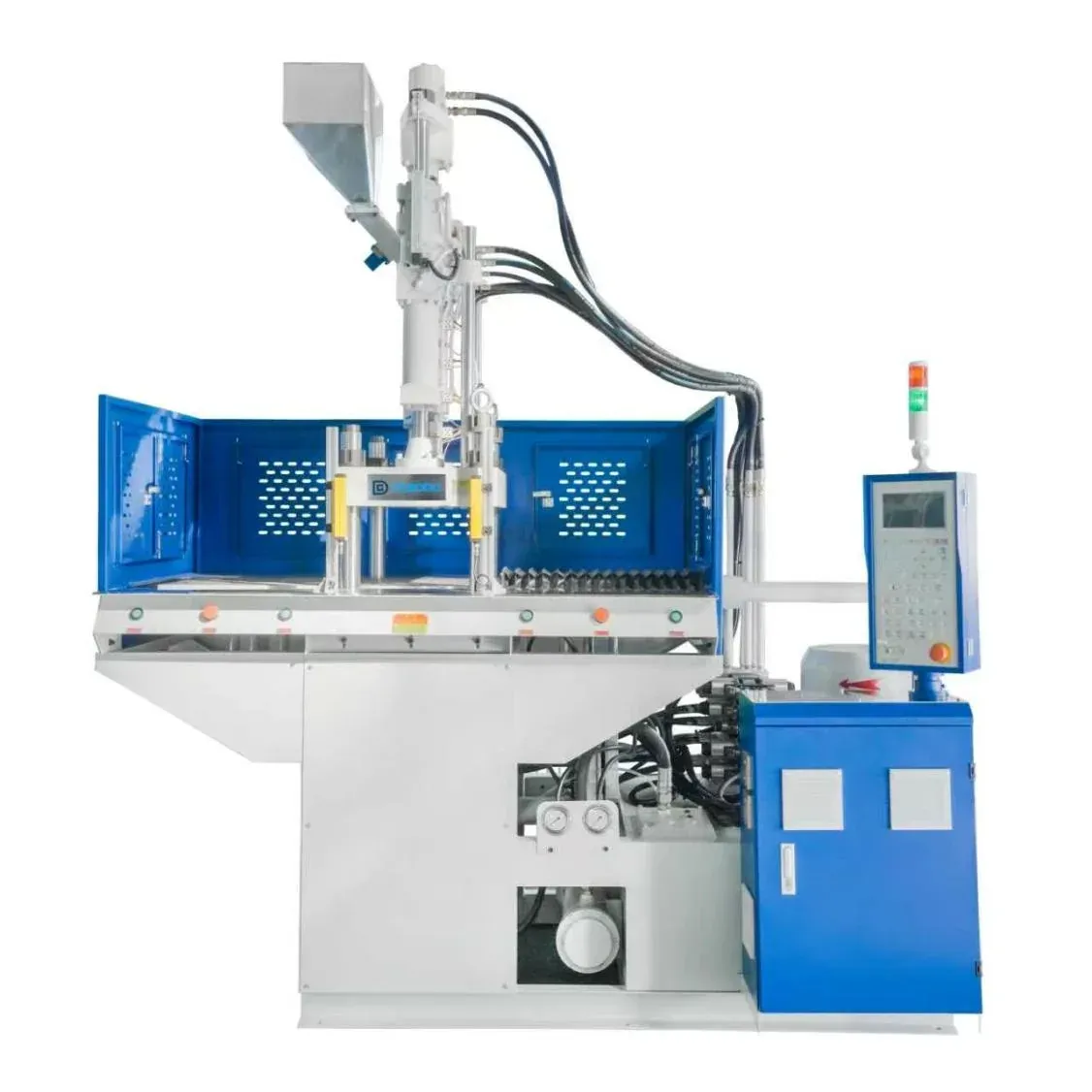
This double-slide layout gives the operator time to lift the plate clear and locate the next one. To size a similar cell, time those two tasks together and compare them with the molding time at the other station. If unloading and preparation take longer, the clamp will wait for the next preform.
What to check on trial plates
Keep trial parts from the two lower molds in separate groups. On samples from each mold, check where the added material stops against the boundary marked on the drawing. Inspect the visible face under angled light for handling marks, then check the plate profile against a gauge or reference sample. If a mark repeats in the same corner on only one station, inspect the corresponding support and locating surfaces on that lower tool first.
For a similar project, send DEBOGE a preform sample and a finished-part drawing that shows the area to be overmolded. Include both material specifications, the surface finish requirements and the target output so the team can review tooling and handling together. Discuss a plate overmolding project with DEBOGE.
Related Reading
Have a similar application?
Contact Deboge engineering to discuss your production requirements and machine configuration.