
What to Prepare Before Requesting a Vertical Injection Molding Machine Quote
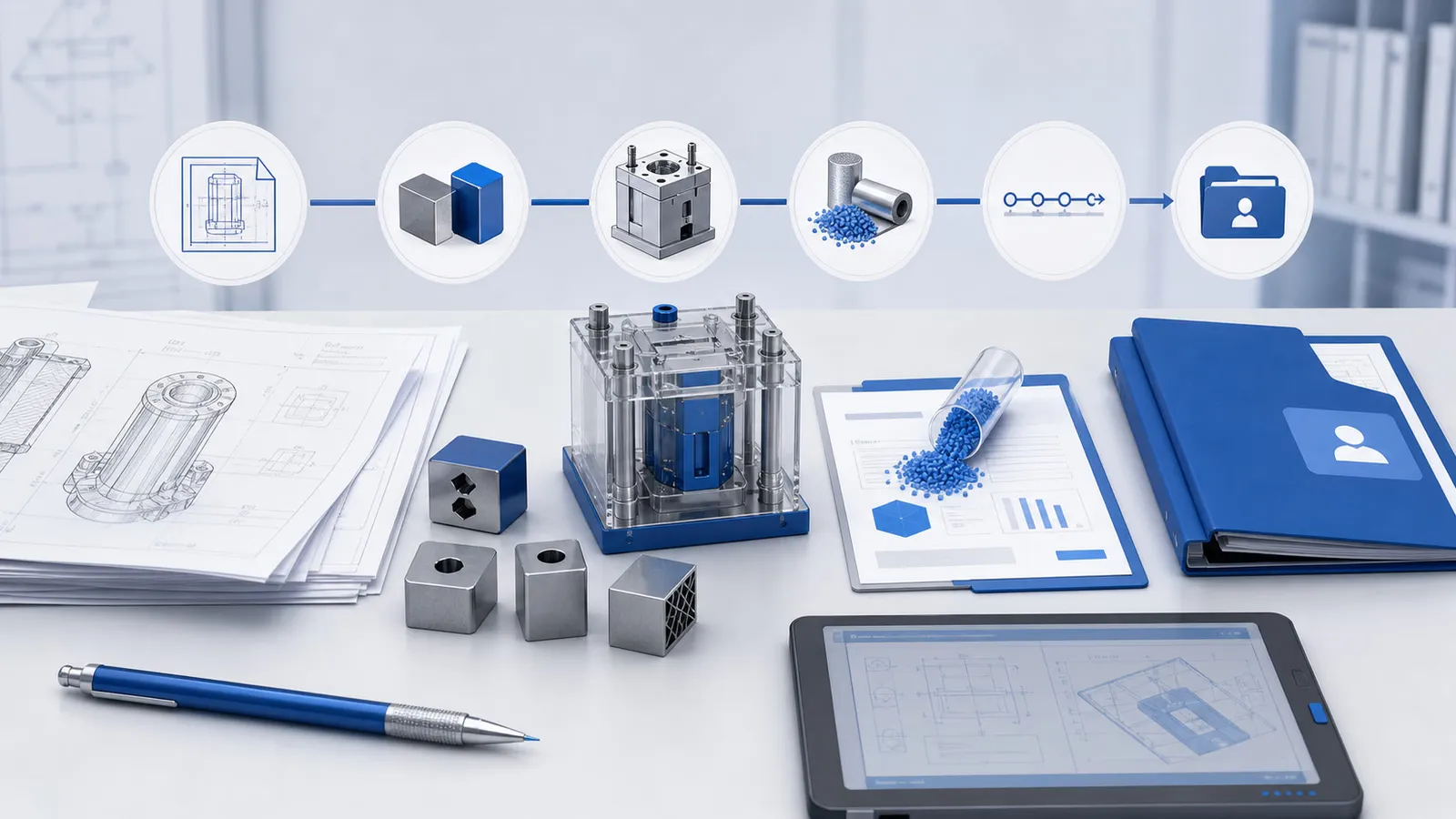
Checklist for preparing a vertical injection molding machine inquiry, including product, mold, material, insert loading, and workflow details.
2026-07-10 | 7 min read | Category: Project Planning
A useful machine quotation needs more than a product name. To recommend a vertical injection molding machine responsibly, an engineering team needs to understand the molded part, insert, material, mold concept, loading method, production rhythm, and any automation expectation. The more complete the inquiry, the less time is wasted on assumptions.
This article is a project preparation checklist. It supports, but does not replace, the machine selection guide.
Start with the Product and Insert
The product is the center of the discussion. Your team should provide drawings, part photos, 3D files if available, and a short explanation of how the molded part will be used. If the part includes a metal insert, wire, cable, terminal, magnet, ceramic part, or another embedded component, include insert dimensions, photos, and loading orientation.
For insert molding, the insert is often more important than the plastic shape. The machine structure must support how the insert is placed, held, and removed. A simple insert may work with a fixed platen workflow. Multiple small inserts, long wires, or cable assemblies may require more open mold access or a table configuration that gives the operator more time.
Explain the Mold Situation
If the mold already exists, share the mold drawing, mold opening direction, platen mounting requirements, runner concept, and any known constraints. If the mold is not designed yet, say so clearly. A machine discussion before mold design should focus on structure, access, injection direction, and workflow rather than fixed dimensions.
Your team should also explain whether the mold is expected to use a fixed platen, slide table, or rotary table concept. If this is not decided, describe the loading process instead. Deboge can then discuss whether fixed platen machines, slide table machines, or rotary table machines should be considered.
Prepare Material and Process Information
Provide the material family, supplier data sheet if available, and any processing notes from the material supplier or mold maker. Do not assume that a material name alone is enough. Some materials affect screw, barrel, temperature, curing, dosing, or mold handling discussions.
If the project involves thermoset, BMC, LSR, silicone, PVC, TPE, PA66, PBT, POM, or another material family, use the materials library as a starting reference. Final processing details still need project review.
Describe the Loading and Unloading Workflow
A vertical injection molding machine is selected around the work that happens before and after injection. Explain who or what loads the insert, how the insert is positioned, how the finished part is removed, and whether the operator can safely and comfortably reach the mold area.
Helpful workflow details include:
- Manual loading or automation loading.
- One insert or multiple inserts per cycle.
- Whether wires or cables extend outside the mold.
- Whether the part needs careful positioning before mold closing.
- Whether loading time is a production bottleneck.
This information helps decide whether the project should begin with DA, DC, DK, a slide table, a rotary table, or a custom discussion.
Clarify Output Goals Without Guessing Specifications
Production target matters, but it should be described in practical terms. Instead of guessing machine specifications, explain required daily output, number of shifts, planned operator arrangement, and whether the project is a trial, pilot production, or regular production program.
This avoids forcing the inquiry into a premature machine size. The engineering discussion can then connect production rhythm to table configuration and automation readiness.
Share Site and Support Expectations
Your team should also tell Deboge the destination country, electrical requirements if known, available factory space, operator experience level, and after-sales support expectations. These details do not replace engineering review, but they help the quotation team understand the installation and communication context.
A Good Inquiry Package
A strong inquiry usually includes:
- Product drawing or photos.
- Insert drawing or photos.
- Material family and data sheet if available.
- Mold drawing or mold concept.
- Loading and unloading method.
- Required production rhythm.
- Any automation expectation.
- Destination country and contact details.
When these details are ready, use Contact Deboge to send the project information. A clear inquiry gives both sides a better starting point for a serious machine discussion.
Related Reading
Have a question about this topic?
Contact Deboge engineering for technical questions specific to your application and production requirements.