
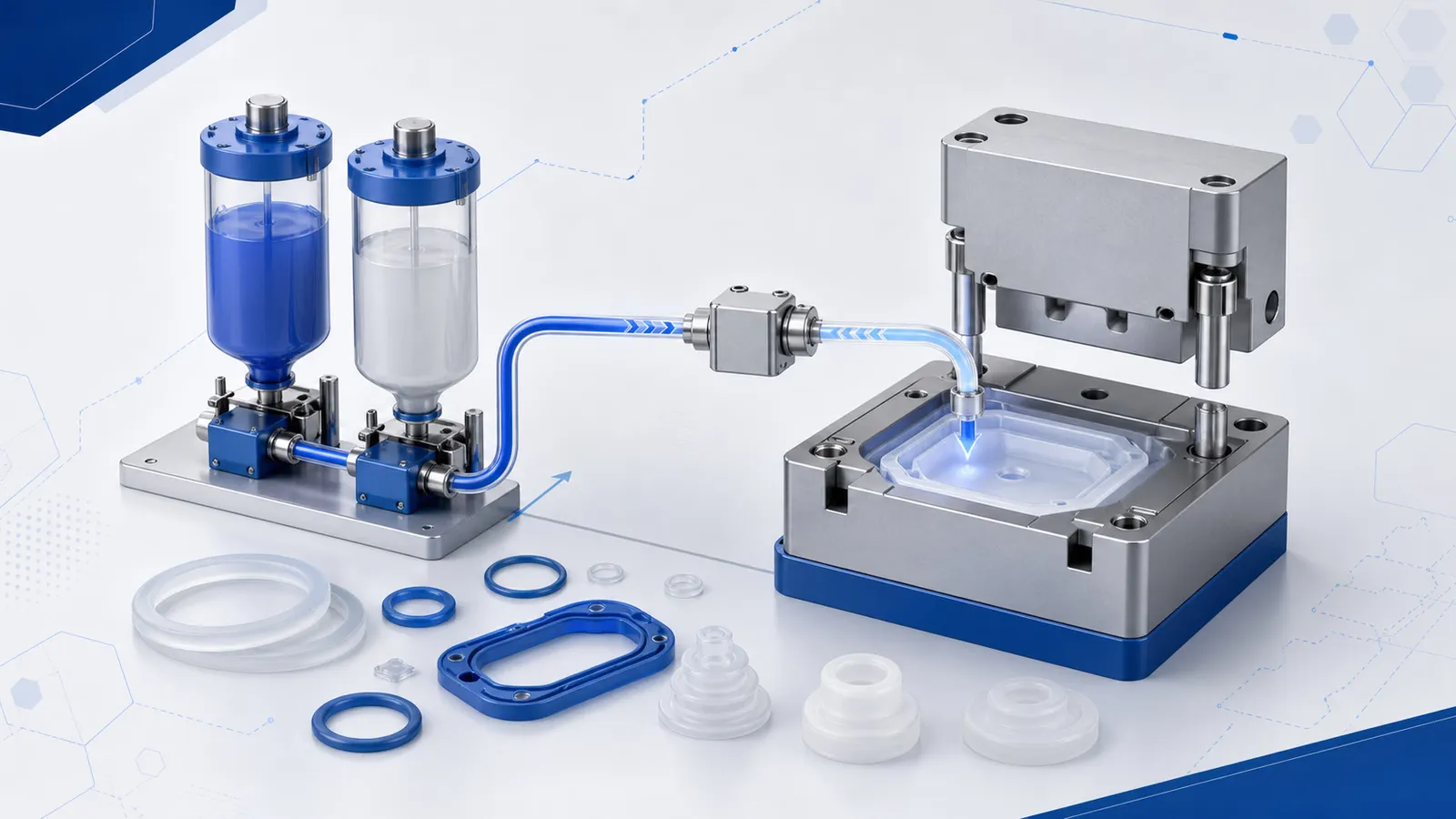
LSR and Silicone Molding: Machine Selection Questions to Prepare
Prepare LSR and silicone molding inquiries by clarifying material form, dosing concept, mold design, application requirements, and machine discussion points.
2026-07-05 | 8 min read | Category: Application Notes
LSR and silicone molding inquiries should clearly separate material, dosing, mold, and machine questions. The material form, mixing or dosing method, mold temperature concept, part geometry, insert loading, and automation expectation all affect the discussion. Your team should prepare these details before asking for a final machine recommendation.
For material reference, start with LSR and silicone materials. For application context, see LSR and silicone molding.
Do Not Start with the Machine Name
LSR and silicone projects often require more process coordination than a standard thermoplastic inquiry. If the inquiry only asks for a vertical injection molding machine, the quotation team may not have enough information to understand the dosing, feeding, mold, and demolding requirements.
A better starting point is the complete molding concept: material form, part function, mold structure, insert or overmolding requirement, and production workflow.
Clarify the Material and Supply Method
The first question is what type of silicone material is being used and how it will be supplied to the molding process. LSR, high consistency rubber, and other silicone forms do not create the same equipment discussion. Material supplier recommendations should be shared when available.
Deboge should not be asked to confirm material compatibility from a material name alone. Provide the material data sheet and any processing guidance from the supplier. Then the machine, dosing, and mold discussion can be reviewed properly.
Discuss the Mold and Part
Silicone parts may involve soft features, seals, buttons, medical-type components, cable protection, or overmolded inserts. The mold concept should explain cavity layout, parting line, venting concept, demolding method, and whether inserts are manually or automatically loaded.
If the application involves soft overmolding or seals, also review soft and flexible materials for broader material-family context. The final process still depends on project review.
Consider Automation Early
LSR and silicone projects may require careful part handling because finished parts can be flexible, small, or difficult to remove consistently. If automation is planned, it should be discussed before machine selection. Robot access, fixture design, demolding direction, and inspection steps may affect the machine layout.
See automation-ready vertical molding machines when the project includes robotic loading, removal, or inspection expectations.
Questions to Prepare
Prepare answers to these questions:
- What exact material family and grade are being considered?
- Is there a material supplier data sheet?
- What dosing or mixing concept is expected?
- Is the part pure silicone, overmolded, or insert molded?
- How will the part be demolded and handled?
- Is manual loading acceptable, or is automation planned?
- Is the mold already designed?
These questions help turn a broad LSR inquiry into a practical project discussion.
Where the Blog Fits
This article is a preparation guide, not a material data sheet. The stable reference page is LSR and silicone materials. If you have a specific product, material, and mold concept, use Contact Deboge to start the engineering discussion.
Related Reading
Have a question about this topic?
Contact Deboge engineering for technical questions specific to your application and production requirements.