
How to Scope a Custom Vertical Molding Project Before Engineering Review
Learn how to prepare a custom vertical molding project scope with product, insert, mold, material, workflow, automation, and factory layout information.
2026-07-02 | 8 min read | Category: Project Planning
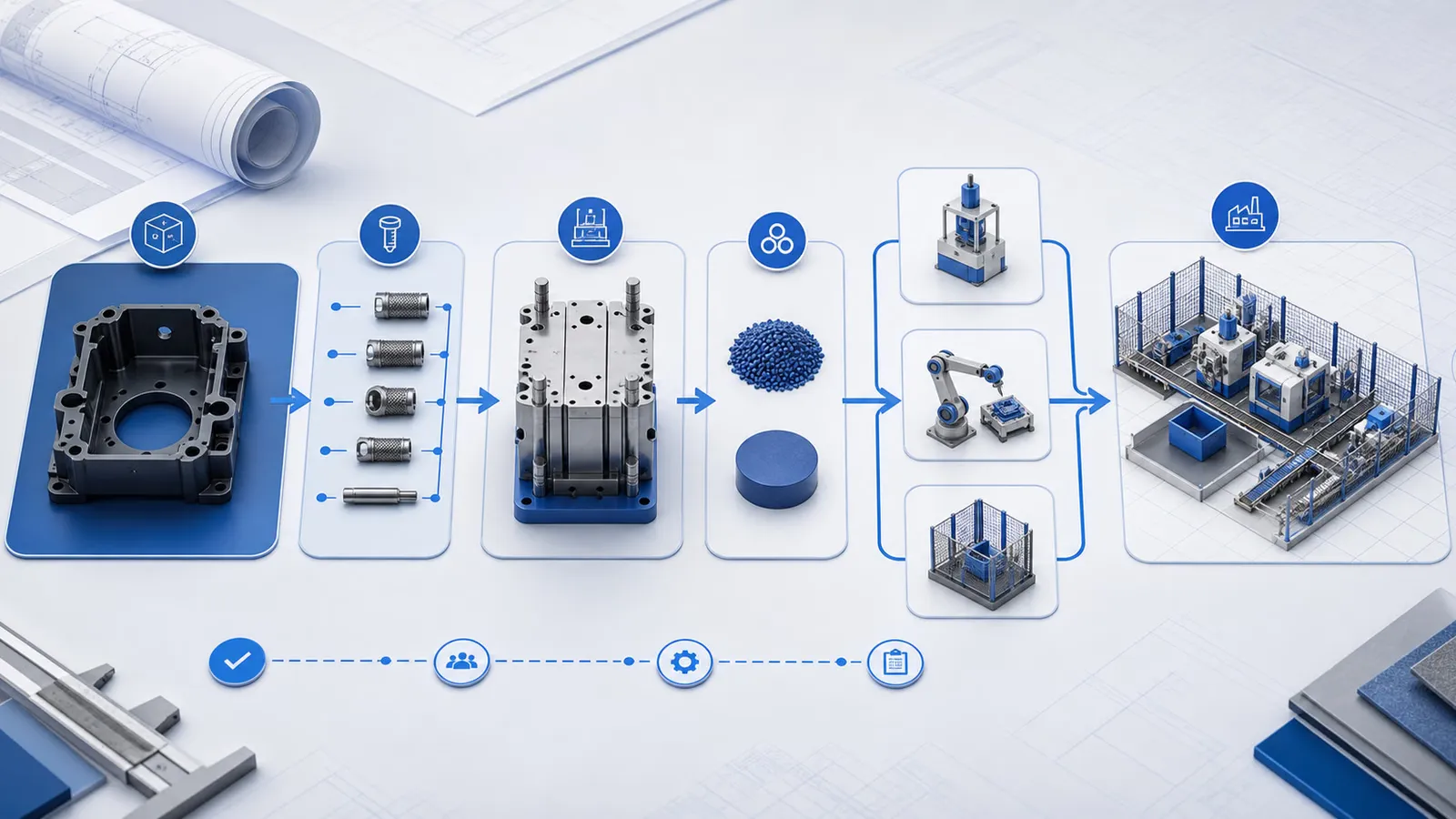
A custom vertical molding project should begin with a clear project scope. The scope should explain the product, insert, material, mold concept, loading workflow, automation expectation, factory layout, and review goals. Without this information, engineering discussion can become a list of guesses.
The related machine page is custom vertical molding solutions.
Define What Makes the Project Custom
Not every project needs a custom machine. A project becomes custom when standard machine structure, table configuration, mold access, automation, or control requirements need project-specific review. Your team should explain what is unusual or difficult.
Examples include special insert loading, unusual product geometry, cable routing, automation integration, process-specific material handling, or factory layout constraints. These examples do not define a final solution. They identify why engineering review is needed.
Start with the Product Package
A useful scope begins with the product package:
- Product drawing or 3D file.
- Photos or samples if available.
- Insert drawing and insert material.
- Material family and supplier data sheet.
- Part function and visual requirements.
- Known production concerns.
This package helps Deboge understand what the machine must help produce, not only what machine category appears to match the project.
Add Mold and Workflow Information
The mold concept is the bridge between product and machine. If the mold exists, provide drawings, mounting details, and photos. If the mold is not designed yet, provide the expected cavity layout, insert position, and injection direction discussion.
Workflow information is equally important. Explain whether operators load inserts manually, whether fixtures are used, whether the finished part is removed by hand or robot, and whether the project may later include automation.
For workflow context, review insert molding and overmolding.
Discuss Machine Structure Without Locking Too Early
Custom discussions may involve DA, DC, DK, fixed platen, slide table, rotary table, or automation-ready layouts. These should be evaluated against the project scope. Avoid locking the structure too early unless the mold and workflow already require it.
Use machine selection guide as a structure for the discussion. The guide helps connect application, material, mold, table configuration, and automation questions.
Include Factory Layout and Support Needs
Custom projects also depend on installation context. Share available space, operator side, material handling route, power and utility expectations if known, and any destination-market requirements that need review. Do not invent requirements if they are not confirmed. State what is known and what needs discussion.
A Clear Scope Reduces Rework
A clear scope helps both teams focus the engineering review. It reduces repeated questions, avoids premature machine assumptions, and makes the quotation more meaningful.
When you are ready, send the scope through Contact Deboge. Include drawings, photos, material information, mold concept, workflow notes, and any automation expectation.
Related Reading
Have a question about this topic?
Contact Deboge engineering for technical questions specific to your application and production requirements.