
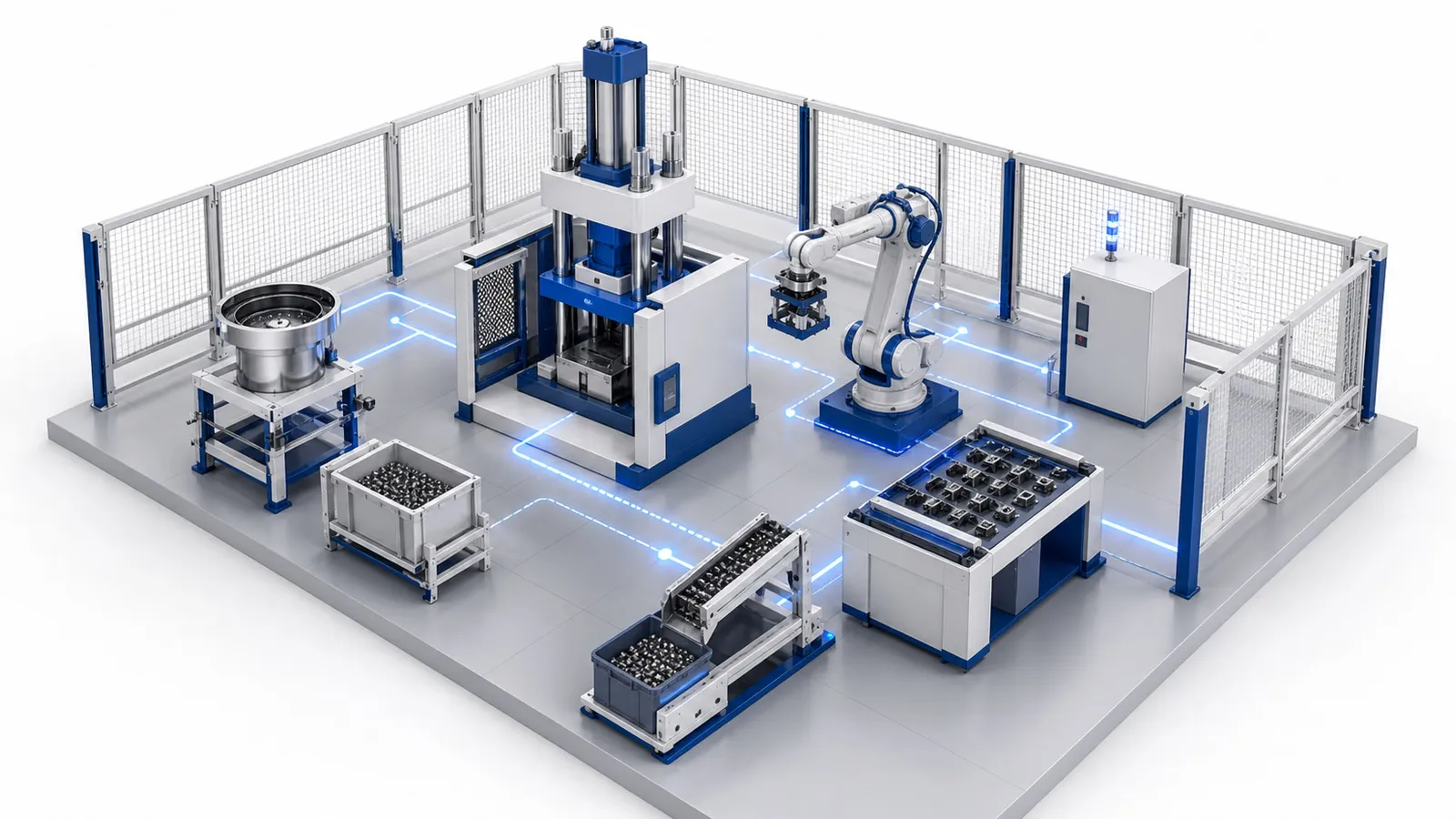
Automation-Ready Vertical Molding: Planning Questions Before Layout Design
Planning guide for automation-ready vertical molding projects, covering insert loading, part removal, robot access, signals, guarding, and maintenance space.
2026-07-04 | 8 min read | Category: Project Planning
Automation-ready vertical molding should be planned before the machine layout is fixed. Insert loading, part removal, robot approach direction, fixture access, signal exchange, guarding, and maintenance space can all affect the machine structure. Automation is not only an accessory added after the machine is selected.
The related machine category is automation-ready vertical molding machines.
Start with the Workcell, Not Only the Machine
An automated molding project includes the machine, mold, robot or handling device, insert feeding system, part removal method, safety guarding, and downstream process. If these pieces are discussed separately, conflicts can appear late in the project.
For example, the machine may have enough clamping and injection capability, but the robot may not have a clean approach path to the mold. Or the fixture may hold inserts well, but maintenance access may become difficult after guarding is installed.
Define the Loading Method
The first automation question is how inserts reach the mold. Inserts may be manually staged, bowl-fed, tray-fed, robot loaded, or placed by a custom fixture. Each method changes space requirements and access direction.
Your team should provide insert drawings, samples if available, and information about orientation requirements. A small insert with a clear geometry may be easier to automate than a flexible wire or irregular component. If wires or cables are involved, review cable connector overmolding early.
Define Part Removal and Inspection
Part removal can be as important as insert loading. Finished parts may need careful handling, visual checks, runner separation, or placement into trays. If inspection is part of the workcell, the machine layout should leave space for cameras, lighting, rejects, and operator access.
This should be discussed with the mold concept. The demolding direction and part shape affect whether a robot, simple picker, or manual removal remains practical.
Signals and Interface Planning
Automation-ready projects require communication between machine and external equipment. The exact interface depends on the project, but your team should explain what equipment will be connected and what sequence is expected.
Important questions include:
- What equipment loads inserts?
- What equipment removes parts?
- Is there visual inspection?
- Does the machine need to wait for an external ready signal?
- Is there downstream packing or transfer?
These questions belong in the early project discussion. They should not be left until after mechanical layout is fixed.
Guarding and Maintenance Access
Automation can improve consistency, but it also adds physical equipment around the machine. Guarding, doors, access panels, cable routing, and maintenance paths must remain practical. A workcell that is difficult to clean, adjust, or maintain will create long-term production problems.
When discussing custom vertical molding solutions, include site space, operator side, maintenance side, and expected access routes.
What to Send Deboge
For an automation-ready inquiry, send product drawings, insert details, mold concept, desired loading method, removal method, inspection needs, factory layout constraints, and any preferred automation equipment. If the project is early, a simple workflow sketch is enough to start.
Use Contact Deboge to begin the discussion. The goal is to align machine structure, mold access, automation sequence, and factory layout before detailed design decisions become expensive to change.
Related Reading
Have a question about this topic?
Contact Deboge engineering for technical questions specific to your application and production requirements.